Où photographier les Écrins ? Glaciers, lacs et conseils terrain - Tableaux photos paysages | Alu Art Mountains

Where to photograph the Ecrins? Glaciers, lakes, and field tips

Updated June 30, 2026

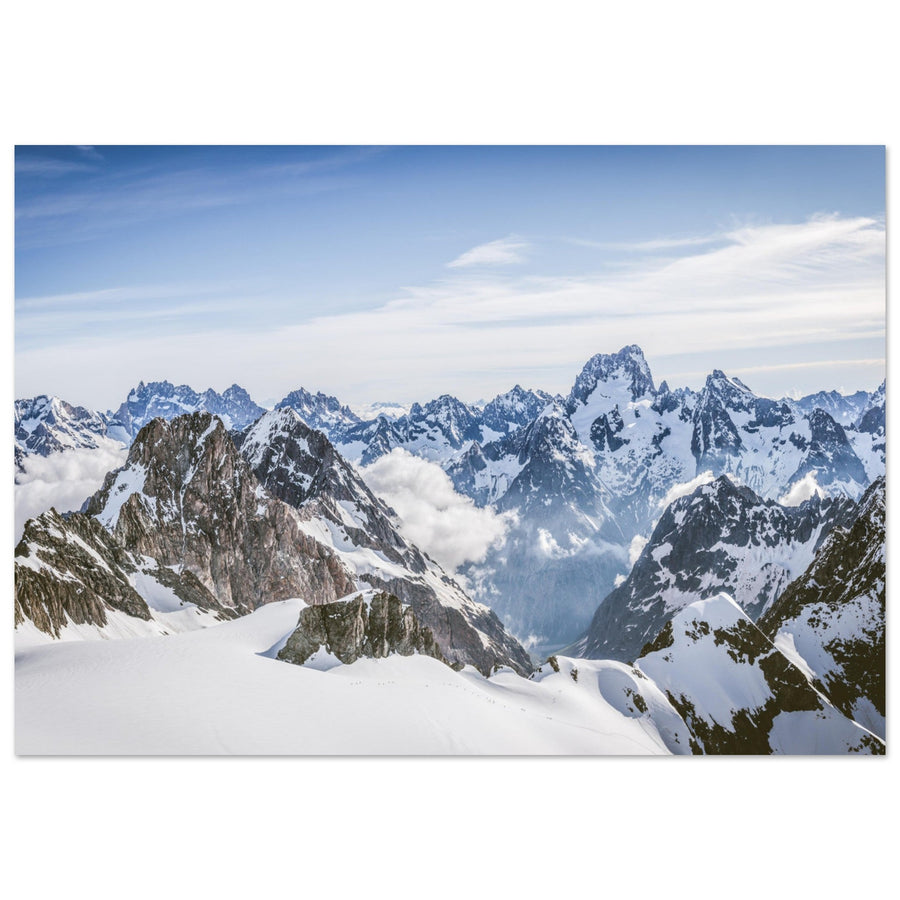
Photographing the Écrins means entering a wilder, more mineral, and often more demanding mountain landscape than the classic grand panoramas of the Alps. Here, glaciers, rocky faces, hanging valleys, high-altitude lakes, and clear light compose powerful images, sometimes austere, but deeply alpine.

In this guide, I share the best places to photograph the Écrins massif, with a field-based approach: access, indicative time, ideal light, season, composition, recommended equipment, mistakes to avoid, and links to my technical guides. The goal is not just to list spots, but to understand how to build a strong image in a massif where weather, altitude, and distances change everything.

As a mountain photographer since 2017, I seek in the Écrins scenes capable of retaining their intensity when printed large: dark ridges, hanging glaciers, reflections of the Meije, golden light on Pelvoux, snow lines, wild valleys, and high-mountain atmospheres. You can find some of this work in my collection of Écrins massif photo prints, printed in France on Dibond aluminum.

Sunset over Mont Pelvoux and its glaciers in the Écrins massif
In the Écrins, late-day light reveals ridges, glaciers, and rock formations with highly graphic intensity.

The Essentials in 30 Seconds

  • Most accessible spot: Pré de Madame Carle, the legendary gateway to the glaciers.
  • Strongest glacier spot: Glacier Blanc, for its glacier tongues, moraines, and high-altitude peaks.
  • Most iconic spot: La Meije from the Emparis plateau, especially with Lakes Lérié and Noir.
  • Best spot for reflections: The lakes of the Emparis plateau or Lac du Goléon on a calm day.
  • High-mountain spot: Barre des Écrins, Pelvoux, Sirac, Rouies, and glacial valleys.
  • Best season: Autumn for colors, low light, and first snows.
  • Best time: Sunrise, sunset, and golden hour on the rock faces.
  • Key tip: In the Écrins, don't just look for the summit: look for lines, textures, and contrasts.

Table of Contents

Why the Écrins is an exceptional photographic terrain

The Écrins massif has a very different personality from Mont Blanc. Where Chamonix often offers frontal and immediately recognizable views, the Écrins requires more interpretation: understanding the valleys, access, light, glaciers, rock lines, and the depth of the landscape.

This massif is particularly interesting for photographers because it combines several atmospheres: high glacial mountains around Pré de Madame Carle and Glacier Blanc, reflective landscapes around Emparis and Goléon, wilder valleys in Valgaudemar, mineral light around La Grave, and more secret atmospheres in the Freissinières valley.

To capture a successful photo in the Écrins, one often has to accept a simpler, rawer image. An isolated peak, a moraine, a dark ridge, light on a glacier, or a partial reflection can be stronger than an overly cluttered panorama. You can supplement this guide with my articles on mountain photography at sunrise, mountain photography at sunset, golden hour in the mountains, and alpine reflections.

The best photo spots in the Écrins

Spot Access Indicative Time Best Light Ideal Season Ideal For
Pré de Madame Carle Summer road access from Ailefroide / Vallouise Immediate to 1 hour depending on framing Morning or late afternoon Summer, autumn Glaciers, Pelvoux, mineral atmosphere
Glacier Blanc Hike from Pré de Madame Carle 2h30 to 3h30 depending on objective Clear morning or golden hour Summer, early autumn Glacier, moraines, high mountains
Barre des Écrins Views from Glacier Blanc, Rouies, or high-altitude routes Variable depending on viewpoint Sunrise, sunset, side light Summer, autumn Ridges, seracs, mineral lines
Emparis Plateau From Besse, Le Chazelet, or Mizoën depending on route 3h to 5h depending on loop Sunrise or sunset Summer, autumn View of La Meije, lakes, and reflections
Lac Lérié and Lac Noir Hike on the Emparis plateau Variable depending on starting point Sunrise on a calm day Summer, autumn Reflections of La Meije
Lac du Goléon Hike from Les Hières or Les Terrasses Approximately 3h30 from Les Hières Calm morning or late afternoon Summer, autumn Reflections, Meije, wild atmosphere
La Grave / Lautaret Road access then viewpoints and short walks Easy to variable Autumn, sunrise or sunset Autumn, winter Meije, larches, mineral reliefs
Ailefroide / Pelvoux Summer road access then hikes Variable depending on outing Morning or sunset Summer, autumn Cliffs, glaciers, alpine atmosphere
Valgaudemar / Rouies / Sirac Valley hikes and high-altitude routes Variable, often long Late afternoon, side light Summer, autumn Wild, high mountains, couloirs
Dormillouse / Freissinières Hike from the Freissinières valley 1h30 to 3h depending on objective Mild morning or late afternoon Spring, summer, autumn Village, waterfalls, preserved valley

1. Pré de Madame Carle: The legendary gateway to the Écrins

Access: Summer road access from Vallouise and Ailefroide, depending on road opening and conditions. Indicative time: Immediate to 1 hour depending on desired framing. Best light: Morning or late afternoon. Ideal season: Summer and autumn.

Pré de Madame Carle is one of the most powerful places to enter the Écrins photographically. You immediately feel the glacial dimension of the massif: large debris cones, austere peaks, traces of Glacier Blanc and Glacier Noir, the cliffs of Pelvoux, and a high-mountain atmosphere.

It's an interesting spot because it doesn't necessarily require a very long walk to start composing. However, it requires a keen eye: if you photograph too wide, the image can quickly become confusing. You need to look for a moraine line, a contrast between rock and snow, light on a summit, or a strong texture in the foreground.

Photo tips for Pré de Madame Carle

  • Use the moraines as leading lines towards the summits.
  • Prefer the low-angle light of morning or late afternoon.
  • Test long focal lengths to isolate glaciers and ridges.
  • In overcast weather, work with textures: rock, moraine, snow, glacial water.
  • Avoid overly wide panoramas if the sky is empty or if the planes blend together.

2. Glacier Blanc: Photographing glacial material

Access: Hike from Pré de Madame Carle towards the Glacier Blanc refuge. Indicative time: Approximately 2h30 to 3h30 depending on pace, objective, and conditions. Best light: Clear morning or golden hour. Ideal season: Summer and early autumn.

Glacier Blanc is one of the best photographic subjects in the Écrins. It offers very strong material: ice, moraines, glacier tongues, seracs, torrents, dark cliffs, and high-mountain lines. It's a perfect place to create more mineral, graphic, and silent images.

Photographing it, you shouldn't just try to show the glacier as a whole. Details are often more powerful: a break in the ice, an illuminated ridge, a glacier tongue disappearing into shadow, a contrast between black rock and cold snow.

Photo tips for Glacier Blanc

  • Protect your highlights: ice and snow can quickly be overexposed.
  • Use a telephoto lens to isolate seracs, breaks, and ridges.
  • Keep the composition simple: glacier, rock, sky, a guiding line.
  • In overcast skies, try black and white to enhance textures.
  • Never venture onto glacial terrain without appropriate skills, equipment, and conditions.

Useful official link: Check the Glacier Blanc refuge page on Destination Écrins before planning your outing.

Milky Way above Les Bans and Pointe de la Pilatte in the Écrins massif
The Écrins also lend themselves to nocturnal atmospheres: deep sky, glaciers, dark summits, and very pure compositions.

3. Barre des Écrins: The emblematic summit of the massif

Access: Depending on the viewpoint: Glacier Blanc, high-altitude valleys, Rouies, or high-mountain routes. Indicative time: Very variable depending on objective. Best light: Sunrise, sunset, or side light. Ideal season: Summer and autumn.

The Barre des Écrins is the emblematic summit of the massif. In photography, its strength comes from its verticality, its ridges, and the contrast between rock, snow, and ice. It's not always the easiest summit to compose, as it can appear distant or get lost in a complex set of lines.

To give it presence, I often recommend using a medium or long focal length. This allows for compression of planes, bringing ridges closer and simplifying the image. Side light on the ridges can transform a very mineral scene into a much more readable image.

Photo tips for the Barre des Écrins

  • Use a 70–200 mm lens to isolate ridges and seracs.
  • Wait for the light to define the reliefs rather than photographing in broad daylight.
  • Compose with a moraine line or a snow slope to guide the eye.
  • Try black and white if the scene is very high contrast.
  • Don't always try to show everything: a portion of a face can be enough.

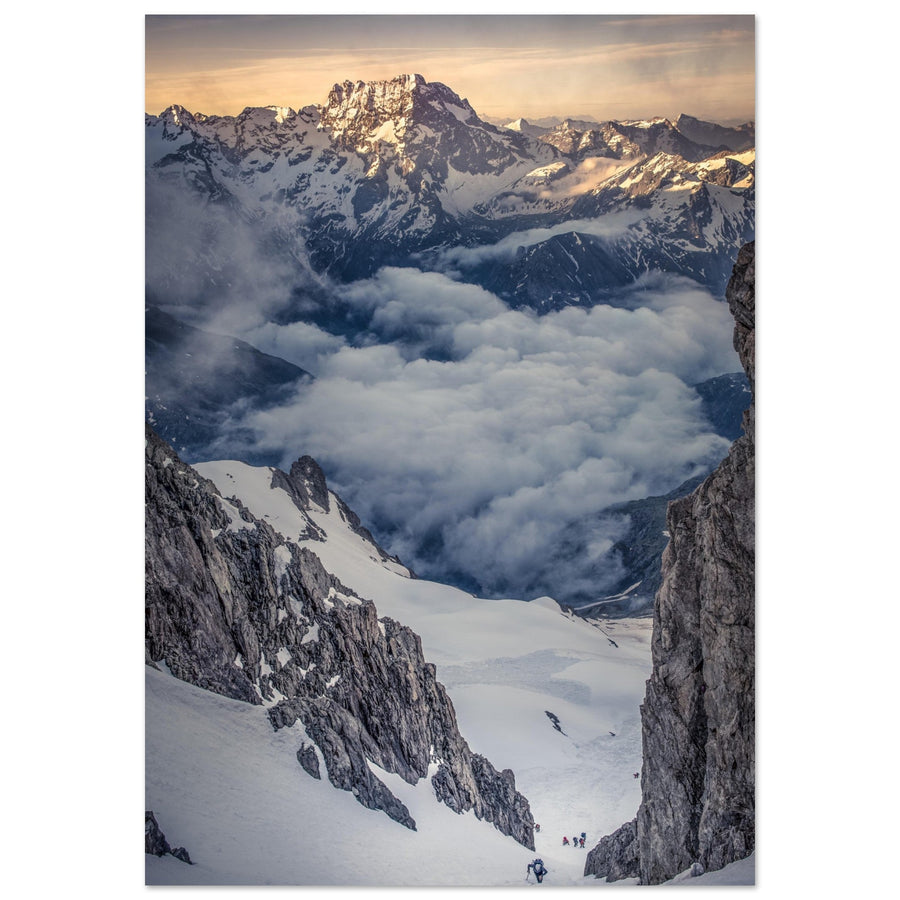
See in the gallery: Barre des Écrins photo print and photo of the couloir towards the Rouies plateau facing the Barre des Écrins.

4. La Meije from the Emparis plateau: The classic photo spot

Access: Hike from Besse, Le Chazelet, or Mizoën depending on the route. Indicative time: Often 3 to 5 hours depending on the loop and starting point. Best light: Sunrise or sunset. Ideal season: Summer and autumn.

La Meije seen from the Emparis plateau is one of the most photogenic scenes in the French Alps. The strength of this area comes from its balance: an open plateau, high-altitude lakes, gentle curves in the foreground, and, in the background, La Meije and its glaciers.

It is an ideal destination for working with reflections, morning light, autumn colors, and panoramic compositions. Unlike the glacial valleys in the heart of the Écrins, Emparis offers a more open, breathable, almost contemplative perspective.

Photo tips for the Emparis plateau

  • Arrive before sunrise if you are aiming for reflections on the lakes.
  • Watch the wind: even slight, it can completely break the mirror effect.
  • Use the shores as a foreground rather than just centering the lake.
  • In autumn, look for contrasts between golden grasses, cold sky, and glaciers.
  • Also work with a telephoto lens to isolate La Meije and its glaciers.

To deepen this type of image, re-read the guide on alpine reflections in mountain lakes.

Useful official link: Consult the page for the lakes of the Emparis plateau starting from Besse.

5. Lac Lérié and Lac Noir: The reflections of La Meije

Access: Hike on the Emparis plateau. Indicative time: Variable depending on start and loop. Best light: Sunrise on a calm day. Ideal season: Summer and autumn.

Lac Lérié and Lac Noir are two major spots for photographing La Meije in reflection. Their interest is not just to show a summit in a lake: it is to create a balanced image between water, sky, shore, reliefs, and light.

Sunrise is often the most interesting moment. The summits can light up before the plateau, creating a very clear separation between the still cold foreground and the glaciers already touched by the light.

Photo tips for Lacs Lérié and Noir

  • Prefer a windless morning to get clear reflections.
  • Position yourself low near the shore to enhance the mirror effect.
  • Keep a simple foreground: grasses, shore, stone, or water line.
  • Don't crop the reflection too tightly: leave space to breathe.
  • If the reflection is poor, switch to a telephoto lens and work on La Meije alone.

See in the gallery: La Meije and La Grave photo prints.

6. Lac du Goléon: Reflections, solitude, and view of La Meije

Access: Hike from Les Hières or Les Terrasses depending on the route. Indicative time: Approximately 3h30 from Les Hières according to the official route. Best light: Calm morning or late afternoon. Ideal season: Summer and autumn.

Lac du Goléon offers a wilder and more isolated atmosphere. The relationship with La Meije is different from that of the Emparis plateau: the lake, the refuge, the valleys, and the relief lines create a more intimate scene, less immediately iconic but very photographically strong.

This is an excellent spot for photographers who enjoy waiting for the light. If the wind drops, the reflections can become very strong. If the sky becomes cloudy, the place takes on a more dramatic atmosphere, perfect for deep and less postcard-like images.

Photo tips for Lac du Goléon

  • Arrive early enough to scout the shores before the best light.
  • Watch for clouds around the Meije: they can add a lot of depth.
  • Work with horizontal compositions to integrate the lake, valley, and summit.
  • Use a tripod during blue hour or just before sunrise.
  • Allow for extra time: the return journey can be long.

Useful official link: consult the Lac du Goléon itinerary from Les Hières.

7. La Grave, Villar-d’Arêne and the Lautaret: the Meije in majesty

Access: Road access via the Romanche valley, then viewpoints or varying walks. Indicative time: Easy to variable depending on the spot. Best light: Autumn, sunrise or sunset. Ideal season: Autumn and winter.

The La Grave, Villar-d’Arêne, and Col du Lautaret area is unmissable for photographing the Meije. It's an area with strong contrasts: golden larches, hanging glaciers, rocky faces, villages, clinging clouds, and changing light.

This area is particularly interesting in autumn, when the larches turn warm colors. The Meije then becomes a very powerful mineral backdrop, contrasting with the golden slopes of the foreground.

Photo tips around La Grave

  • Use autumn larches as a natural foreground.
  • Work with long focal lengths to bring the Meije closer.
  • Watch for clouds clinging to the glaciers: they add a lot of tension.
  • In winter, look for minimalist compositions with snow and ridge silhouettes.
  • Try panoramas if the light crosses the entire face.

See in the gallery: photos of La Meije and La Grave.

8. Ailefroide, Pelvoux and Vallouise: rock faces, glaciers and alpine light

Access: Summer road access to Ailefroide depending on the season, then various hikes. Indicative time: Variable depending on the objective. Best light: Morning or sunset. Ideal season: Summer and autumn.

Ailefroide, Pelvoux and the Vallouise valley offer a very alpine atmosphere. The rock faces, glaciers, torrents and forests create a variety of interesting subjects: high mountain scenes, golden light on the Pelvoux, details of rock faces, valley atmospheres and more vertical compositions.

Mont Pelvoux is particularly photogenic at sunset, when the light sculpts the glaciers and ridges. It is a very good subject for images that are both powerful and decorative.

Photo tips around Ailefroide and Pelvoux

  • Wait for the low light to reveal the volumes of Pelvoux.
  • Use torrents or valley lines to guide the eye.
  • Try vertical framing if the rock faces dominate the scene.
  • In unstable weather, watch for breaks of light on the glaciers.
  • Do not neglect more intimate scenes: forest, rocks, water, mist.

See in the gallery: photo of Mont Pelvoux and its glaciers at sunset.

9. Valgaudemar, Rouies and Sirac: the wild Écrins

Access: Valley hikes and high-altitude itineraries depending on objective. Indicative time: often long and variable. Best light: late afternoon, side light. Ideal season: summer and autumn.

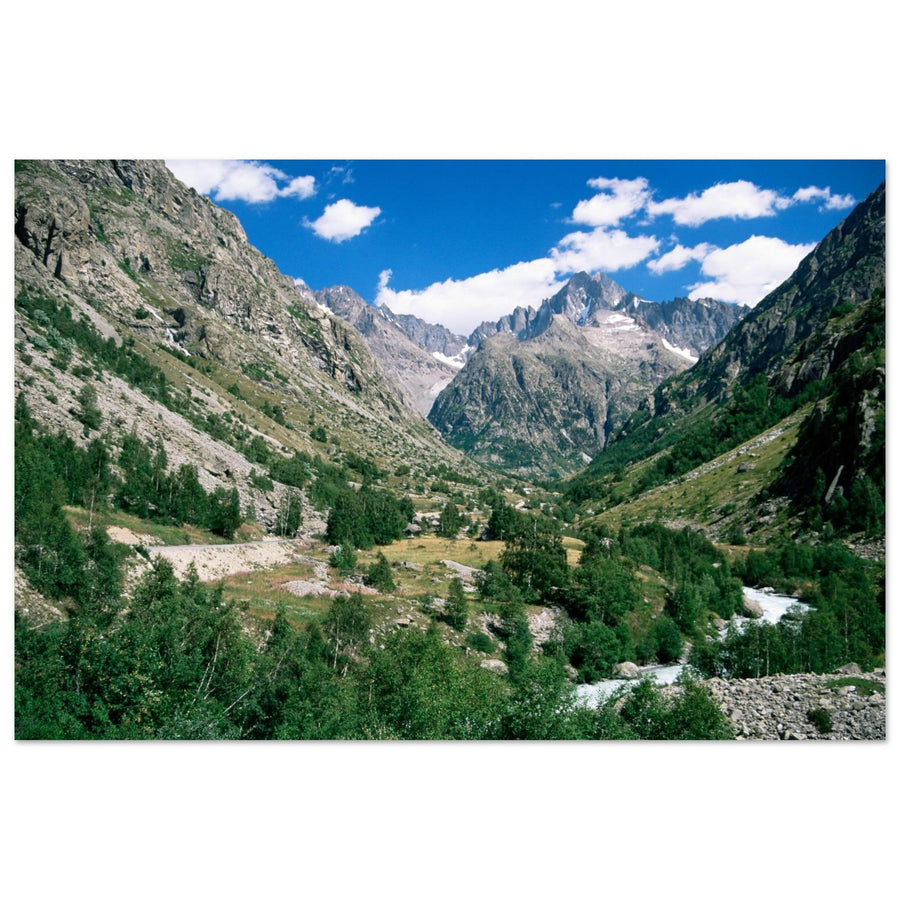
The Valgaudemar offers a wilder interpretation of the Écrins. The valleys are deep, the relief more austere, the peaks more isolated. It is an ideal sector for photographers who like strong atmospheres, couloirs, changing skies and less obvious high mountain scenes.

The Rouies, the Sirac and the glacial valleys allow for more graphic, sometimes almost abstract, images. A snow slope, a rope team, a dark ridge or light on a face can be enough to create a very powerful image.

Photo tips in Valgaudemar

  • Favor long focal lengths to isolate peaks and couloirs.
  • Work with contrasts between snow, rock and sky.
  • In unstable weather, pay attention to breaks in the light.
  • Integrate human scales with caution: alpinists, tracks, refuge, trail.
  • Allow a significant safety margin: itineraries can be long and isolated.

See in the gallery: photo of Sirac from the Rouies plateau and photo of alpinists near the Rouies plateau.

10. Dormillouse and Freissinières: a more intimate atmosphere

Access: Hike from the Freissinières valley. Indicative time: approximately 1h30 to 3h depending on the objective. Best light: soft morning or late afternoon. Ideal season: spring, summer and autumn.

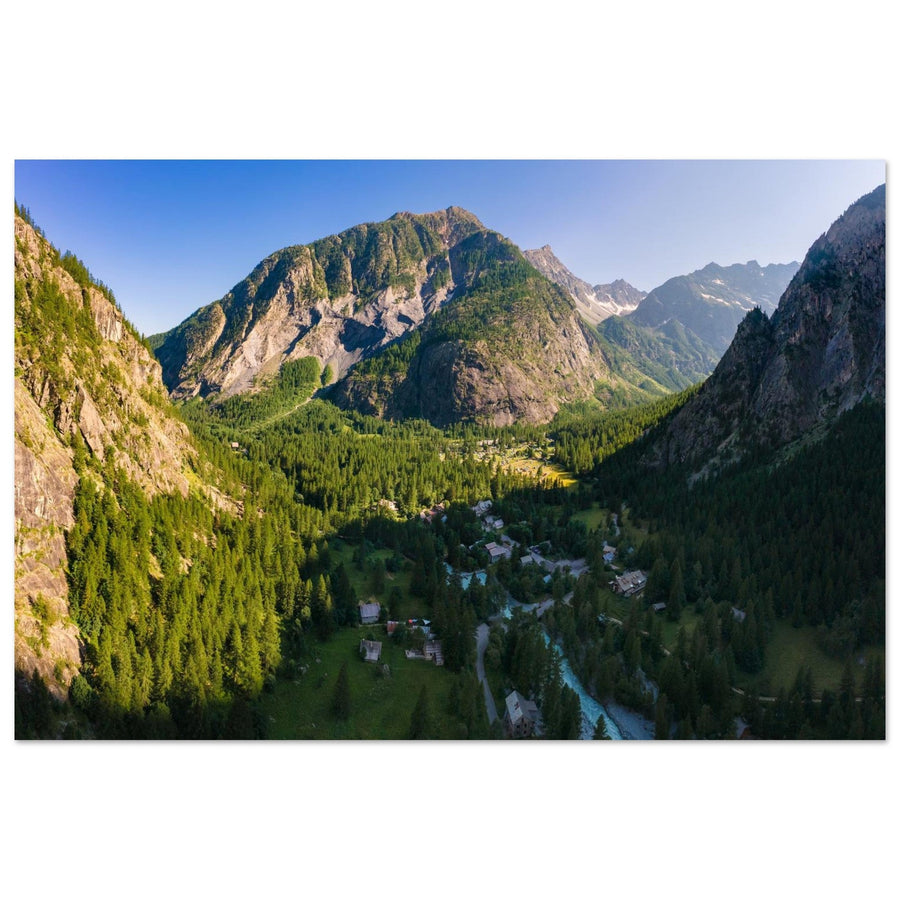
Dormillouse and the Freissinières valley offer a more intimate approach to the Écrins. Here, the interest is not only the spectacular high mountains: it is the waterfalls, the trails, the villages, the forests, the meadows and the atmosphere of a preserved valley.

This is an excellent area to vary the Écrins hub with less glacial, more sensitive, more narrative images. A trail, a waterfall, a mountain house or a soft light in the trees can tell another facet of the massif.

Photo tips for Dormillouse and Freissinières

  • Work on woodland and waterfall atmospheres in soft light.
  • Use a tripod if you want to slow down the water.
  • Compose with paths to guide the eye into the image.
  • In autumn, look for contrasts between warm foliage and cold rock.
  • Maintain a discreet approach in inhabited areas and sensitive environments.

Which season to choose for photographing the Écrins?

Spring

Spring can be interesting for torrents, residual snow, seasonal contrasts, and certain valley atmospheres. However, access to high-altitude areas can remain difficult. Before targeting a lake or a glacial route, always check snow conditions and accessibility.

Summer

Summer facilitates access to high-altitude refuges, lakes, and valleys. It is the most practical season to explore Pré de Madame Carle, the Glacier Blanc, Emparis, or Goléon. To avoid harsh light, prioritize very early starts, late afternoons, and light after a storm.

Autumn

Autumn is often the best photo season in the Écrins. The light becomes lower, the larches color, the peaks can receive the first snows, and the air is sometimes clearer. La Grave, Emparis, Goléon, and the wilder valleys then take on a particular intensity.

Snow-covered forest photographed by drone in the Écrins massif
In winter or after a snowfall, the Écrins become very graphic: forests, shadows, snow, and mineral textures.

Winter

Winter offers a more graphic interpretation: snow, dark ridges, strong contrasts, villages and silhouettes. Access is more limited, but some road viewpoints or valley resorts can offer very beautiful images without long hikes.

What photo equipment to bring to the Écrins?

The Écrins require versatile equipment. The landscapes are vast, but the best images often come from details: glacier, ridge, reflection, couloir, moraine line, light on a face or snow texture.

  • 16–35 mm: useful for lakes, valleys and wide foregrounds.
  • 24–70 mm: versatile for balanced compositions.
  • 70–200 mm: essential for isolating peaks, glaciers, ridges and light details.
  • Tripod: recommended for sunrise, blue hour, reflections and long exposures.
  • Polarizing filter: useful on some lakes, but to be used with caution with wide-angle.
  • Spare batteries: essential at altitude and in cold weather.
  • Headlamp: mandatory if you leave before dawn or return after sunset.
  • Warm and windproof clothing: necessary even in summer, especially if you wait a long time for the light.

Regulations and safety in the Écrins National Park

A large part of the most beautiful areas of the Écrins are located within or near the National Park. Regulations are strict to protect wildlife, flora, lakes, glaciers, and fragile environments.

In the heart of the park, dogs are prohibited, even on a leash or carried. Camping is prohibited. Bivouacking may be authorized, but it is strictly regulated: times, minimum distance, small tent, and respect for the site. Fires, waste, noise, drones, and sampling are also sensitive or prohibited subjects depending on the areas.

Before a photo outing, systematically check official information: weather, access times, trail conditions, snow cover, local regulations, road closures, and high-altitude conditions. A photo never justifies damaging a fragile environment or taking unnecessary risks.

Useful official links before an outing

Mistakes to avoid when photographing the Écrins

1. Underestimating distances

The Écrins are less accessible than some very convenient spots around Mont-Blanc. Many powerful images require a real hike, an early start, or good management of the return journey.

2. Photographing everything with a very wide-angle lens

The landscapes are vast, but wide-angle lenses can make the peaks appear too small. In the Écrins, a telephoto lens often better reveals ridges, glaciers, and textures.

3. Only waiting for blue skies

A uniform blue sky can result in flat images. The Écrins often become more powerful with clouds, side light, mist, a stormy sky, or breaks in the light.

4. Neglecting regulations

The massif is fragile and protected. Dogs, bivouacking, fires, drones, swimming, or trails may be regulated depending on the area. Always check the rules before your outing.

5. Trying to show everything

A photo of the Écrins often gains strength when it simplifies the subject: a ridge, a moraine, a glacier, a reflection, a light, a trace. Too many elements can dilute the image.

My photographer's advice

In the Écrins, I would seek less the perfect view than the right atmosphere. This massif does not always have the spectacular ease of Mont-Blanc or the Dolomites. Its strength comes from its raw character: glacier, rock, silence, altitude, isolated valley, harsh light, or fleeting glimpse.

If you want to create a strong image, choose a simple subject and wait for the light to give it depth. An illuminated ridge, a glacier in shadow, an imperfect reflection of the Meije or a snow slope swept by the wind can tell much more than an overly broad panorama.

Discover my Écrins photo prints

Part of my work on the Écrins massif is available as large format prints on aluminum Dibond. I select images that retain their strength once printed: Barre des Écrins, La Meije, Glacier Blanc, Emparis plateau, Rouies, Pelvoux, Valgaudemar and wild valleys.

Discover the Écrins massif photo prints

You can also explore the collection La Meije and La Grave, the wider collection of mountain landscape photo prints in the Alps, as well as my selection of the most beautiful images of the Alps on aluminum Dibond.

Some prints related to the Écrins

FAQ — Where to photograph the Écrins?

What is the best place to photograph the Écrins?

Pré de Madame Carle and the Glacier Blanc are among the best spots for photographing the glacial atmosphere of the Écrins. For reflections and views of the Meije, the Emparis plateau, Lac Lérié, Lac Noir, and Lac du Goléon are particularly interesting.

Where to photograph the Meije?

The best viewpoints of the Meije are around La Grave, Le Chazelet, the Emparis plateau, Lacs Lérié and Noir, as well as Lac du Goléon. Autumn light and sunrises are often very photogenic there.

Where to photograph the Écrins glaciers?

The Pré de Madame Carle and Glacier Blanc area is one of the best for photographing glaciers, moraines, and high mountain atmospheres. Glacier Blanc, Glacier Noir, and the high-altitude valleys are the main subjects.

What is the best season to photograph the Écrins?

Autumn is often the best photo season due to the low light, golden larches, clearer air, and first snows. Summer remains the most practical season for accessing high-altitude lakes and refuges.

Can you photograph the Écrins without a long hike?

Yes, some viewpoints are more easily accessible, particularly around La Grave, Lautaret, Vallouise or Pré de Madame Carle depending on the season. However, the most powerful spots often require a real hike.

Is bivouacking allowed in the Écrins National Park?

Bivouacking may be authorized, but it is strictly regulated. The rules depend on the core of the park, opening hours, distance from road access, and specific areas. Before any outing, check the official rules of the Écrins National Park.

Are dogs allowed in the Écrins National Park?

In the heart of the Écrins National Park, dogs are prohibited, even on a leash or carried. You must therefore check precisely if your itinerary crosses a core area before setting off.

What focal length to use to photograph the Écrins?

A wide-angle lens is useful for lakes, valleys, and foregrounds, but a telephoto lens is often essential for isolating ridges, glaciers, peaks, and light details. A 24–70 mm and a 70–200 mm already cover many situations.

Do you need a tripod to photograph the Écrins?

It is not mandatory during the day, but it becomes very useful at sunrise, during blue hour, for reflections, long exposures, and low-light scenes.

Which article should I read before a photo outing in the Écrins?

Before you go, I recommend reading the guides on sunrise, sunset, golden hour, and alpine reflections. These are the four most useful basics for a successful photo outing in the Écrins.


Back to blog

The most beautiful mountain landscape photo paintings :

Photographic Prints – The Most Beautiful Mountain Images

Here is my best-of selection : graphic ridges , high-altitude lakes , glaciers , forests and starry nights . Each visual is edited in photo board on Dibond aluminummatte , clear, glare-free finish — for elegant and durable wall decoration .

Choose the mountain view that speaks to you — golden sunrise , blue hour on a lake, minimalist black & white — I make it in the format and finish of your choice, made in France and ready to hang .

What you receive

A gallery-quality aluminum Dibond print , lightweight and sturdy, ready to hang above a sofa, desk or staircase.

Decorating advice

Bright wall: favor reflections and golden hours .
Design spirit: edges and peaks in black & white .
Large wall: 90×60 or 120×80.

Manufacturing & Delivery

Production in France , careful control, protected packaging. Fast delivery times depending on the format.

Continue by theme:

👉 Order your mountain photo print : gallery quality, made in France, formats of your choice.