Where to see marmots in the Alps?
Updated July 27, 2026
The Alpine marmot (Marmota marmota) is one of the easiest animals to associate with the Alpine landscapes. Its whistle echoes across the mountain pastures, its silhouette occasionally appears at the edge of a trail, and its burrows are visible in the high-altitude meadows. However, seeing them under good conditions requires more than just going to a popular spot.
Marmots spend a large part of the year underground. When active, their presence varies depending on the season, weather, temperature, time of day, and human traffic. Therefore, a known area never guarantees an observation. You need to take the time to scan the slopes, listen for whistles, and above all, avoid turning an encounter into a chase.
This guide presents the main areas in the French Alps where marmots can be observed, with particular attention to the Vanoise, Écrins, Queyras, and Mercantour. It also explains when to go, how to interpret their behavior, how to photograph them, and why you should never feed them.

The Essentials in 30 Seconds
- Most obvious massif: Vanoise and Haute Maurienne, where marmots occupy numerous mountain pastures and rocky areas.
- Iconic family spot: Prapic and Saut du Laire in the Écrins, known for their meadows and marmot colonies.
- Very favorable territory: Queyras, with its large alpine lawns, Haut-Guil, and the Ristolas–Mont Viso reserve.
- Best Southern Alps scenery: Mercantour, especially the Haut-Verdon, the surroundings of Lac d’Allos, and the major passes.
- General period: From April to September or October depending on altitude and conditions; marmots hibernate during the bad season.
- Best times: Morning and late afternoon during hot weather; observation is still possible during the day when temperatures are cool.
- Key tip: A whistle means an alert. Stay calm, do not approach the burrow, and let the animal resume its activity.
- Absolute rule: Never feed a marmot, not even with bread, fruit, biscuits, or a cereal bar.
Table of Contents
- Where to see marmots in the French Alps?
- Which area to choose for your outing?
- Comparative table of the best areas
- Marmots in Vanoise and Haute Maurienne
- Marmots in the Écrins
- Marmots in the Queyras
- Marmots in the Mercantour
- Marmots around Mont-Blanc and the Aiguilles Rouges
- Other Alpine massifs to know about
- What is the best season?
- What time to observe marmots?
- Understanding whistles and postures
- Observing near a burrow without disturbing
- Why you should never feed a marmot
- How to photograph marmots?
- Observing marmots with children
- Dogs, trails, and regulations
- The most common mistakes
- Discover our marmot photo prints
- Continue with the Alpine wildlife guides
- FAQ
Where to see marmots in the French Alps?
Marmots primarily live in open environments: high-altitude meadows, alpine lawns, clearings, scree slopes, and sunny slopes where the soil allows for burrowing. In the Alps, they can occupy a wide altitudinal range, but they are most often found above the treeline, in the subalpine and alpine zones.
The most favorable areas combine three elements: vegetation rich enough for feeding, soil suitable for building burrows, and good visibility for spotting predators. Totally mineral slopes, very dense forests, and constantly frequented areas are generally less suitable.
There's no need to look for an exact coordinate. Colonies move, some burrows are abandoned, and human traffic can alter habits. Instead, plan an itinerary through open mountain pastures, then slowly observe the edges of rocks and small mounds near burrows.
Quickly choose your observation area
- You want to maximize your chances during an Alpine stay: choose Vanoise or Haute Maurienne.
- You are looking for an accessible family walk: look towards Prapic and Saut du Laire in the Écrins, checking daily conditions.
- You love large dry alpine pastures and high-altitude villages: prefer Queyras.
- You want to combine marmots, southern light, and mineral landscapes: choose Mercantour.
- You are staying in Chamonix: the reserves and balconies of the Aiguilles Rouges offer favorable habitats, without guaranteeing an encounter.
- You are photographing: leave early, bring a 100–400mm lens or equivalent focal length, and never set up in front of a burrow entrance.
Comparative table of the main areas
| Area | Atmosphere | Favorable Period | General Accessibility | Photo Interest |
|---|---|---|---|---|
| Vanoise and Haute Maurienne | Mountain pastures, lakes, passes, high peaks, and open meadows | Late spring to early autumn | From easy to challenging depending on the area | Marmot in a very clear alpine landscape |
| Prapic and Champsaur, Écrins | Flowery meadows, torrent, plateau, and agricultural valley | Spring and summer | Several family walks, depending on the itinerary | Observation of colonies and meadow scenes |
| Queyras and Haut-Guil | Dry lawns, larches, high-altitude villages, and Mont Viso | Spring, summer, and early autumn | Highly variable | Clear light, open environment, and silhouettes |
| Mercantour and Haut-Verdon | Passes, light rocks, lakes, and southern mountains | Late spring to autumn | Easy near some passes, more challenging elsewhere | Strong contrasts, rocks, and group scenes |
| Aiguilles Rouges and Chamonix valley | Balconies, lawns, lakes, and views of Mont-Blanc | Summer and early autumn | Moderate to challenging | Animal positioned against glaciers and peaks |
Where to see marmots in Vanoise and Haute Maurienne?
Vanoise is probably the easiest territory to recommend for a first search. Marmots are present in many valleys, around high-altitude meadows, and in areas where trails cross open mountain pastures. Haute Maurienne gathers several villages and resorts providing access to these habitats: Aussois, Val Cenis, Bessans, Bonneval-sur-Arc, La Norma, or Valfréjus.
The Bellecombe plateau, above Val Cenis, is regularly cited for observation. The Mont-Cenis pastures, areas near the lakes, and certain itineraries around Aussois also offer good possibilities. Presence remains variable depending on the time, heat, human traffic, and vegetation conditions.
In this massif, the main risk is to consider the animals as accustomed. Some marmots live near roads or frequented paths and seem unafraid. This tolerance does not mean they should be touched, fed, or surrounded by several people. Let them cross and always keep burrow access clear.
To prepare the landscape around your outing, consult the guide Where to photograph Vanoise? and the Vanoise photo prints.
Where to see marmots in the Écrins?
In the Écrins, the Prapic sector, at the end of the Orcières valley in Champsaur, has become one of the best-known places to observe marmots. The Charnière plateau and the Saut du Laire path cross meadows where colonies have been monitored for a long time by the National Park.
This area is interesting because it combines observation, agricultural landscape, torrents, and the reliefs of Champsaur. Marmots can appear near meadows or low walls, but it is important to stay on the paths and avoid crossing mowing areas. A meadow is both a habitat and a workspace for farmers.
Other sectors of the massif can offer encounters: Champoléon valley, Vallouise, Valgaudemar, Lauvitel, or GR54 itineraries. However, the size of the Écrins makes it impossible to speak of a single "spot." A valley favorable one day may remain silent the next.
Spring is particularly interesting when animals emerge from hibernation and find the first vegetated areas. Accesses can still be wet, snowy, or fragile. Check the trail conditions before leaving.
Prepare for the massif with our guide Where to photograph the Écrins? and discover the Écrins photo prints.
Where to see marmots in the Queyras?
The Queyras boasts vast alpine lawns and a significant marmot population. The open slopes, the mountain pastures of Haut-Guil, the surroundings of Saint-Véran, Molines-en-Queyras, Ceillac, Abriès-Ristolas, and the GR58 stages cross numerous favorable habitats.
The Ristolas–Mont Viso nature reserve is a remarkable area for discovering the wildlife of Haut-Guil. Organized outings by the Park emphasize silent and distant observation. Marmots share these environments with chamois, birds of prey, and domestic herds.
The Queyras is very interesting for environmental photography. The dry slopes, light-colored stones, larches, and peaks near Mont Viso provide different backgrounds from those of the Vanoise. However, the sun can quickly become harsh: prioritize morning or late afternoon for the light, even if the animals sometimes remain visible in the middle of the day.
Respect pastoral activities. Do not cross a herd to follow a marmot, close gates when they are provided for that purpose, and adapt your behavior in the presence of guard dogs.
Where to see marmots in the Mercantour?
The Mercantour hosts marmots on numerous sunny and open slopes. The Haut-Verdon, around Lac d’Allos and Mont Pelat, is one of the most obvious areas. The roads of La Cayolle, La Bonette, and Larche also cross habitats where marmots can appear near embankments and meadows.
This proximity to the road requires particular vigilance. A marmot accustomed to cars can cross without warning. You should never stop in a dangerous place, attract an animal with food, or step onto the roadway to take a photo.
In wilder valleys, encounters often occur at the edge of scree slopes or on a small mound offering an unobstructed view. The rocks and light of the Southern Alps produce highly contrasting images. A telephoto lens allows for a soft background without reducing the distance.
Discover the Mercantour photo prints.
Where to see marmots around Mont-Blanc and the Aiguilles Rouges?
On the Aiguilles Rouges side, the lawns, scree slopes, and balconies overlooking Chamonix can host marmots. The nature reserves of the massif protect tiered environments between forests, heaths, grasslands, and high mountains. Observation remains less predictable than in some well-known mountain pastures of Vanoise or the Écrins.
The Grand Balcon Sud and the areas accessible from La Flégère or Planpraz cross favorable habitats, but their high summer traffic alters conditions. Leaving early reduces human pressure, improves light, and increases the chances of observing natural behavior.
Do not leave the trails to reach a visible burrow on a slope. Nature reserves concentrate sensitive species and habitats far beyond just marmots. Photography must remain compatible with regulations and the tranquility of the areas.
To prepare your framing for the Mont-Blanc massif, consult the guide Where to photograph the Aiguilles Rouges?.
Other Alpine massifs where to encounter marmots
Beaufortain
The mountain pastures of Beaufortain, the surroundings of large dams, and high-altitude itineraries offer favorable habitats. Marmots are easier to spot in open meadows than in very wooded areas.
Belledonne
In Belledonne, their presence is possible around high-altitude lawns and valleys. The terrain is often rockier and access more challenging. Encounters should remain a bonus of the hike, not a guarantee.
Aravis
The combes, mountain pastures, and grassy slopes of the Aravis can host marmots. Coexistence with pastoralism is strong there: stay on the itineraries and respect herds as well as mowing areas.
Vercors
The Vercors has environments very different from the internal Alps. Marmots are present on certain plateaus and open areas, but they are less systematically associated with the massif than chamois or ibex.
What is the best season to see marmots?
April and May: emergence from hibernation
Emergence from hibernation depends on altitude, exposure, and snow cover. In the lowest and most exposed areas, the first marmots can reappear as early as spring. They then need to replenish their reserves and look for the first plant shoots.
This period is interesting for observation, but the animals emerge emaciated, and the ground can be fragile. Stay on the paths and avoid making them run. Unnecessary flight costs energy when their reserves are low.
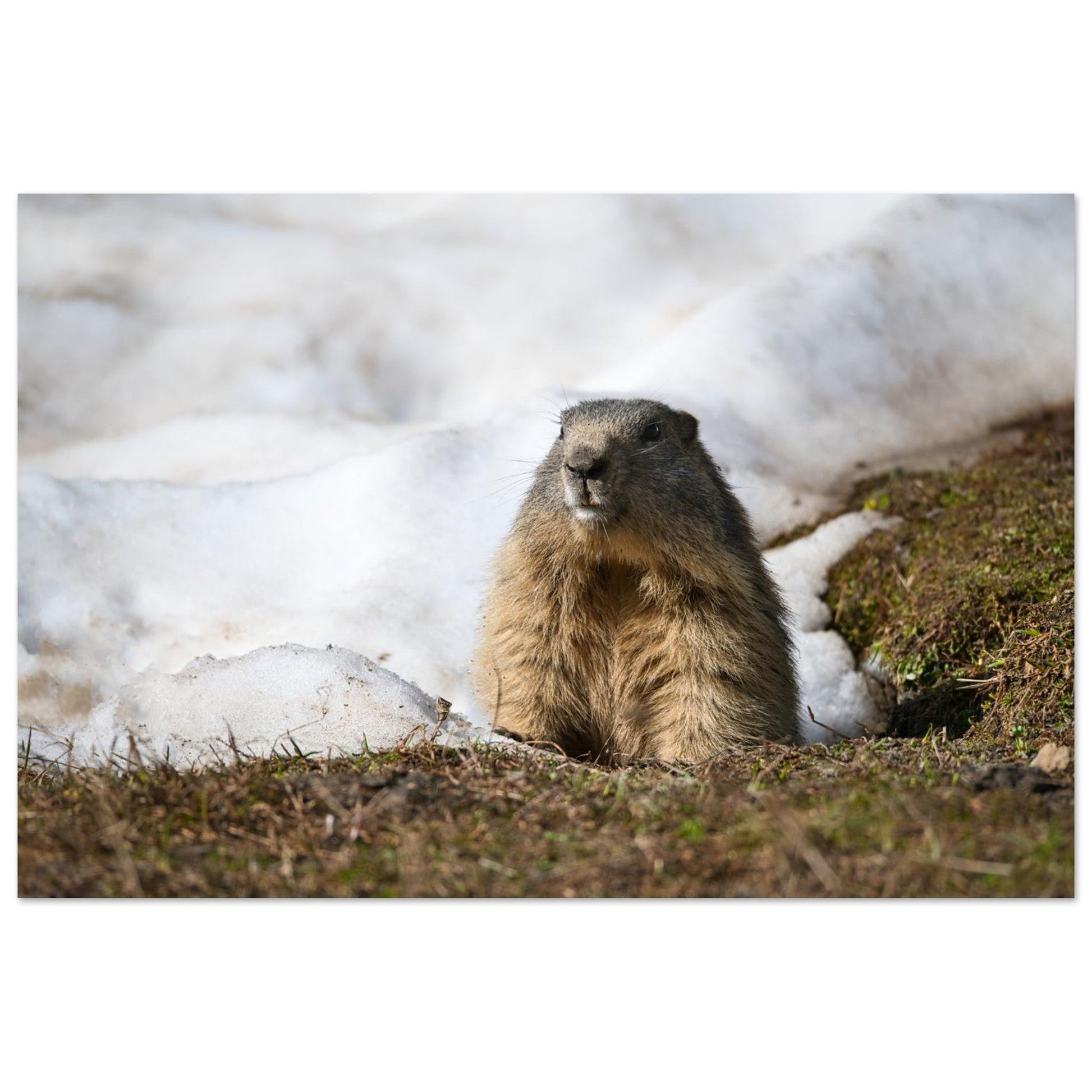
June and July: Family activity
Early summer is a period of intense activity. Meadows are rich, days are long, and young marmots begin to emerge from their burrows. It is also the peak tourist season. Groups of visitors can quickly surround an animal or block access to a burrow.
Be extra careful with young marmots. Never place yourself between a young marmot and the burrow entrance, even if the scene appears calm.
August and September: Building up reserves
In late summer, marmots spend a lot of time feeding. Their silhouette becomes more massive as they accumulate the reserves needed for hibernation. They can remain visible for a long time in the meadows when the temperature is pleasant.
The light in September is often softer, and visitor numbers decrease. This is an excellent time for photography, provided you do not distract them from their feeding activities.
October to early spring: Hibernation
The marmot is a true hibernator. It spends the cold season in a sealed burrow, with a greatly slowed metabolism. The duration varies depending on conditions and altitude, but you should not plan a winter outing hoping to see one.
A snow-covered or blocked burrow is not abandoned. Never dig, move stones, or let a dog sniff or scratch an entrance.
What time of day to observe marmots?
Marmots are diurnal. Therefore, they can be seen throughout the day, contrary to popular belief. Their activity mainly depends on temperature, weather, predators, and visitor numbers.
In summer, when it's hot, mornings and late afternoons are generally more favorable. Animals enjoy more moderate temperatures, and the light is better for photography. In the middle of the day, they may stay near the burrow, rest, or seek a less exposed area.
In spring or on cloudy days, mid-day observation is still entirely possible. The main thing is to walk slowly and observe before arriving in the middle of the colony.
Field tip
Stop before the area where the whistling starts. Take out your binoculars, look for small mounds and burrow entrances, then wait. By remaining still, you will often see animals reappear that a passing group had caused to retreat.
Understanding whistles and postures
The marmot's sharp whistle is an alarm call. It warns other individuals of potential danger. Do not respond, whistle back, or try to provoke the call to get a video.
A marmot standing on its hind legs is not necessarily "posing." It may be surveying its surroundings. If it stares at you, stops feeding, or repeatedly whistles, reduce your presence: stay still or move away.
Conversely, a marmot that is eating, grooming, moving calmly, or interacting with another individual is exhibiting more natural behavior. This is what a photographer should look for: a scene observed without intervention.
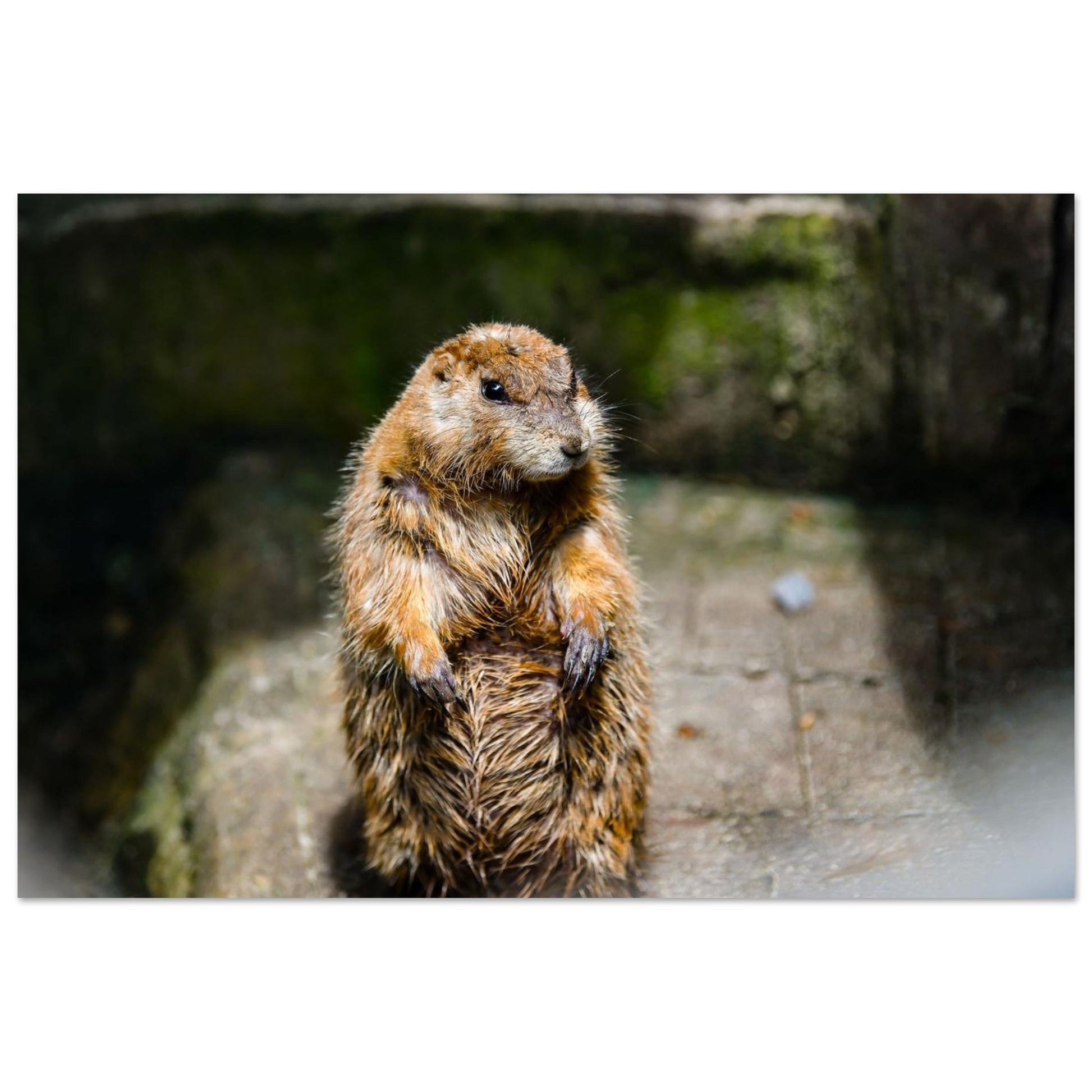
Observing a marmot near its burrow without disturbing it
The burrow is central to a marmot's life: an immediate refuge, breeding site, and hibernation shelter. A colony can use multiple entrances connected to different tunnels. Therefore, the most visible opening is not necessarily the only escape route.
Do not sit in front of an entrance, even to wait for an exit. Do not place a camera, phone, or video camera at the edge of the hole. Do not throw stones or tap on the ground. These behaviors prevent the animal from using its refuge normally.
If a marmot goes into its burrow when you arrive, move away and wait at a distance. Seeing it re-emerge is not a goal that justifies prolonged immobilization a few meters from the entrance.

Why you should never feed a marmot
Feeding a marmot is one of the most serious and common mistakes. Bread, biscuits, fruit, crisps, and cereal bars are not part of its natural diet. Foods that are too fatty, too sugary, or unsuitable can cause health problems and compromise the quality of reserves used during hibernation.
Feeding also alters behavior. A marmot accustomed to receiving food approaches humans, roads, and parking lots. It may lose some of its vigilance, become insistent, and be more exposed to accidents.
Good observation is done without attracting the animal. Put away all food, explain the rule to children, and leave no organic waste on site.
Useful official sources
- Vanoise National Park — the marmot and the risks of feeding
- Écrins National Park — biology, burrows, and observation
- Mercantour National Park — habitat and altitudinal distribution
- Queyras Regional Natural Park — alpine grassland fauna
- Haute Maurienne Vanoise — observation areas and times
- Mercantour National Park — caution on mountain roads
How to photograph marmots?
The marmot is an excellent subject for beginners in wildlife photography because it alternates between calm phases and short movements. However, it still requires a sufficient shutter speed: the head and whiskers move quickly, even when the body appears still.
- Focal length: a 100–400 mm is very versatile; a longer focal length helps when the burrow is far away.
- Shutter speed: start around 1/800 to 1/1250 s for a standing or slowly moving marmot.
- Autofocus: Continuous AF with priority to the nearest eye.
- Aperture: f/5.6 to f/8 for a single animal; close down more for two subjects on slightly different planes.
- ISO: use auto ISO to maintain shutter speed when the light changes.
- Composition: leave space in front of the gaze and show part of the burrow, rocks, or alpine pasture.
- Angle: avoid systematically placing yourself above; a lower angle gives more presence, only if the path allows it.
- Burst mode: use short sequences when the animal stands up, interacts, or moves.
The complete guide Photographing mountain animals: equipment, settings, and tips details settings, snow, autofocus, composition, and post-processing.
Observing marmots with children
The marmot is often one of the first wild animals children want to see in the mountains. The outing can become an excellent learning experience if the rules are established before the encounter.
- Walk calmly and avoid running towards the animal.
- Speak softly when marmots are visible.
- Never feed them.
- Do not approach young marmots or touch a burrow entrance.
- Look with binoculars rather than with a phone held a few meters away.
- Accept that an outing may end without an observation.
Choose an itinerary suited to the family's actual level. The potential presence of marmots should not make you forget the altitude, sun, thunderstorms, snow patches, and the return journey's duration.
Dogs, trails and regulations
Rules regarding dogs vary depending on protected areas. In the core of some national parks, they are forbidden even on a leash. Elsewhere, a leash may be mandatory or highly recommended.
A dog can cause a marmot to flee into its burrow, chase a young marmot, or dig at a burrow entrance. Even a calm and obedient animal must be managed before entering an area frequented by marmots.
Also respect mowing areas, fences, herds, and protective dogs. The best observation point often remains the trail: it makes your trajectory predictable and limits trampling.
Most frequent mistakes
1. Running towards the first marmot spotted
Rapid movement triggers the alarm and sends the entire colony into their burrows. Stop before the area and use binoculars.
2. Interpreting whistling as a show
The call indicates potential danger. Do not try to provoke it and do not respond.
3. Settling in front of the burrow
The animal must be able to enter and exit freely. Move away and increase the distance.
4. Giving a piece of food
Even a small amount encourages habituation and can harm the animal's health.
5. Using too slow a shutter speed
The head may appear still, but small movements make the eye blurry. Increase the shutter speed before trying to reduce the ISO.
6. Forgetting the environment
A tight portrait is appealing, but a marmot in its alpine pasture tells more of the mountain story. Vary your framing without constantly changing position.
7. Sharing the exact burrow location in real time
A very precise location can quickly attract several visitors. Mention the massif or valley rather than a specific burrow entrance.
8. Stopping dangerously on a mountain pass road
In Mercantour and other road sectors, only stop at an authorized location. A photograph never justifies stopping in the roadway.
Discover our marmot photo prints
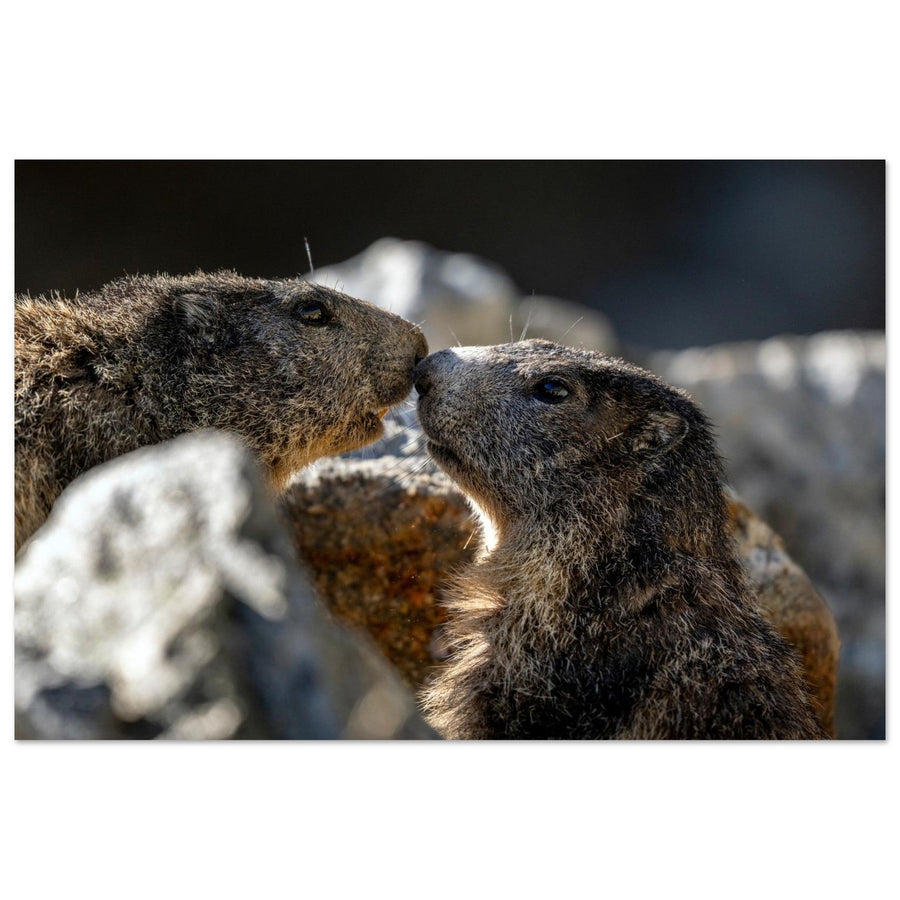
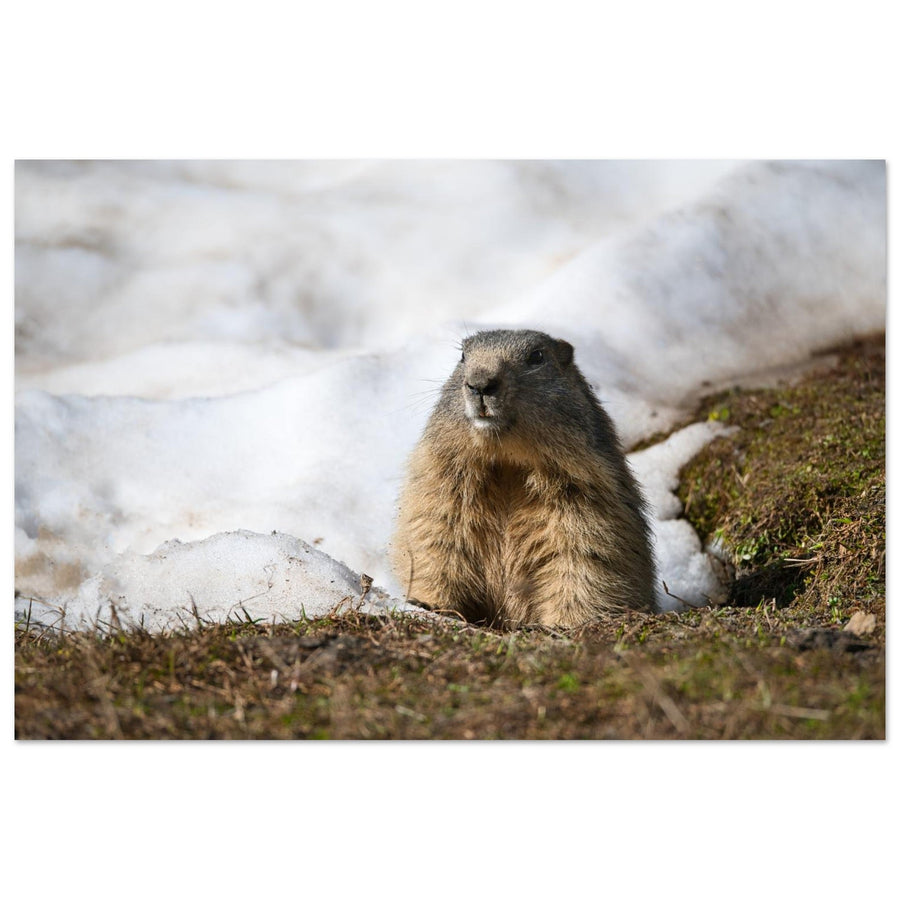
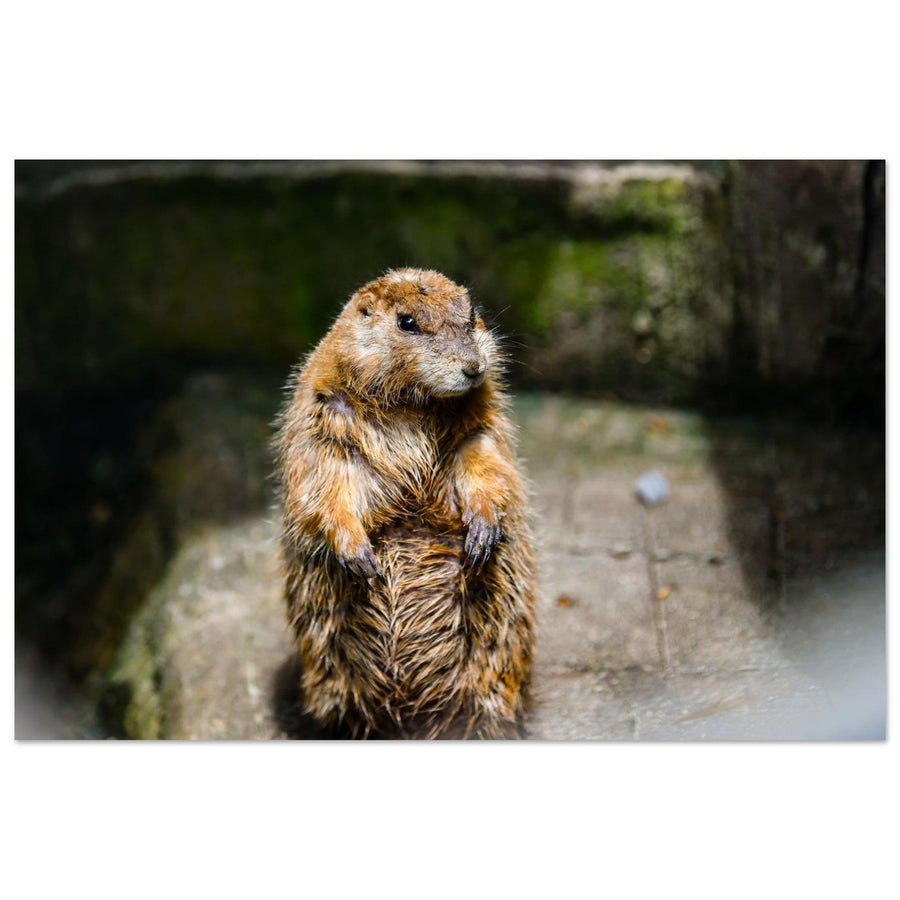
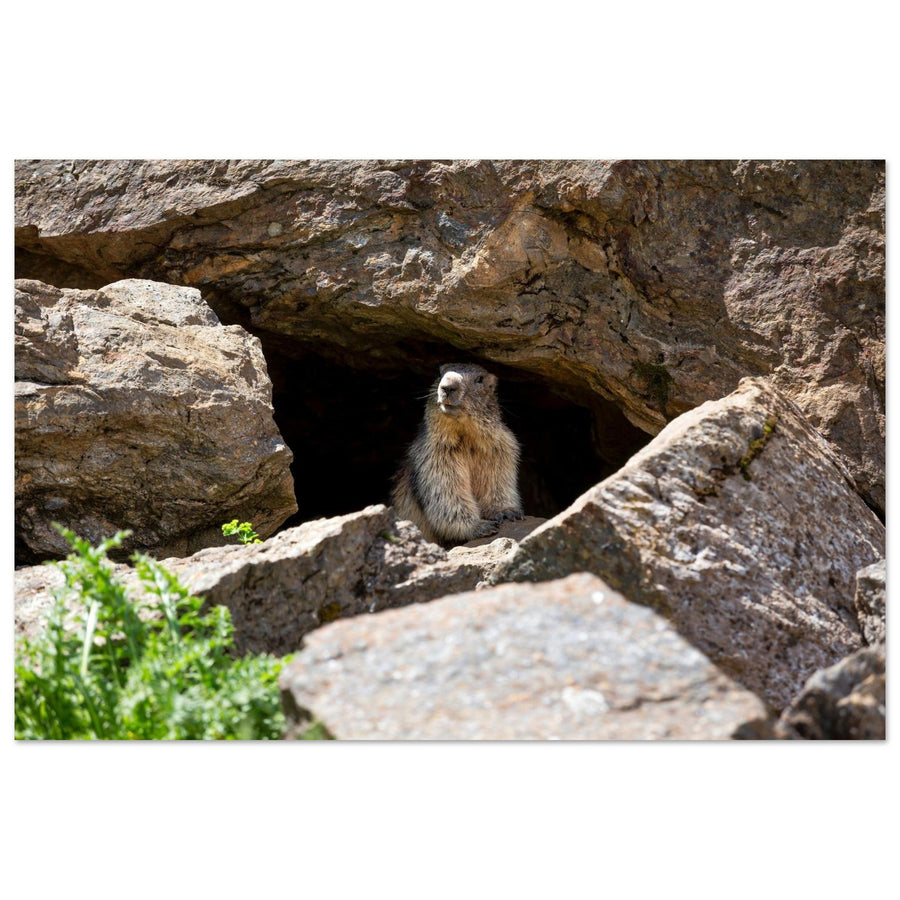
The AluArtMountains collection currently features several complementary poses: two marmots in the Mercantour, a young marmot standing, an outing at snowmelt, and an animal observing from its burrow. Each product sheet indicates the photographer and available geographical information.
To see in the gallery
- Discover all marmot photo prints
- Photo of Two Alpine Marmots in the Mercantour — photography by Michel PERES
- Photo of a Young Alpine Marmot — photography by Wirestock Creators
- Photo of an Alpine Marmot at Snowmelt — photography by LucileB
- Photo of an Alpine Marmot at its Burrow Entrance — photography by Davesayit
To expand your selection, also check out our mountain animal photo prints and ibex photo prints.
Continue with the Alpine wildlife guides
This guide is part of a mini-cluster dedicated to observing and photographing mountain animals:
FAQ — Where to see marmots in the Alps?
What is the best place to see marmots in the Alps?
The Vanoise and Haute Maurienne offer many possibilities. Prapic in the Écrins, Queyras, and Haut-Verdon in the Mercantour are also excellent territories. However, no sighting is guaranteed.
When do marmots emerge from hibernation?
Emergence generally occurs in spring, often between April and May, depending on altitude, exposure, and snow cover. In high-altitude or still snowy areas, it may be later.
Can you see marmots in winter?
Not under normal conditions. Marmots hibernate in a sealed burrow during the cold season. You should never dig or try to wake an animal.
What time should you choose to see marmots?
In warm weather, mornings and late afternoons are often the best times. In cool or cloudy weather, marmots can remain active during the day.
Why do marmots whistle?
Whistling is an alarm call intended to warn other marmots of danger. If whistling increases upon your arrival, remain still or move away.
Can you feed marmots?
No. Human food is unsuitable, can harm their health, and encourages habituation to visitors, roads, and parking lots.
How far should you keep your distance?
There isn't a single distance. Stay far enough away so that the marmot continues to eat, move, or groom normally. If it stares at you, whistles, or goes into its burrow, increase your distance.
How to spot a marmot burrow?
Entrances often appear in a meadow, under a stone, or at the edge of a scree. They may be accompanied by disturbed earth and several tracks. Do not approach to check if the burrow is occupied.
What lens should I use to photograph a marmot?
A 100–400 mm is very versatile. A longer focal length allows you to keep more distance. A 70–200 mm may be sufficient when the animal is naturally close to the trail or to show the landscape.
What shutter speed should I use to photograph a marmot?
A base of 1/800 to 1/1250 s ensures sharp images of head movements and short movements. Increase it further if the animal runs or interacts quickly.
Are dogs allowed near marmots?
Regulations depend on the sector. They are forbidden in some park cores and must be kept under control elsewhere. A dog must never chase a marmot or dig near a burrow.
Can you see marmots with children?
Yes, by choosing a suitable hike and explaining the rules: walk calmly, do not feed, do not touch the burrow, and observe with binoculars.