Where to photograph the Chartreuse? Cliffs, forests, and field tips
Share
Updated June 30, 2026
Photographing the Chartreuse is entering a more intimate, more forested, and more mysterious mountain range than the grand glacial landscapes of the Alps. Here, limestone cliffs, deep forests, rounded ridges, mists, alpine pastures, waterfalls, and viewpoints compose highly atmospheric images, sometimes gentle, sometimes steep, but always very recognizable.
In this guide, I share the best places to photograph the Chartreuse, with a field approach: access, estimated time, ideal light, season, composition, recommended equipment, regulations, mistakes to avoid, and links to my technical guides. The goal is not just to list peaks, but to understand how to build a strong image in a massif where forests, clouds, cliffs, and mists often play as important a role as the summits themselves.
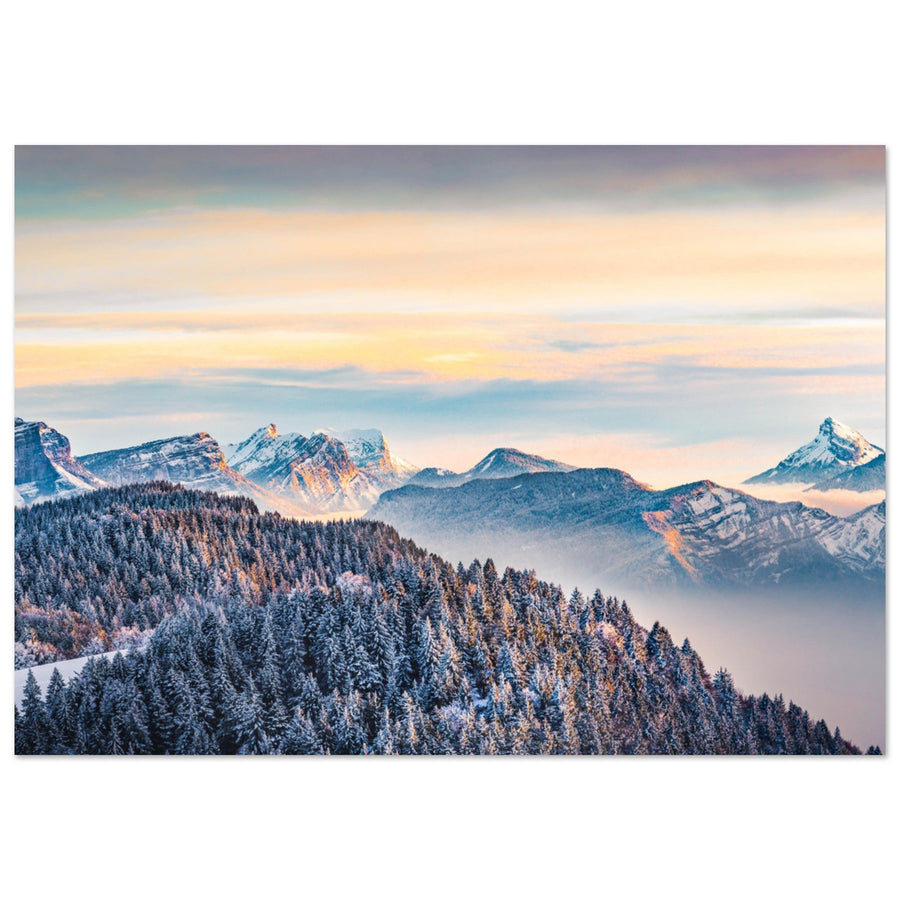
As a mountain photographer since 2017, I seek out scenes in the Chartreuse that retain their power when printed in large format: sunsets on snowy ridges, Mont Granier under clouds, Dent de Crolles above the Grésivaudan valley, Chamechaude in low light, misty forests, limestone cliffs, and distant views from the Croix du Nivolet. You can find some of this work in my collection of Chartreuse photo prints, printed in France on Dibond aluminum.
The essentials in 30 seconds
- Most emblematic spot: Chamechaude, the highest point of the massif, very striking at sunrise or sunset.
- Most graphic spot: Dent de Crolles, for its limestone cliffs and views of the Grésivaudan valley.
- Most spectacular spot: Mont Granier, massive, steep, and very photogenic under clouds.
- Most accessible spot: Charmant Som, for its alpine pastures, open views, and simple compositions.
- Waterfall spot: Cirque de Saint-Même, for its forests, torrents, waterfalls, and cliffs.
- Best decorative angle: forests, mists, cliffs, snow, and soft light.
- Best season: autumn for mists and forests; winter for graphic ridges; spring for waterfalls.
- Key tip: In Chartreuse, look for the atmosphere before the panorama: mist, forest, limestone, silence, light.
Table of Contents
- Why the Chartreuse is an exceptional photographic playground
- Table of the best photo spots in Chartreuse
- 1. Chamechaude
- 2. Dent de Crolles and Col du Coq
- 3. Mont Granier
- 4. Charmant Som
- 5. Cirque de Saint-Même
- 6. Grande Chartreuse and Saint-Pierre-de-Chartreuse
- 7. Plateau des Petites Roches
- 8. Chartreuse Forests, Firs, and Mists
- 9. External Viewpoints: Croix du Nivolet, Revard, and Grenoble
- 10. The Chartreuse in winter
- Which season to choose?
- What photo equipment to bring?
- Regulations and safety
- Mistakes to avoid
- Discover my Chartreuse photo prints
- FAQ
Why the Chartreuse is an exceptional photographic playground
The Chartreuse has a very different personality from other Alpine massifs. It does not have the monumentality of Mont Blanc, the high glacial mountains of the Écrins, or the open lakes of the Vanoise. Its strength comes from elsewhere: limestone cliffs, deep forests, dark ridges, mists, enclosed valleys, side lighting, and almost secret atmospheres.
It is a very interesting massif for photographers who love ambiance. In Chartreuse, the weather plays a central role: a sea of clouds, a break in the light, a forest mist, fresh snow on the fir trees, or a stormy sky against a cliff can transform a simple scene into a very strong image.
To capture a successful photo of Chartreuse, it's often best to avoid the reflex of the grand panorama. The massif lends itself very well to tighter framing: a cliff, a forest, a ridge, a road, a cross, a waterfall, an isolated peak in the mist. You can supplement this guide with my articles on mountain photography at sunrise, mountain photography at sunset, the golden hour, the blue hour, and storms in the mountains.
The best photo spots in Chartreuse
| Spot | Access | Estimated Time | Best Light | Ideal Season | Ideal for |
|---|---|---|---|---|---|
| Chamechaude | From Col de Porte or nearby sectors depending on conditions | 2 to 3 hours depending on itinerary | Sunrise, sunset, side light | Autumn, winter, spring | Emblematic peak, panorama, ridges |
| Dent de Crolles / Col du Coq | From Col du Coq or Plateau des Petites Roches | 1.5 to 3 hours depending on objective | Sunset, clear morning, mist | Autumn, spring, summer | Cliffs, Grésivaudan, Belledonne |
| Mont Granier | From Entremont-le-Vieux, Col du Granier or external viewpoints | Variable depending on itinerary | Storm, side light, sunset | Autumn, spring, winter | Massive cliff, clouds, silhouette |
| Charmant Som | From Saint-Pierre-de-Chartreuse or alpine pasture road depending on season | Easy to 2 hours depending on access | Sunset, golden hour | Summer, autumn, winter | Alpine pastures, open views, simple compositions |
| Cirque de Saint-Même | From Saint-Pierre-d’Entremont | Easy to 2 hours depending on loop | Soft light, cloudy weather | Spring, autumn | Waterfalls, forest, cliffs |
| Grande Chartreuse | Saint-Pierre-de-Chartreuse, Saint-Hugues, museum and forest roads | Easy to variable | Mist, morning, autumn | Autumn, winter, spring | Forests, silence, monastic atmosphere |
| Plateau des Petites Roches | Road access from Grésivaudan valley | Easy to variable | Sunrise, sunset, sea of clouds | Autumn, winter | Viewpoints, Dent de Crolles, valley |
| Chartreuse Forests | Numerous forest sectors and high-altitude roads | Variable | Mist, snow, diffuse light | Autumn, winter | Fir trees, fog, textures, minimalism |
| Croix du Nivolet / Revard | Neighboring Bauges massif, view towards Chartreuse | Easy to variable | Sunrise, sunset, sea of clouds | Autumn, winter | External view of Chartreuse, mists |
| Chartreuse in winter | Col de Porte, Charmant Som, forests, accessible roads | Easy to variable | Cold morning, blue hour | Winter | Snow, fir trees, ridges, black and white |
1. Chamechaude: the emblematic peak of the Chartreuse
Access: usually from the Col de Porte sector, depending on conditions and itinerary. Estimated time: about 2 to 3 hours depending on pace, snow, and skill level. Best light: sunrise, sunset, or side light. Ideal season: autumn, winter, and spring.
Chamechaude is the highest point of the Chartreuse. It is one of the massif's best subjects for photographing a mountain that is both close, graphic, and highly identifiable. From its slopes or from surrounding viewpoints, it offers strong compositions with ridges, forests, cliffs, and views towards Grenoble, Belledonne, or the Vercors.
Photographically, Chamechaude works very well in side light. The slopes, changes in terrain, and forest lines then gain volume. In winter, the snow simplifies shapes and allows for more minimalist images.
Photo tips for Chamechaude
- Use ridge and forest lines to guide the eye.
- Prefer low light to give the summit relief.
- In winter, monitor exposure to retain detail in the snow.
- With a telephoto lens, isolate ridges, cornices, and layers of terrain.
- Check conditions: snow, ice, wind, potential rockfalls, and visibility.
Useful official link: consult the Chamechaude — Summit on Chartreuse Tourisme page before planning your outing.
2. Dent de Crolles and Col du Coq: cliffs, Grésivaudan, and Belledonne
Access: from Col du Coq, Plateau des Petites Roches, or authorized itineraries depending on conditions. Estimated time: about 1.5 to 3 hours depending on objective. Best light: sunset, clear morning, or mist in the valley. Ideal season: autumn, spring, and summer.
Dent de Crolles is one of the most graphic peaks in Chartreuse. Its limestone cliffs dominate the Grésivaudan valley and offer very strong views towards Belledonne. The Col du Coq sector allows for compositions with meadows, forests, slopes, and rocky faces.
This spot is particularly interesting when the valley is partially shrouded in mist. The layers of terrain then become very clear: Chartreuse foreground, sea of clouds, Belledonne in the distance. The massif takes on a much more atmospheric dimension.
Photo tips for Dent de Crolles
- Use the cliffs as the main subject rather than framing too wide.
- At sunset, look for contrasts between warm limestone and the dark valley.
- With a sea of clouds, frame the successive layers of terrain.
- A 70–200 mm lens is very useful for isolating cliffs, ridges, and Belledonne.
- Respect protected areas: dogs, gathering, bivouacking, and access may be regulated.
Useful official links: consult Dent de Crolles on Chartreuse Tourisme and the Col du Coq page.
3. Mont Granier: the most spectacular cliff
Access: from Entremont-le-Vieux, Col du Granier, or from external viewpoints depending on objective. Estimated time: variable depending on itinerary. Best light: side light, sunset, stormy sky, or clinging clouds. Ideal season: autumn, spring, and winter.
Mont Granier is one of the most powerful subjects in the Chartreuse. Its massive cliff, imposing silhouette, and relationship with the clouds allow for the creation of very dramatic images. It is a peak that often benefits from being photographed from the outside, to reveal its volume.
Granier works particularly well when the weather is unstable: clouds clinging to the cliff, light breaking through, dark sky, contrast between forest and limestone. It is an excellent subject for deeper images, less decorative in the classic sense, but very visually striking.
Photo tips for Mont Granier
- Work with a medium or long focal length to give presence to the cliff.
- Wait for clouds and side light: the summit becomes much more expressive.
- Frame with forests in the foreground to enhance the scale.
- In cloudy weather, try black and white to bring out the limestone texture.
- Check for trail closures and local prohibitions: some areas are sensitive or unstable.
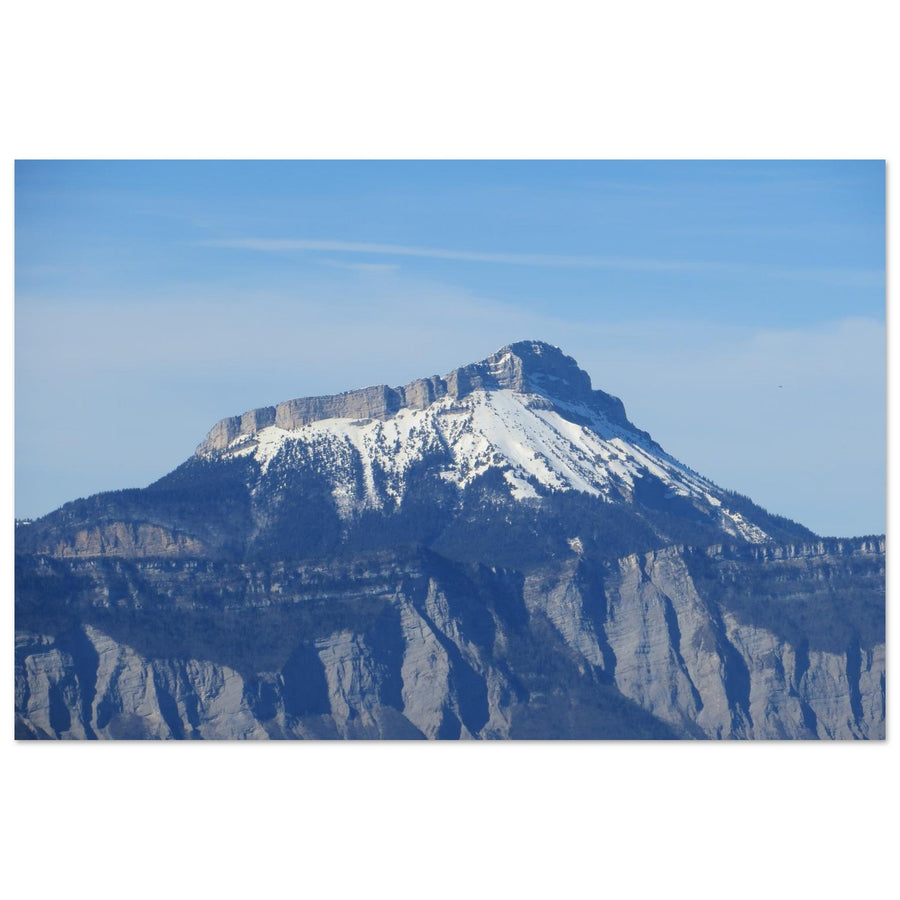
See in the gallery: photo of Mont Granier, Chartreuse massif.
Useful official link: consult the To the summit of Mont Granier on Chartreuse Tourisme page and the Park's information on any prohibited areas on Mont Granier.
4. Charmant Som: alpine pastures, gentle landscapes, and open views
Access: from Saint-Pierre-de-Chartreuse, Col de Porte, or the alpine pasture road depending on the season. Estimated time: easy to 2 hours depending on the starting point. Best light: sunset, golden hour, and summer morning. Ideal season: summer, autumn, and winter depending on conditions.
Charmant Som offers a gentler and more open Chartreuse. It is an excellent area for photographing alpine pastures, terrain curves, views of Chamechaude, and neighboring peaks. It lends itself very well to simple and warm compositions.
This spot is particularly interesting for creating decorative images: rounded slopes, golden grasses, chalets, ridges, low light. It is less spectacular than Mont Granier or Dent de Crolles, but often more balanced and easier to read in large format.
Photo tips for Charmant Som
- Use the curves of the alpine pastures to guide the eye.
- Wait for the golden hour to give relief to the slopes.
- Integrate chalets or trail lines as anchor points.
- With a telephoto lens, isolate Chamechaude or neighboring ridges.
- In winter, simplify the composition: snow, alpine pasture, ridge, sky.
Useful official link: consult the Summit of Charmant Som on Chartreuse Tourisme page.
5. Cirque de Saint-Même: waterfalls, forest, and limestone cliffs
Access: from Saint-Pierre-d’Entremont. Estimated time: easy to 2 hours depending on the chosen loop. Best light: soft light, cloudy weather, or morning. Ideal season: spring and autumn.
The Cirque de Saint-Même is one of the best places to photograph a wetter, more forested, and more vertical Chartreuse. The waterfalls, streams, mosses, trees, and limestone cliffs create a very different atmosphere from the open summits.
It's an excellent spot on cloudy days. Unlike panoramic views, waterfalls and forests handle diffuse light very well. This allows for working with textures, deep greens, water lines, and the contrasts between light rock and dark undergrowth.
Photo tips for the Cirque de Saint-Même
- Use a tripod if you want to slow down the water's movement.
- Prefer soft light to avoid excessively harsh contrasts in the forest.
- Protect your equipment from moisture and splashes.
- Compose with tree trunks, rocks, and stream lines to structure the image.
- Stay on marked trails: the site is sensitive and can become slippery.
Useful official links: consult the page for Cirque de Saint-Même and the waterfall trail.
6. Grande Chartreuse and Saint-Pierre-de-Chartreuse: silence, forest, and monastic atmosphere
Access: areas of Saint-Pierre-de-Chartreuse, Saint-Hugues, Grande Chartreuse Museum, and authorized forest roads. Estimated time: easy to variable depending on location. Best light: mist, morning, autumn, or fresh snow. Ideal season: autumn, winter, and spring.
The Grande Chartreuse area is interesting for more atmospheric photography. Here, the image doesn't need a spectacular summit: a forest road, mist among the fir trees, cold light, a discreet facade, or a silent path can be enough to tell the story of the massif.
The monastery itself is not open to visitors and remains a place of silence. Photographically, it's important to prioritize respect for the site, maintaining distance, and capturing the outdoor atmospheres: forests, valleys, paths, light, snow, heritage, and landscapes around Saint-Pierre-de-Chartreuse.
Photo tips around Grande Chartreuse
- Focus on atmospheres rather than postcards.
- In fog, simplify: road, forest, silhouette, diffuse light.
- In autumn, look for contrasts between warm deciduous trees and dark firs.
- Respect the tranquility of the area, private properties, and restricted zones.
- A 35mm or 50mm lens can work very well for more intimate scenes.
Useful official link: consult information about the Grande Chartreuse Monastery.
7. Plateau des Petites Roches: viewpoints over the Grésivaudan valley
Access: by road from the Grésivaudan valley or via the villages of Plateau des Petites Roches. Estimated time: easy to variable depending on the viewpoint. Best light: sunrise, sunset, or sea of clouds. Ideal season: autumn and winter.
The Plateau des Petites Roches offers very interesting views over the Grésivaudan valley, Belledonne, and the Chartreuse cliffs. It's a perfect area for playing with temperature inversions and seas of clouds.
When the valley is shrouded in fog and the peaks emerge, the Chartreuse becomes very graphic. The lines of cliffs, layers of relief, and low light create very legible images, often stronger than under clear blue skies.
Photo tips for the Plateau des Petites Roches
- Monitor inversion forecasts to target seas of clouds.
- Use a telephoto lens to compress the valley, Belledonne, and cliffs.
- At sunrise, expose carefully to retain detail in the mist.
- Integrate a cliff line or an isolated tree to structure the image.
- Respect protected areas, pastures, private properties, and local restrictions.
Useful official link: consult information about the Col du Coq Sensitive Natural Area.
8. Chartreuse forests, fir trees, and mists: the soul of the massif
Access: numerous forest areas around Saint-Pierre-de-Chartreuse, Col de Porte, Entremonts, Charmant Som, or high-altitude roads. Estimated time: variable. Best light: mist, snow, diffuse light, or humid morning. Ideal season: autumn and winter.
Forests are an essential part of the visual identity of the Chartreuse. They give the massif its dark, intimate, and profound character. For a photographer, it's a very rich terrain: fir trees, fog, beech forests, mosses, roads, clearings, snow, and shafts of light.
The difficulty in the forest is to simplify. A forest can quickly become cluttered if everything is in the frame. Look for a line, a dominant trunk, a clearing, a road, a silhouette, or light that organizes the image.
Photo tips for the Chartreuse forest
- Photograph in mist or diffuse light to reduce contrasts.
- Use roads and paths as leading lines.
- In winter, snow simplifies shapes and makes compositions more legible.
- Try medium focal lengths to isolate a portion of the forest.
- In strong light, look for backlighting and rays filtering through the trees.
9. External viewpoints: Croix du Nivolet, Revard, and Grenoble
Access: from viewpoints outside the massif, particularly on the Chambéry side, Savoie Grand Revard, Croix du Nivolet, or Grenoble. Estimated time: easy to variable. Best light: sunrise, sunset, blue hour, or sea of clouds. Ideal season: autumn and winter.
Sometimes, the best place to photograph the Chartreuse is not within the Chartreuse itself. From the Bauges, Revard, Croix du Nivolet, or certain viewpoints around Grenoble, the massif becomes a silhouette: successive ridges, mists, cliffs, Dent de Crolles, Chamechaude, or Mont Granier.
These external viewpoints are very interesting for creating more graphic images. The Chartreuse then appears as a set of layers, lines, and volumes. This is particularly striking at sunrise or when the valley is filled with mist.
Photo tips from external viewpoints
- Use a telephoto lens to compress the Chartreuse relief.
- Wait for mists or seas of clouds to separate the planes.
- During blue hour, use a tripod if the light drops quickly.
- Frame with a strong element in the foreground: cross, cliff, fir tree, silhouette.
- Don't always strive for maximum sharpness: a soft atmosphere can be stronger.
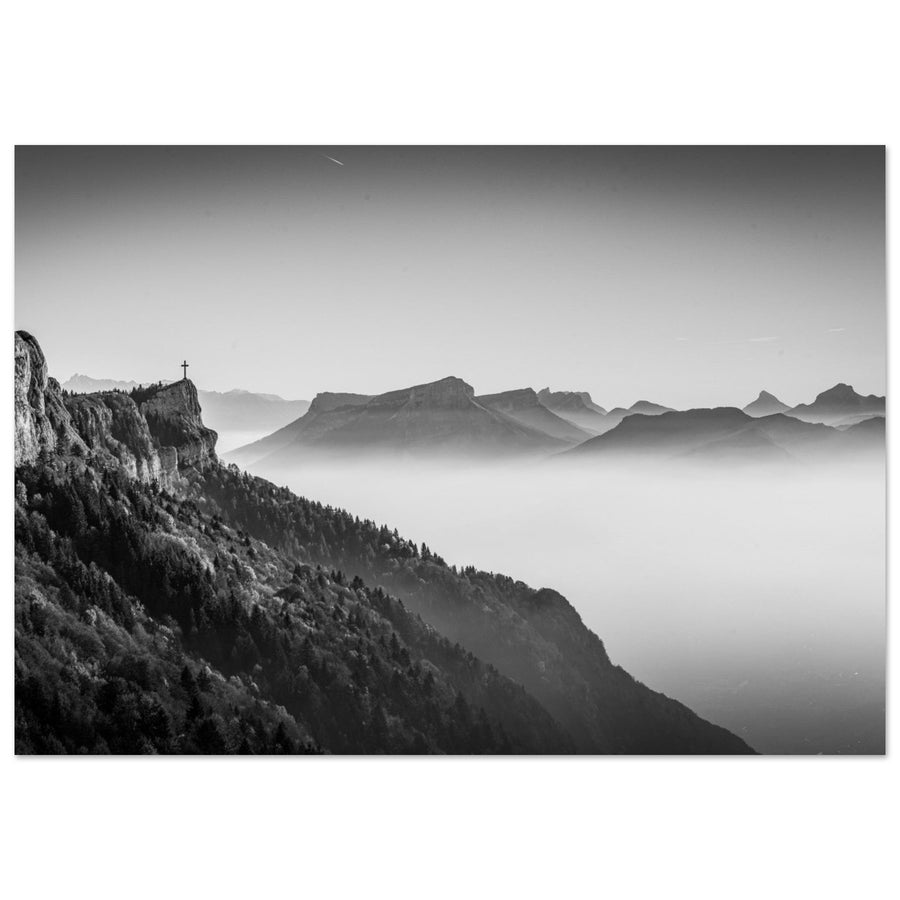
See in the gallery: photo of the Croix du Nivolet in front of the Chartreuse massif and black and white version of the Croix du Nivolet facing the Chartreuse.
10. The Chartreuse in winter: snow, fir trees, and minimalism
Access: Col de Porte, Charmant Som, forests, high-altitude roads, and accessible areas depending on conditions. Estimated time: easy to variable. Best light: cold morning, sunset, blue hour, or fresh snow. Ideal season: winter.
Winter transforms the Chartreuse. Snow simplifies forests, highlights ridges, softens alpine pastures, and gives limestone cliffs a more graphic presence. It's an excellent season for creating more minimalist, calmer, sometimes almost abstract images.
The best winter subjects are often simple: snow-laden fir trees, a dark ridge, a forest in the mist, a track in the snow, a sunset over Chamechaude, or snow-covered Chartreuse from a viewpoint.
Photo tips for winter
- Expose carefully to retain detail in the snow.
- Use fir trees as graphic elements.
- Photograph after a snowfall before tracks multiply.
- During blue hour, use a tripod or slightly increase ISO.
- Check snow, ice, visibility, and avalanche risk conditions depending on the area.
Which season to choose for photographing the Chartreuse?
Spring
Spring is interesting for waterfalls, streams, humid forests, and snow transitions. The Cirque de Saint-Même can be particularly photogenic, but trails can be slippery and conditions still variable at higher altitudes.
Summer
Summer makes access to summits, alpine pastures, and trails easier. It's a good season for Chamechaude, Charmant Som, Dent de Crolles, or Mont Granier. To avoid harsh light, prefer sunrise, sunset, golden hour, and post-storm atmospheres.
Autumn
Autumn is probably the best photo season in Chartreuse. Forests take on warm colors, mists are frequent, light becomes lower, and limestone cliffs gain relief. It's the ideal season for atmospheric images.
Winter
Winter gives the Chartreuse a more graphic look: snow, fir trees, ridges, white roads, cold mists, and deep blue skies. Access can be more limited, but images are often very strong, especially after a snowfall or above a sea of clouds.
What camera equipment to bring to Chartreuse?
The Chartreuse requires versatile equipment, but not necessarily extreme. The massif lends itself equally well to wide landscapes and tighter frames: cliffs, forests, mists, waterfalls, ridges, and silhouettes.
- 16–35 mm: useful for waterfalls, forests, viewpoints, and wide foregrounds.
- 24–70 mm: ideal for balanced compositions typical of the Chartreuse.
- 70–200 mm: very useful for isolating cliffs, ridges, mists, and layers of relief.
- Tripod: recommended for waterfalls, blue hour, dark forests, and long exposures.
- Polarizing filter: useful in forests and by waterfalls to control reflections.
- Rain protection: important in forests, near waterfalls, or in unstable weather.
- Headlamp: essential if you're waiting for sunrise or sunset.
- Warm and non-slip clothing: necessary in winter, on wet rock, or forest terrain.
Regulations and safety in Chartreuse
The Chartreuse is a Regional Natural Park, with sensitive areas such as the Hauts de Chartreuse National Nature Reserve, sensitive natural spaces, private alpine pastures, pastoral zones, forests, and exposed cliffs.
Rules vary depending on the area. Dogs may be allowed in some sectors but prohibited in others, sometimes even required to be on a leash. In the Hauts de Chartreuse Nature Reserve and certain sensitive areas, restrictions may concern dogs, bivouacking, camping, fires, picking, waste, access to certain fragile areas, and activities that may disturb wildlife.
Bivouacking must be prepared with caution. In the Hauts de Chartreuse Nature Reserve, camping is prohibited, bivouacking is regulated, and tent bivouacking is prohibited in July and August. Therefore, never assume that you can freely pitch a tent near a summit, cliff, or alpine pasture.
Before a photo outing, systematically check official information: weather, trail conditions, possible closures, snow conditions, local regulations, pastoral zones, temporary prohibitions, and return times. A photo never justifies leaving a fragile trail, disturbing a herd, approaching an unstable cliff, or taking an unnecessary risk.
Useful official links before an outing
- PNR Chartreuse — Hauts de Chartreuse Nature Reserve regulations
- PNR Chartreuse — bivouac
- PNR Chartreuse — dogs
- Chartreuse Tourisme — Chamechaude
- Chartreuse Tourisme — Dent de Crolles
- Chartreuse Tourisme — Charmant Som
- Chartreuse Tourisme — Cirque de Saint-Même
Mistakes to avoid when photographing the Chartreuse
1. Only expecting a grand panorama
The Chartreuse is not always spectacular in the classical sense. Its strength often comes from its atmospheres: mist, forest, cliff, snow, silence, diffuse light. An intimate framing can be stronger than a panorama.
2. Photographing everything with a wide-angle lens
A wide-angle can make reliefs appear too distant. In Chartreuse, a telephoto lens often better reveals cliffs, mists, layers of relief, and ridges.
3. Neglecting the forest
Forests are not just a backdrop between two summits. They are one of the massif's true subjects. Mists, fir trees, roads, mosses, and snow can create very powerful images.
4. Underestimating the terrain
The Chartreuse may seem gentle, but some cliffs, ledges, wet slopes, lapiaz, or exposed trails require experience. When in doubt, choose a simpler route.
5. Forgetting regulations
Nature reserve, bivouacking, dogs, alpine pastures, picking, fires, temporary access: rules can change depending on the area. Always check official information before you go.
My photographer's advice
In the Chartreuse, I would first look for atmosphere. This massif doesn't need to be shown as a spectacular high mountain. Its power comes from mystery: a forest in the mist, a cliff appearing between two clouds, a snowy ridge at sunset, a sea of clouds below the Dent de Crolles.
To create a strong image, simplify. Choose a line, a mass, a light, or a texture. In Chartreuse, a successful photo can depend on very little: a fir tree in the snow, a summit in the mist, an illuminated cliff, a forest road, or a sunset behind the ridges.
Discover my Chartreuse photo prints
Some of my work focusing on the Chartreuse mountains is available as large format prints on aluminum Dibond. I select images that retain their power when printed: Chamechaude, Dent de Crolles, Mont Granier, forests, cliffs, mist, snow, sunsets, and external views from the Croix du Nivolet.
Discover the Chartreuse photo prints
You can also explore the Isère photo prints collection, the broader collection of mountain landscape photo prints from the Alps, as well as my selection of the most beautiful images of the Alps on aluminum Dibond.
Some prints related to the Chartreuse
- Photo of a sunset over the snow-covered Chartreuse
- Photo of Mont Granier, Chartreuse massif
- Photo of the Croix du Nivolet in front of the Chartreuse massif
- Photo of the Croix du Nivolet and the Chartreuse in black and white
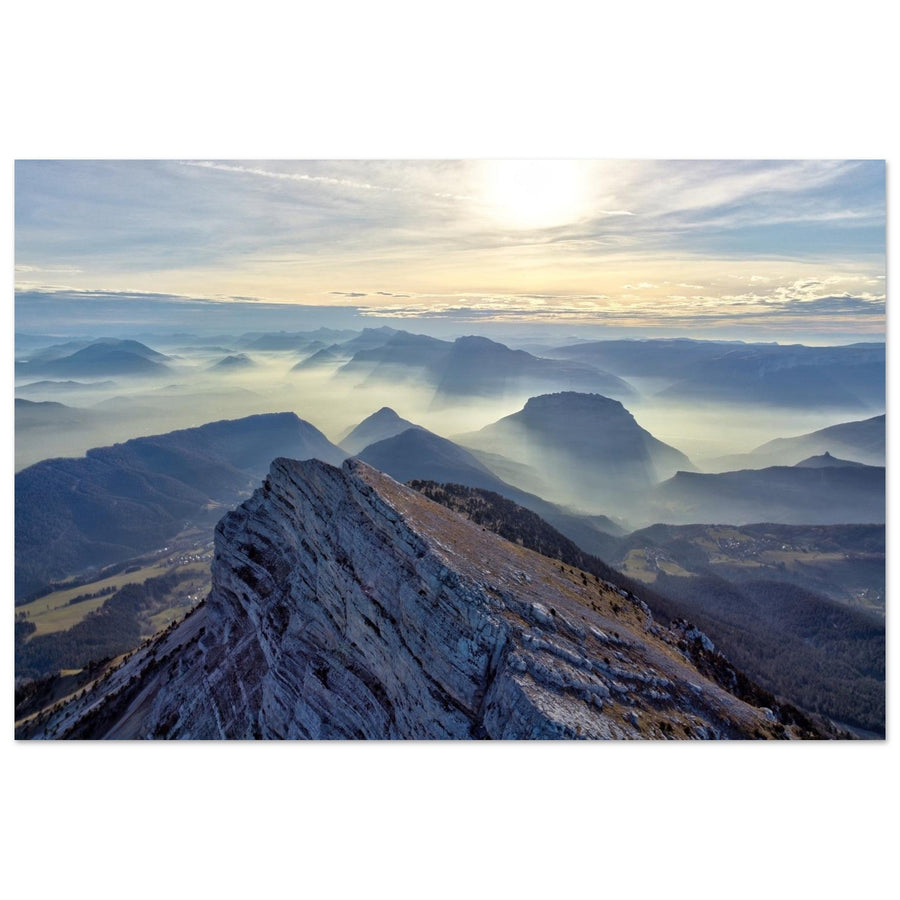
- Photo of the Croix du Nivolet — Bauges and Chartreuse
FAQ — Where to photograph the Chartreuse mountains?
What is the best place to photograph the Chartreuse?
Chamechaude, Dent de Crolles, Mont Granier, Charmant Som, and the Cirque de Saint-Même are among the best photo spots in Chartreuse. The choice depends on the desired atmosphere: summit, cliff, forest, waterfall, mist, or panoramic view.
Where to photograph Chamechaude?
Chamechaude can be photographed from its access routes, from the Col de Porte areas, from certain viewpoints around Grenoble, and from other Chartreuse viewpoints. The low morning or evening light gives the summit a lot of relief.
Where to photograph Dent de Crolles?
Dent de Crolles is very photogenic from the Col du Coq, the Plateau des Petites Roches, and viewpoints over the Grésivaudan valley. It works particularly well with a sea of clouds or sunset light.
Where to photograph Mont Granier?
Mont Granier photographs well from Entremont-le-Vieux, the Col du Granier, the Combe de Savoie, and certain external viewpoints. Clouds, side lighting, and stormy skies greatly enhance its massive cliff.
What is the best season to photograph the Chartreuse?
Autumn is often the best season thanks to mist, colorful forests, and low light. Winter provides graphic images with snow and fir trees, while spring is very interesting for waterfalls and streams.
Can the Chartreuse be photographed without a long hike?
Yes. Several spots are easily accessible or with little walking, including certain viewpoints, forest roads, viewpoints on the Plateau des Petites Roches, Charmant Som areas depending on the season, Cirque de Saint-Même, or external views from Chambéry and Grenoble.
Is wild camping allowed in Chartreuse?
Wild camping is regulated and varies greatly depending on the area. In the Hauts de Chartreuse Nature Reserve, camping is prohibited, and tent bivouacking is prohibited in July and August. Always check official rules before preparing for a night photo outing.
Are dogs allowed in Chartreuse?
Dogs may be allowed in some areas, but they are prohibited in other areas or during certain periods, even on a leash. Before you go, check precisely whether your itinerary crosses a nature reserve, a sensitive natural area, or a regulated alpine pasture.
What focal length should be used to photograph the Chartreuse?
A 24–70 mm is very versatile in Chartreuse. A 70–200 mm is often very useful for isolating cliffs, mist, forests, and layers of relief. A wide-angle lens remains useful for waterfalls, forests, and wide foregrounds.
Is a tripod necessary to photograph the Chartreuse?
It is not essential in broad daylight, but it becomes very useful for waterfalls, blue hour, dark forests, long exposures, and low-light scenes.