Where to photograph the Belledonne Massif? Lakes, ridges, and field tips
Share
Updated June 30, 2026
Photographing the Belledonne Massif means entering a wilder, more mineral, and more secluded mountain range than the alpine classics. Here, high-altitude lakes, granite boulders, dark ridges, hanging valleys, scree slopes, crests, and reflections create powerful, often raw, yet very elegant images.
In this guide, I share the best places to photograph Belledonne, with a field-based approach: access, indicative time, ideal light, season, composition, recommended equipment, regulations, mistakes to avoid, and links to my technical guides. The goal is not just to list lakes or summits, but to understand how to build a strong image in a massif where rock, water, light, and altitude give it a very particular identity.
As a mountain photographer since 2017, I seek out scenes in Belledonne that retain their strength when printed in large format: the calm Lac du Crozet, reflections of the Grand Doménon, granite ridges at sunset, cold lights over Chamrousse, snow lines, hanging valleys, and deep views from the Chartreuse or Grenoble. You can find part of this work in my collection of Belledonne Massif photo prints, printed in France on Dibond aluminum.
The Essentials in 30 Seconds
- Most iconic spot: Lac du Crozet, for its reflections, granite boulders, and accessibility from Grésivaudan.
- Wildest spot: the Doménon lakes, for their high-mountain atmosphere and mineral ridges.
- Most accessible spot: Chamrousse and the Lacs Robert, thanks to resort access and lifts depending on the season.
- Trekking spot: the Pra refuge and the GR®738, for exploring the heart of Belledonne.
- Grand scenic spot: the Sept Laux, for the lakes, dams, scree slopes, and summits in the northern part of the massif.
- Best exterior viewpoint: views from Chartreuse, Grenoble, or the Lances de Malissard.
- Best season: autumn for low light and reflections; summer for lake access; winter for snow lines.
- Key tip: in Belledonne, look for texture: granite, water, ridges, scree, reflections, snow.
Summary
- Why Belledonne is an exceptional photo playground
- Table of Belledonne's best photo spots
- 1. Lac du Crozet
- 2. Pra Refuge
- 3. Doménon Lakes
- 4. Lacs Robert and Chamrousse
- 5. Lac Achard and Arselle plateau
- 6. Sept Laux Lakes
- 7. Grand Pic, Croix de Belledonne and great ridges
- 8. Belledonne from Grenoble and Chartreuse
- 9. Lac Luitel Nature Reserve
- 10. Belledonne in winter
- Which season to choose?
- What photo equipment to bring?
- Regulations and safety
- Mistakes to avoid
- Discover my Belledonne photo prints
- FAQ
Why Belledonne is an exceptional photo playground
Belledonne has a very different personality from Chartreuse, Mont Blanc, Écrins, or Vanoise. Where Chartreuse is forested and mysterious, Belledonne is more mineral, more granitic, more suspended. The massif offers a succession of lakes, ridges, valleys, scree slopes, and summits that create very graphic images.
This massif is particularly interesting for photographers who love wild atmospheres without necessarily going very far from Grenoble. The high-altitude lakes allow for reflection work, the ridges provide strong lines, the scree slopes add texture, and the views towards Chartreuse, Vercors, or Écrins add depth.
To capture a successful photo of Belledonne, it's often best to avoid too wide a panorama. The best images come from precise composition: a calm lake, a granite boulder, an illuminated ridge, a shoreline, a partial reflection, or light breaking through the clouds. You can supplement this guide with my articles on alpine reflections, mountain sunrises, sunsets, the golden hour, and mountain storms.
In the Alpine Photo Destinations hub, Belledonne complements the article on Chartreuse very well: the two massifs are close, but their photographic identity is very different. Chartreuse plays on forests, mists, and cliffs; Belledonne plays on lakes, granite, ridges, and accessible high mountains.
Belledonne's best photo spots
| Spot | Access | Indicative Time | Best Light | Ideal Season | Ideal for |
|---|---|---|---|---|---|
| Lac du Crozet | From Pré Raymond / Revel | 2 to 3 hours depending on pace | Calm morning, late afternoon | Summer, autumn | Reflections, granite, golden light |
| Pra Refuge | From Pré Raymond via Lac du Crozet | 2h30 to 3h from Pré Raymond | Evening, blue hour, morning | Summer, autumn | Trekking, alpine pastures, lakes, GR®738 |
| Doménon Lakes | From the Pra sector | Long hike | Clear morning or changing light | Summer, early autumn | High mountains, reflections, ridges |
| Lacs Robert | From Chamrousse or gondola depending on season | Variable, access facilitated by lifts | Morning, sunset, winter | Summer, autumn, winter | Lakes, mineral cirque, snow |
| Lac Achard | From Chamrousse / Arselle plateau | Easy to moderate | Calm morning, autumn | Summer, autumn, winter | Accessible reflections, forest, gentle atmosphere |
| Sept Laux | From Fond de France, Pleynet or trekking | Long, often demanding | Evening, morning, changing weather | Summer, autumn | Lakes, dams, scree slopes, wild |
| Grand Pic / Croix de Belledonne | High-altitude routes and alpine terrain | Long and demanding | Sunrise, sunset, side light | Summer, early autumn | Ridges, summit, alpine atmosphere |
| Belledonne from Grenoble / Chartreuse | Exterior viewpoints | Easy to variable | Sunrise, sunset, sea of clouds | Autumn, winter | Silhouettes, layers of relief, telephoto lens |
| Lac Luitel | Chamrousse road, marked trails | Easy | Mist, soft light | Autumn, spring | Bog, forest, intimate atmosphere |
| Belledonne in winter | Chamrousse, roads, ski touring depending on level | Variable | Cold morning, sunset, blue hour | Winter | Snow, ridges, skiing, minimalism |
1. Lac du Crozet: Belledonne's photo classic
Access: from the Pré Raymond car park, Revel / Grésivaudan sector. Indicative time: approximately 2 to 3 hours depending on pace and conditions. Best light: calm morning or late afternoon. Ideal season: summer and autumn.
Lac du Crozet is one of Belledonne's most emblematic spots. It combines everything that makes the massif photogenic: high-altitude water, granite boulders, ridges, late afternoon light, and possible views towards the Chartreuse or Grésivaudan during the ascent.
Photographically, Crozet works very well with a simple composition. The lake can serve as a mirror, but you shouldn't only look for the perfect reflection. A shoreline, a boulder, a mountain line, or light on the ridge can be enough to create a strong image.
Photo tips at Lac du Crozet
- Arrive early or late to avoid harsh light and crowds.
- Use granite boulders as foreground elements.
- In calm weather, position yourself low near the water to enhance reflections.
- If the wind breaks the mirror, switch to a telephoto lens to isolate the ridges.
- Avoid framing too wide: the lake gains power with precise composition.
To learn more about this type of image, consult the guide on alpine reflections in mountain lakes.
Useful official link: consult the page Hiking Lac du Crozet on Belledonne Chartreuse.
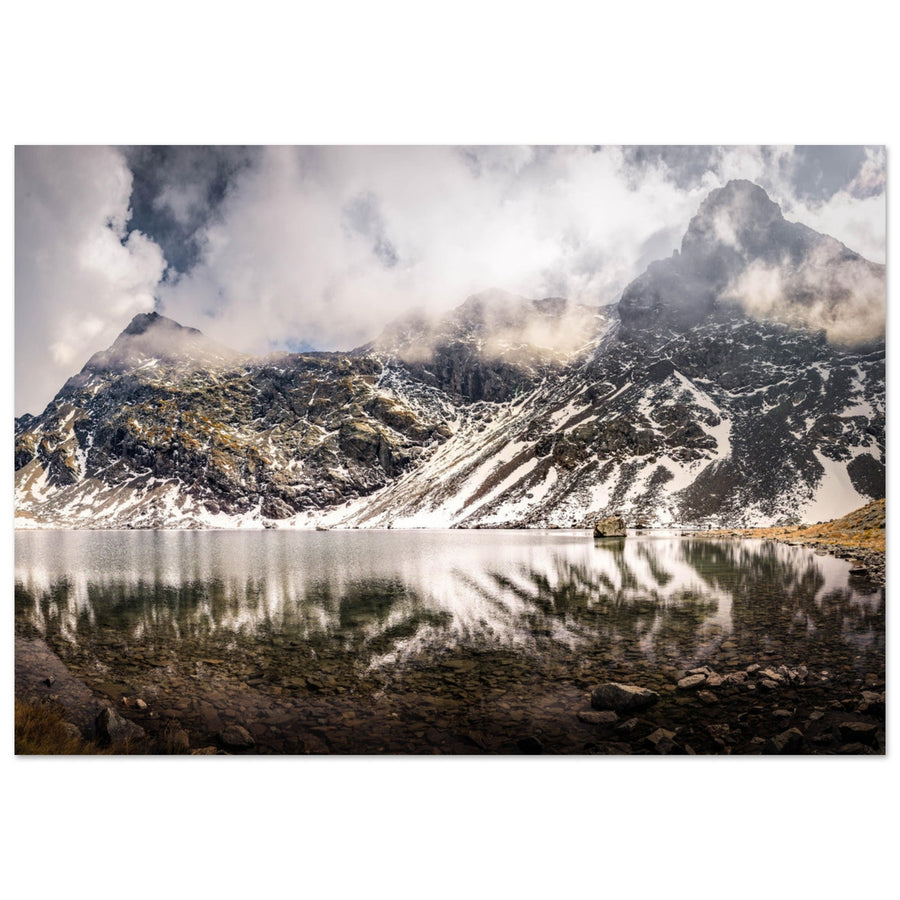
To see in the gallery: photo of Lac du Crozet, Belledonne massif, second framing of Lac du Crozet and reflection of Lac du Crozet in Belledonne.
2. Pra Refuge: gateway to the heart of Belledonne
Access: from Pré Raymond, generally via Lac du Crozet. Indicative time: approximately 2h30 to 3h to the refuge depending on the official access. Best light: evening, blue hour and morning. Ideal season: summer and autumn.
The Pra refuge is one of the best starting points for photographing the heart of Belledonne. It provides access to a more open atmosphere: alpine pastures, torrents, lakes, ridges, trekking, and departures towards Doménon, Croix de Belledonne, or Grande Lauzière.
This is a very interesting sector if you want to photograph Belledonne in a way other than a simple round trip to a lake. The refuge allows you to stay overnight for the evening and morning light, which are often the strongest at high altitudes.
Photo tips around the Pra refuge
- Use the refuge or trails as scale points in the landscape.
- Work during the blue hour if the sky remains clear and the ridges stand out.
- Scout for foreground elements before the light: torrents, boulders, grasses, footbridges.
- Keep a telephoto lens to isolate the ridges around the Pra.
- Respect wetlands and protected areas: stay on existing trails.
Useful official links: consult the Pra refuge website and its access page from Pré Raymond.
3. Doménon Lakes: high mountains, reflections and wild ridges
Access: from the Pra sector, with a longer and more challenging route than simple access to Lac du Crozet. Indicative time: long hike depending on starting point and conditions. Best light: clear morning, changing sky or late afternoon. Ideal season: summer and early autumn.
The Doménon lakes offer a more alpine reading of Belledonne. Here you find a mineral atmosphere, cold waters, boulders, ridges and a more pronounced high mountain feel. It is a perfect area for creating wilder and less accessible images.
The Grand Doménon is particularly interesting for reflections and contrasts between water, residual snow, scree slopes and dark rock faces. In unstable weather, clouds can add a lot of tension to the scene.
Photo tips at the Doménon lakes
- Plan plenty of time: the approach is longer than Crozet.
- Use the boulders by the water to structure the foreground.
- Watch for clouds clinging to the ridges: they add relief.
- A tripod is useful if you are photographing at sunrise, sunset or blue hour.
- Do not underestimate the terrain: scree, residual snow and orientation can complicate the outing.
To see in the gallery: photo of Lac du Grand Doménon, Belledonne massif.
4. Lacs Robert and Chamrousse: the simplest access to a mineral atmosphere
Access: from Chamrousse, with several itineraries and facilitated access by lifts depending on the season. Indicative time: variable depending on departure; some loops are possible from the gondola arrival point. Best light: morning, sunset or winter. Ideal season: summer, autumn and winter depending on conditions.
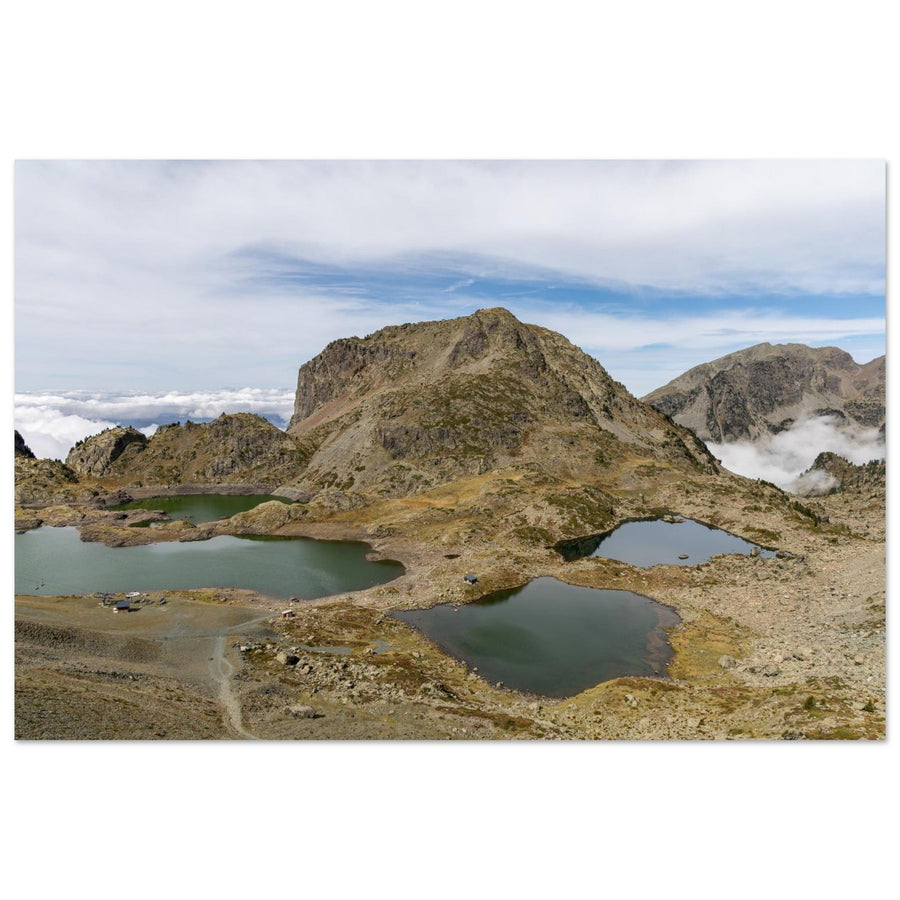
The Lacs Robert are an excellent entry point into Belledonne. The area is more accessible than the Doménon lakes or the Sept Laux, but it retains a truly mineral atmosphere: cirque, boulders, dark water, ridges and snow depending on the season.
The proximity of Chamrousse also allows for different images: summer landscapes, reflections, winter snow, ski lines, mist, or the contrast between the resort and the high mountains. You simply need to compose carefully to avoid too visible elements of development if you are looking for a wild atmosphere.
Photo tips at Lacs Robert
- Arrive early if you want to avoid heavy traffic.
- Use the banks and boulders as foregrounds.
- With a telephoto lens, isolate the ridges and slopes around the cirque.
- In winter, work with snow lines, tracks, and relief contrasts.
- Check lift operating hours and open routes.
Useful official links: consult the Chamrousse pages on the Lacs Robert and the Lacs Robert loop.
5. Lac Achard and Arselle plateau: accessible reflections and gentle atmosphere
Access: from Chamrousse and the Arselle plateau depending on the itinerary. Indicative time: easy to moderate depending on departure and loop. Best light: calm morning, autumn or winter. Ideal season: summer, autumn and winter depending on conditions.
Lac Achard offers a gentler atmosphere than the large, mineral lakes in the heart of Belledonne. The landscape is more forested, more accessible, with potential reflections, pines, wetlands, and a more intimate feel.
It's a good spot to vary a Belledonne photo series. After the very mineral images of Crozet or Doménon, Lac Achard allows for a calmer atmosphere: dark water, trees, reflections, mist, light snow, and silence.
Photo tips for Lac Achard
- Aim for a windless morning for clear reflections.
- Use the trees as a natural frame around the lake.
- In autumn, look for contrasts between warm vegetation and cold water.
- In winter, simplify the composition with snow, pines, and shoreline lines.
- Stay on the trails to preserve wetlands and fragile environments.
6. Lacs des Sept Laux: the grand wild scenery of northern Belledonne
Access: from Fond de France, le Pleynet, or as part of a multi-day hike depending on your objective. Estimated time: long and often demanding; some tours require several days. Best light: morning, evening, or changing weather. Ideal season: summer and autumn.
The Sept Laux offer one of Belledonne's most powerful settings: large lakes, dams, scree, hanging valleys, peaks in the northern part of the massif, and a more isolated atmosphere. It's a perfect area for creating deep and less-seen images than the classic spots near Grenoble.
Photographically, the Sept Laux demand patience. There are many lakes, the distances are significant, and the light can change rapidly. The most interesting approach is often not to look for "the perfect lake," but to use the dam lines, boulders, shores, clouds, and ridges to build a more personal image.
Photo tips for the Sept Laux
- Carefully plan your itinerary: distance, elevation gain, timings, refuge, and weather.
- Use the shores, dams, and boulders to give structure to the image.
- In unstable weather, watch for breaks in the light over the lakes.
- A 24–70 mm and a 70–200 mm are very useful for varying compositions.
- Maintain a significant safety margin: long return, rocky terrain, possible thunderstorms.
Useful official links: consult the pages for Lacs des Sept Laux and the refuge and lakes of 7 Laux via le Pleynet.
7. Grand Pic, Croix de Belledonne, and great ridges: the alpine face of the massif
Access: high-altitude routes and alpine terrain depending on the objective. Estimated time: long and demanding. Best light: sunrise, sunset, or side light. Ideal season: summer and early autumn depending on conditions.
The Grand Pic de Belledonne, the Croix de Belledonne, and the great ridges give the massif its alpine dimension. Here, you leave simple lake hiking to enter a more demanding world: ridges, scree, couloirs, névés, orientation, rocky terrain, and long approaches.
For photography, this area is very powerful, but it requires a real level of preparation. The images can be spectacular: silhouettes on ridges, side light on arêtes, clinging clouds, views towards the Écrins, Grandes Rousses, or Chartreuse. But this is not terrain to be tackled solely "to take a photo."
Photo tips for the great ridges
- Prioritize safety and technical skill over the photographic objective.
- Use a long focal length to isolate ridges, couloirs, and silhouettes.
- Photograph the side lights that sculpt the granite.
- Integrate a human presence only if it reinforces the scale.
- Do not venture onto alpine terrain without the right skills, stable weather, and appropriate equipment.
Useful link: to locate the summit and its level of commitment, consult the Grand Pic de Belledonne on Altituderando page.
8. Belledonne from Grenoble and Chartreuse: the massif in silhouette
Access: external viewpoints from Grenoble, Chartreuse, Grésivaudan, or certain vantage points around the Lances de Malissard. Estimated time: easy to variable. Best light: sunrise, sunset, blue hour, or sea of clouds. Ideal season: autumn and winter.
Sometimes, the best place to photograph Belledonne is not within the massif itself. From Grenoble, Chartreuse, or the viewpoints of the Grésivaudan, the range becomes a powerful silhouette: successive ridges, raking light, snow, clouds, and layers of relief.
This is a very interesting angle for creating more graphic images. With a telephoto lens, the peaks compress, the planes overlap, and Belledonne takes on an almost abstract dimension.
Photo tips from external viewpoints
- Use a 70–200 mm lens to compress the ridges.
- At sunrise, watch for the first light on the snowy peaks.
- From the Chartreuse, look for foregrounds of alpine pastures or ridges.
- In a sea of clouds, expose carefully to retain detail in the whites.
- Crop tightly if the sky is empty or too bright.
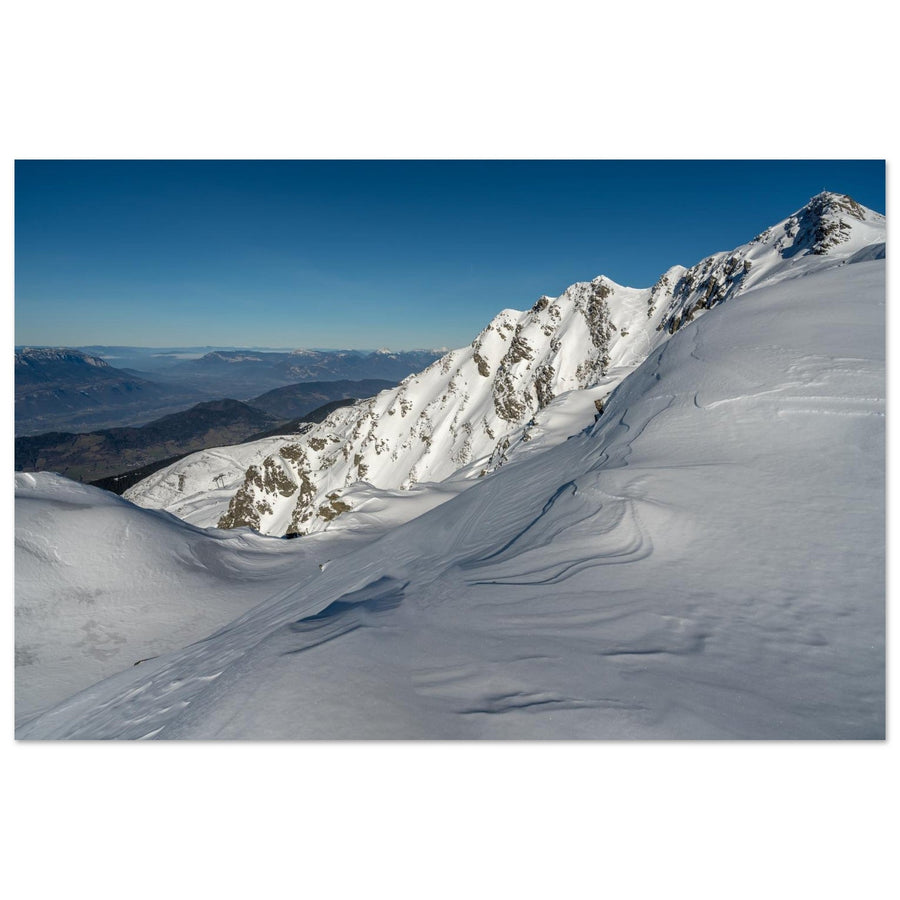
See in the gallery: photo of the Belledonne range from the Lances de Malissard.
9. Lac Luitel Nature Reserve: bog, forest, and intimate atmosphere
Access: Chamrousse road, marked trails depending on conditions. Estimated time: easy. Best light: mist, soft light, damp morning. Ideal season: autumn and spring.
Lac Luitel reveals a very different facet of Belledonne. Here, the interest is not spectacular high mountains, but a fragile, humid, and very atmospheric environment: bog, forest, dark water, boardwalks, pines, mist, and plant textures.
It's a good spot to work on more intimate photography. In overcast or foggy weather, contrasts decrease, and shapes become softer. However, the place demands a lot of respect: it is a protected area where environments are sensitive.
Photo tips for Lac Luitel
- Photograph in soft light rather than direct sunlight.
- Use the boardwalks and lines of vegetation to structure the image.
- Work on details: dark reflections, grasses, tree trunks, mist, textures.
- Strictly stay on authorized paths.
- Avoid leaving the trail: bog environments are very fragile.
Useful official link: consult the Chamrousse page on the Lac Luitel Nature Reserve.
10. Belledonne in winter: snow, skiing, and graphic ridges
Access: Chamrousse, high-altitude roads, resorts, ski touring, or suitable routes depending on conditions and skill level. Estimated time: variable. Best light: cold morning, sunset, blue hour. Ideal season: winter.
Winter transforms Belledonne into a very graphic massif. Snow simplifies scree, highlights ridges, defines couloirs, and creates strong contrasts between dark forests, white slopes, and cold skies.
The main difficulty is safety. Belledonne is a wild massif, with steep slopes, ski touring routes, risks of slab avalanches, fog, cold, and long returns. For a safe photographic approach, it's best to prioritize accessible spots, viewpoints, Chamrousse, or outings adapted to your skill level.
Photo tips for winter
- Expose carefully to retain detail in the snow.
- Use ski or snowshoe tracks as leading lines.
- Work with a telephoto lens to isolate ridges, couloirs, and clouds.
- During blue hour, use a tripod or slightly increase the ISO.
- Check weather, avalanche risk, visibility, timings, and itinerary before any outing.
Which season to choose for photographing Belledonne?
Spring
Spring can offer very beautiful transitions: residual snow on the ridges, more active torrents, contrasts between green valleys and still-white summits. However, high-altitude lakes can remain snow-covered for a long time. Before aiming for Crozet, Doménon, or Sept Laux, check snow cover and conditions.
Summer
Summer is the most practical season for accessing lakes, refuges, and high-altitude routes. It's the ideal period for Crozet, Pra, Doménon, Chamrousse, or Sept Laux. To avoid harsh light, favor early departures, late afternoons, and post-storm light.
Autumn
Autumn is often the best photo season in Belledonne. The light is lower, reflections are more interesting, crowds diminish, and the first snows can redraw the ridges. It's a very strong period for lakes and views from Chartreuse or Grenoble.
Winter
Winter offers a more graphic interpretation: snow, ridges, dark forests, tracks, ski lines, and cold skies. Access is more limited, but the images can become very powerful, especially from Chamrousse, viewpoints, or accessible areas without excessive commitment.
What camera gear to bring to Belledonne?
Belledonne requires versatile equipment. Lakes call for wide-angle, but ridges and summits often benefit from being isolated with a telephoto lens. The massif is also more mineral and sometimes more demanding than its accessibility from Grenoble might suggest.
- 16–35 mm: useful for lakes, boulders, foregrounds, and reflections.
- 24–70 mm: ideal for balanced compositions between lake, shore, and ridge.
- 70–200 mm: very useful for isolating ridges, clouds, summits, and layers of relief.
- Tripod: recommended for sunrise, blue hour, reflections, and long exposures.
- Polarizing filter: useful on some lakes, but to be used with caution with wide-angle lenses.
- Extra batteries: important at high altitude and in cold weather.
- Headlamp: essential if you leave early or return after sunset.
- Warm and windproof clothing: necessary even in summer, especially if you wait a long time for the light.
Regulations and safety in Belledonne
Belledonne is not a single national park with uniform regulations. Rules vary depending on municipalities, alpine pastures, Natura 2000 zones, nature reserves, refuges, itineraries, and periods. Therefore, it is necessary to check official information before each outing.
Certain areas are sensitive: wetlands, high-altitude lakes, bogs, alpine pastures, nature reserves, pastoral zones, ski touring routes, and fragile environments. Swimming, dogs, bivouacking, fires, drones, fishing, access, or traffic may be regulated depending on the location.
In the area of the Pra refuge, you enter a protected Natura 2000 zone where swimming in watercourses and lakes is strictly prohibited. At Lac Luitel, the marked paths must be respected, as the bog is a fragile environment.
Before a photo outing, systematically check: weather, thunderstorms, residual snow, timings, trail conditions, local regulations, presence of herds, guard dogs, avalanche risk in winter, and return margin. A photo never justifies leaving a fragile trail, disturbing a herd, pitching a tent anywhere, or venturing into alpine terrain without an appropriate skill level.
Useful official links before an outing
- Belledonne Chartreuse — Lac du Crozet hike
- Refuge de la Pra — FFCAM
- Refuge de la Pra — access
- Chamrousse — Lacs Robert
- Les 7 Laux — Sept Laux lakes
- Mon GR — GR®738 Haute Traversée de Belledonne
- Chamrousse — Lac Luitel Nature Reserve
Mistakes to avoid when photographing Belledonne
1. Underestimating the massif
Belledonne is close to Grenoble, but it is not an easy massif. The elevation changes, scree, névés, thunderstorms, and long returns can make an outing serious.
2. Photographing everything too wide
The landscapes are vast, but a wide-angle can make the ridges appear too small. A medium or long focal length often better reveals the strength of the granite and arêtes.
3. Only seeking out well-known lakes
Crozet and Lacs Robert are magnificent, but Belledonne is also very powerful from viewpoints, ridges, less frequented valleys, and external views.
4. Neglecting the light
In the middle of the day, scree and granite can become harsh and flat. The massif gains immensely at sunrise, sunset, after a storm, or under side lighting.
5. Forgetting about sensitive environments
Lakes, bogs, alpine pastures, Natura 2000 zones, and nature reserves require special attention. Stay on the trails, respect the rules, and avoid damaging the shores.
My photographer's advice
In Belledonne, I would first look for structure. This massif can seem chaotic: scree, boulders, ridges, lakes, valleys, clouds. To create a strong image, you need to simplify: a lake, a shore, a ridge, a light, a boulder.
The best reflex is to slow down by the lakes. Don't just take the first view. Walk around the subject, observe the wind, look for a boulder that organizes the image, wait for the light to touch an arête or for the clouds to open a window. Belledonne truly becomes powerful when the composition brings order to its wild character.
Discover my Belledonne photo prints
Part of my work around the Belledonne massif is available as large format prints on aluminum Dibond. I select images that retain their power once printed: Lac du Crozet, Grand Doménon, granite summits, sunsets, snowy ridges, and deep views from the Chartreuse.
Discover Belledonne massif photo prints
You can also explore the Isère photo prints collection, the broader collection of mountain landscape photo prints in the Alps, as well as my selection of the most beautiful images of the Alps on aluminum Dibond.
Some prints related to Belledonne
- Photo of Lac du Crozet, Belledonne Massif
- Photo of Lac du Crozet, Belledonne Massif — second framing
- Photo of the reflection of Lac du Crozet in Belledonne
- Photo of Lac du Grand Doménon, Belledonne Massif
- Sunset over the peaks of the Belledonne Massif
- Belledonne range from Les Lances de Malissard
FAQ — Where to photograph Belledonne?
What is the best place to photograph Belledonne?
Lac du Crozet is one of the best starting points for photographing Belledonne, thanks to its reflections, granite blocks, and access from the Grésivaudan valley. Lacs Robert, Refuge de la Pra, the Doménon lakes, and Sept Laux are also very interesting.
Where to photograph reflections in Belledonne?
Lac du Crozet, the Doménon lakes, Lacs Robert, Lac Achard, and some of the Sept Laux lakes are very suitable for reflections. The best conditions are sunrise or late afternoon with little wind.
Where to photograph Belledonne near Grenoble?
The areas of Chamrousse, Lac du Crozet, Pré Raymond, Lac Luitel, and the viewpoints around Grenoble allow you to photograph Belledonne without traveling far. However, some spots require a real hike.
What is the best season to photograph Belledonne?
Autumn is often the best season thanks to the low light, reflections, and first snows. Summer makes access to high-altitude lakes easier, while winter provides more graphic images with snow, ridges, and ski lines.
Can Belledonne be photographed without a long hike?
Yes, some viewpoints from Chamrousse, Grenoble, Chartreuse, Lac Luitel, or the viewpoints of the Grésivaudan are accessible with little walking. However, the most beautiful high-altitude lakes often require significant effort.
Where to photograph Belledonne at sunset?
Lac du Crozet, viewpoints from Chartreuse, views from Grenoble, Chamrousse, and certain points around the ridges work very well at sunset, especially when the side light hits the peaks.
Can you bivouac in Belledonne?
Bivouacking depends on the specific areas, municipalities, mountain pastures, refuges, and protected areas. You should not assume it is allowed everywhere. Before a night photo outing, check local regulations, Natura 2000 zones, nature reserves, and refuge guidelines.
Are dogs allowed in Belledonne?
Rules vary by sector. Some itineraries cross mountain pastures, protected areas, or nature reserves where dogs may be prohibited or subject to restrictions. Always check the exact itinerary before going with a dog.
What focal length to use for photographing Belledonne?
A wide-angle lens is useful for lakes and foregrounds, but a telephoto lens is often essential to isolate ridges, clouds, peaks, and layers of relief. A 24–70 mm and a 70–200 mm already cover many situations.
Is a tripod necessary to photograph Belledonne?
It is not essential during the day, but it becomes very useful for reflections, sunrise, blue hour, long exposures, and low-light scenes around the lakes.