What to photograph in the Écrins massif?
Choose a subject in the Écrins
In the Écrins, the right project does not begin with a viewpoint: it begins with the relationship you want to make legible between a summit, ice, water or a valley.
La Meije is understood with La Grave, the Barre as the destination of the eye, the Glacier Blanc through its material, and the Pelvoux through its mass above Vallouise. Lauvitel organizes the image around water; Valgaudemar and Vénéon gain their strength from a progression through the valley.
Photographic identity
Four image families for reading the massif
The subjects differ less by altitude than by the way they organise the planes.
The face and silhouette
A recognizable mountain carries the image. Light and foreground must reinforce its profile without stealing its hierarchy.
The material of the high mountains
Ice, moraine, seracs and polished rock provide scale. A close detail can tell more than an overly wide panorama.
Water as structure
Lake or torrent, water becomes a line, surface or rhythm. It organizes the composition instead of serving as simple scenery.
The valley as progression
Hamlets, slopes, forests and a mineral background build depth. The route of the eye matters as much as the final summit.

Texture becomes the main subject
Crevasses give the image direction
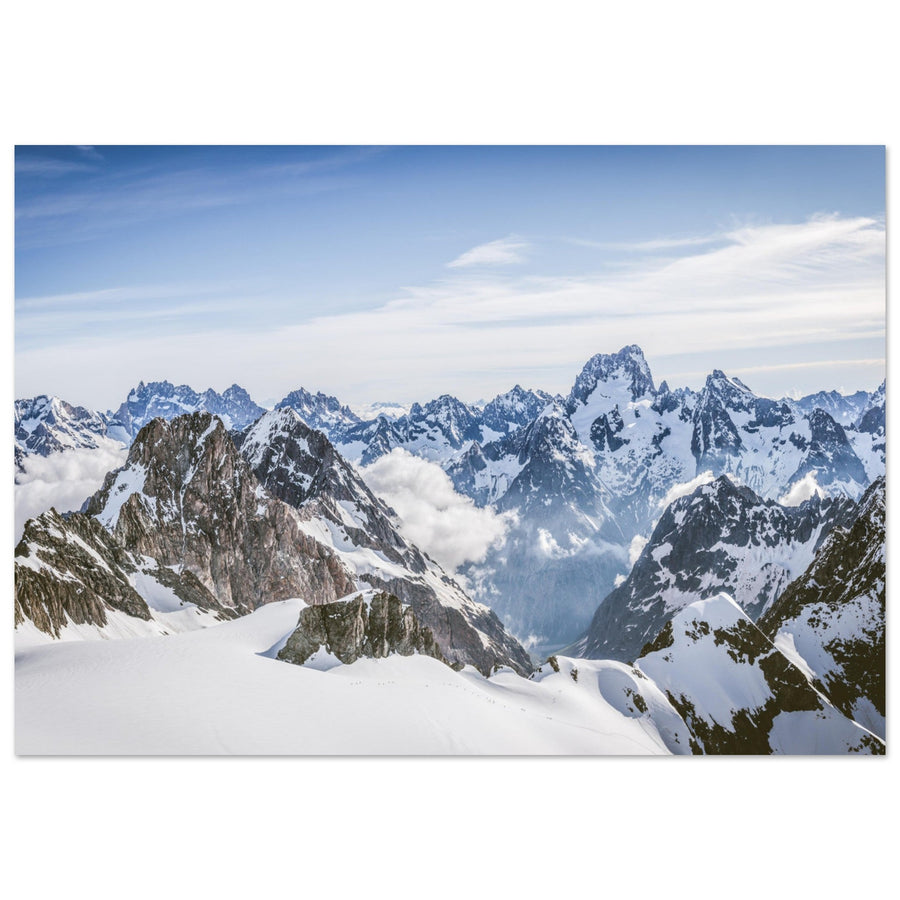
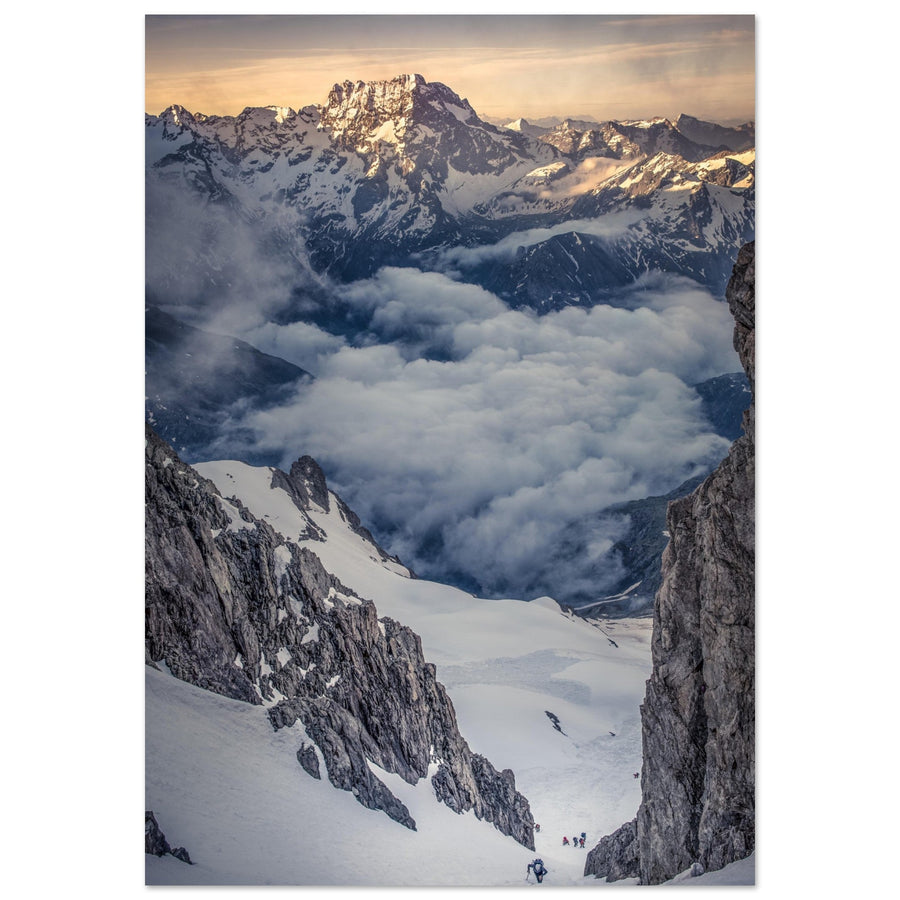
The Glacier Blanc fills the foreground with its fractures and tones. The Pelvoux locates the scene, but the dense crevasses keep the eye within the ice. This creates a different hierarchy from a summit portrait.
Photograph: Marisa Estivill View the Glacier Blanc facing the PelvouxChoose an intention
What image do you really want to bring back?
Start from the visual result, then open the project that gives it the most depth.
Keep villages, road or terraces as a measure of the face. Choose La Meije
Build planes that lead unambiguously towards the highest point. Choose the Barre
Put crevasses, moraines or rocks at the forefront of the reading. Choose the Glacier Blanc
Use the valley and larches to provide depth and season. Choose the Pelvoux
Decide whether the lake carries colour, reflection or the scale of the basin. Choose Lauvitel
Keep the signs of progression towards alpine pasture and high mountains. Choose Valgaudemar
Use the torrent and walls as opposing forces. Choose Vénéon
Eight photographic projects
Compare the subjects before choosing the terrain
Each project answers a distinct question; the order below moves from the iconic figure to the two major valleys.
Écrins | Photograph La Meije
Iconic face and inhabited territoryThe challenge is to preserve the mountain's presence while giving villages, terraces or the valley a real function.
Écrins | Photograph the Barre des Écrins
Summit and hierarchyGlacier and relief lines must lead to the summit without confusing the subject with the Glacier Blanc or the Pelvoux.
Écrins | Photograph the Glacier Blanc
Ice, moraine and scaleThe ice must remain legible as volume and surface rather than becoming a simple bright line below the summits.
Écrins | Photograph Mont Pelvoux
Mass, valley and seasonThe strength comes from the contrast between the large mineral volume and the valley, forest or larch layers.
Écrins | Photograph Lac du Lauvitel
Water and enclosed basinShore, surface and slopes form a system; reflection is an option, never a requirement.
Écrins | Photographing the Plateau d’Emparis
Plateau, alpine pastures and high mountainsOpen space, lakes, streams and the lines of the alpine pastures build the foreground, while the high mountains close the horizon.
Écrins | Photograph Valgaudemar
Valley in progressionDepth comes from the succession of habitation, slopes, alpine pastures, refuges and a mineral or glacial background.
Écrins | Photograph the Vénéon valley
Torrent, walls and hamletsThe Vénéon connects the current, breaks in slope and signs of habitation in a more vertical geometry.

A valley as a progression
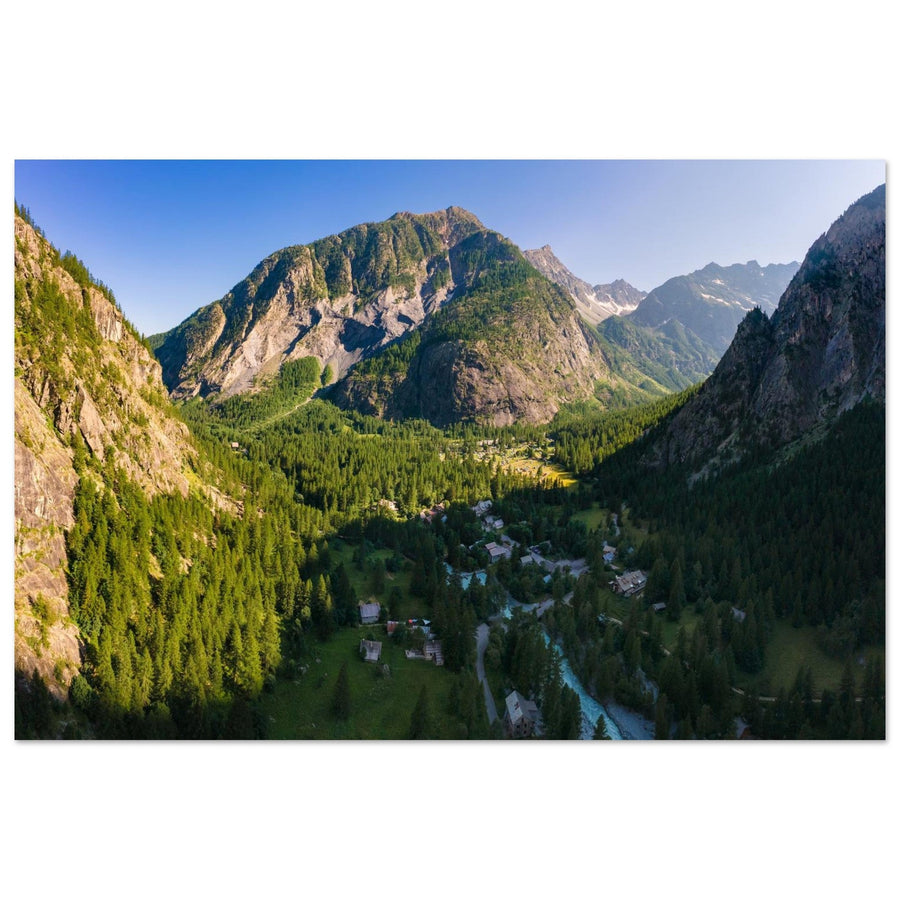
Ailefroide reveals the enclosed valley before the high mountains
Meadows, forests and successive rock faces give the image several layers of depth. This artwork complements the reading of the Écrins valleys without reducing it to an isolated summit.
Photograph: Francois Roux View the photo print of the Ailefroide valleyConditions and Plan Bs
Change project rather than force the image
In this massif, clouds, contrast, wind and access can shift the main subject.
Move down to the valley or nearby material
Give up the summit portrait and work with torrent, forest, moraine, habitation or details of ice.
Prioritize lines and volumes
Reduce the sky and use shadows, slopes and relief as geometry rather than waiting for colour that is not there.
Make the surface a plane, not a mirror
A shore, diagonal or colour variation is enough to structure Lauvitel or Vénéon.
Recompose from a safe sector
Never turn access information into a promise: check official sources and keep a fallback project.
Ground conditions take priority over the planned image
Valleys, footbridges and trails can change quickly after severe weather. A destination being open on one date is not a lasting guarantee.

Let the valley create depth
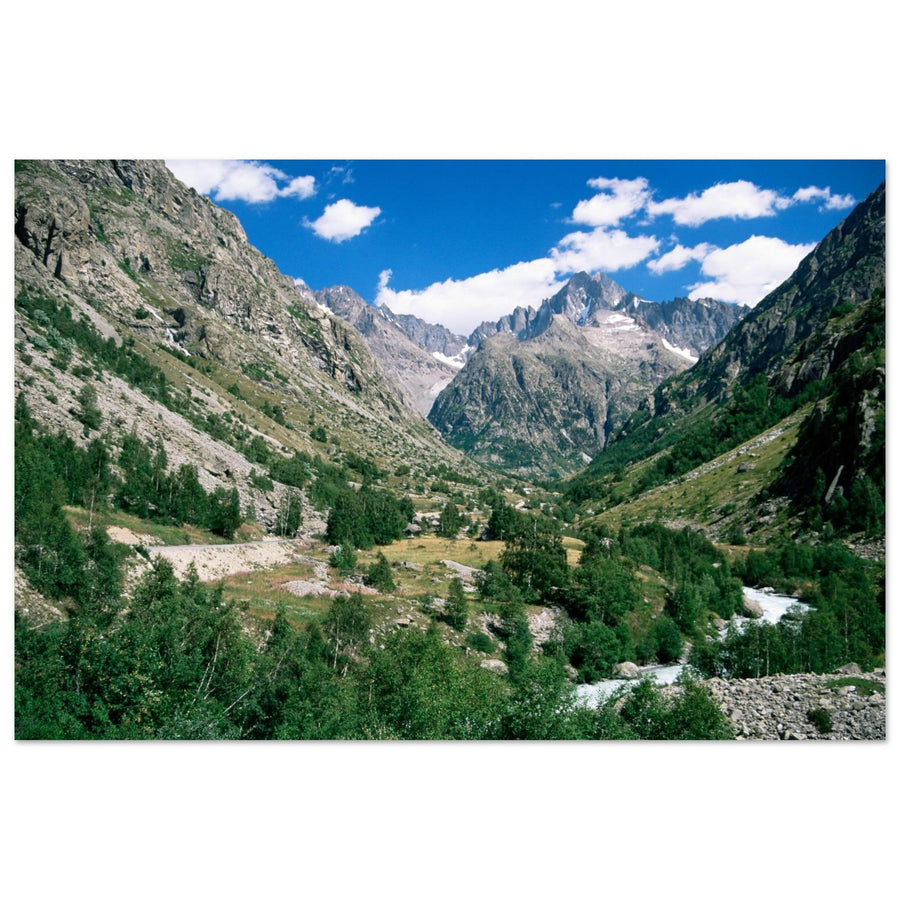
Lines on the valley floor connect the two walls
At the Pré de Madame Carle, water channels and scattered trees organise the valley floor between two large slopes. The image does not depend on an isolated summit: its strength lies in the continuity of the corridor. This example illustrates a valley-scale composition without describing current access conditions.
Photograph: Pierre Thiaville View the depth of the Pré de Madame CarlePrepare the outing
Separate image choices from information that must be rechecked
The relationship between a face, a valley, ice or water is stable photographic knowledge. Road access, the condition of a footbridge, restrictions and weather are not.
Prepare a main subject and a Plan B in the same sector, then confirm conditions with the relevant managers and tourist offices.
Check before you go
- weather, visibility, wind and thunderstorm risk;
- road access, parking and transport;
- condition of trails, footbridges and refuges;
- local regulations and protected areas.
Official sources
Photographic works from the Écrins
Explore the collection used here as evidence of the differences between summits, glaciers, lakes and valleys.