Where to see and hear the red deer rut in the Alps?
Listening to the red deer rut in the Alps is first and foremost a sound experience. During the rut, the deep calls of the males can carry far across valleys, forests and pastures, while the animals themselves may remain invisible. In Parc national du Mercantour, this idea is summed up very well: the rut is something you “listen to” more than something you “watch”. Trying to reduce the distance simply to obtain a photograph is therefore often the wrong objective.
The timing varies with the area, altitude and temperatures. Official Alpine sources broadly converge on an autumn window from mid-September to early or mid-October, with possible shifts in the mountains. Mercantour in particular notes that the mating period can move into October at altitude, while the Swiss National Park generally places the rut from the second half of September to the first days of October.
To prepare an outing, it is better to choose a broad area where the phenomenon is documented and the rules are clear, then accept uncertainty. Mercantour, Vercors, Engadine in the Swiss National Park and Val Soana in Gran Paradiso offer four very different readings of the same event. Vanoise adds an example of observation supervised by park rangers.
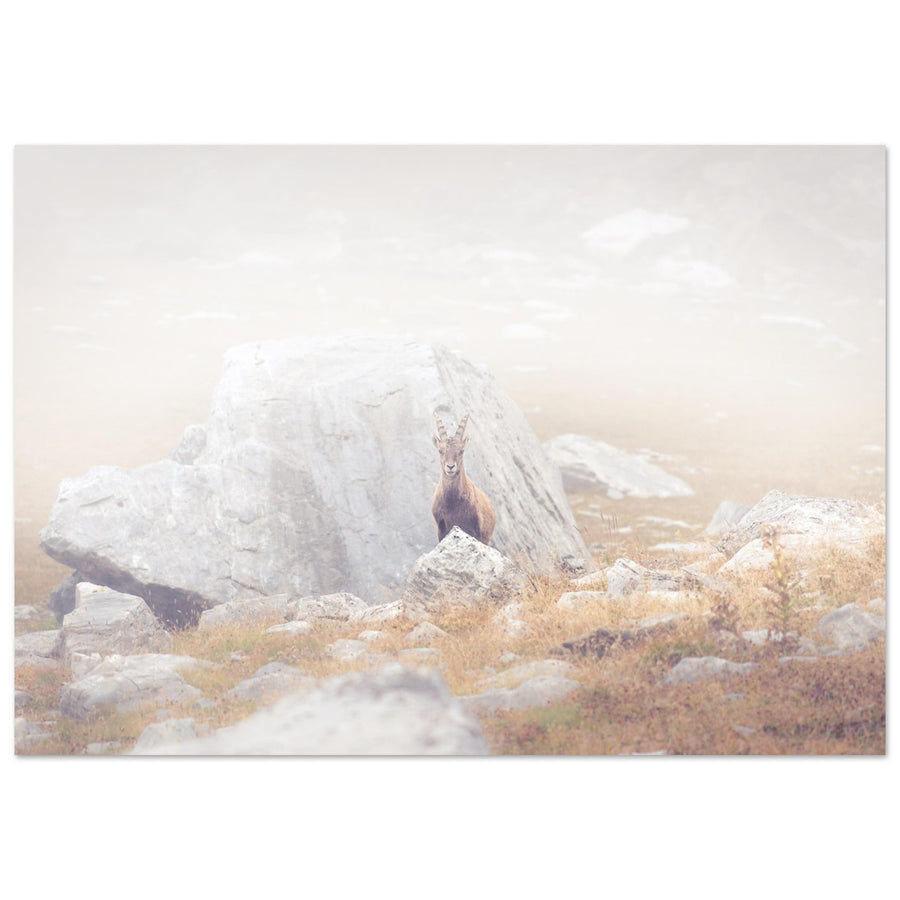
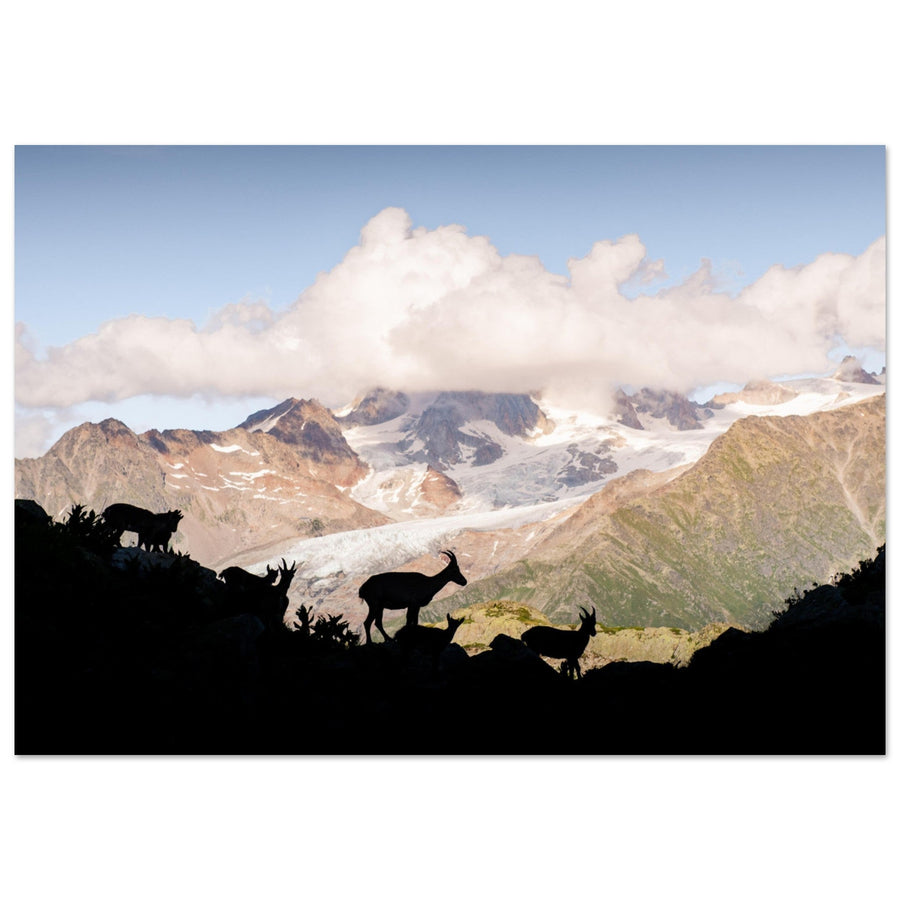
For photography, the best scene is not necessarily a tight portrait of a large stag. A distant deer in a clearing, a backlit silhouette, antlers emerging from mist or simply an autumn landscape accompanied by the sound of rutting deer can say more about the season. Lenses, shutter speeds, autofocus and detailed settings remain the responsibility of the Technique guide devoted to mountain wildlife photography.
The roar carries far. A successful outing can remain entirely auditory if the animals keep their distance.
Mid-September to October is a useful general window, but altitude and temperature can bring the peak forward or delay it.
Mercantour often reports strong activity at these times, but a calendar or clock time never creates an appointment.
The rut is a sensitive period. Leaving the trail or approaching a herd can interrupt the very behaviour you came to observe.
No lighting animals, calling, playback, pursuit or publishing micro-locations as a “spot”.
Which Alpine contexts genuinely change how you prepare?
| Area | Why it matters | Useful window / reading | Plausible scene | Main trade-off |
|---|---|---|---|---|
| Mercantour | Very complete official sources on the rut, behaviour and good practice | Mid-September to mid-October as a general reference; possible shift into October in the mountains | Rut heard from a path, distant stag in alpine pasture or at the forest edge | Do not turn known rutting grounds or density information into photography spots |
| Vercors | Iconic Prealpine context with explicit management of tranquillity on the Ambel plateau | Mid-September to mid-October according to the official Vercors Rando source | Silhouette between forest and grassland, listening from authorised paths | The rut is highly attractive: follow local instructions and do not overcrowd sensitive areas |
| Swiss National Park / Engadine | Highly regulated observation and an especially precise calendar | Generally from mid-September, often around the 20th, until the first days of October | Deer visible at a distance in a broad Alpine valley, rut heard from the authorised route | Paths are compulsory, visits are daytime only, dogs and drones are prohibited |
| Gran Paradiso / Val Soana | An Italian counterpoint where the Park offers official experiences centred on listening at dusk | Official 2025 autumn programme devoted to the rut from late September into October | Rut in a wooded valley and meadow landscape, with animals not always visible | A guided event proves a context, not guaranteed presence at a specific time or point |
| Vanoise | The Park calendar documents a rut observation with a park ranger | A September reference, useful as an example of guided observation rather than an absolute calendar | Guided listening, distant observation if the animals appear | The existence of an official outing does not turn the entire massif into an easily observable rutting area |
This table does not rank your “chances of seeing a deer”. Presence data, the reputation of a massif or a guided outing cannot be converted into an individual probability. The right area is the one whose timing, regulations and landscape type suit your project while leaving the animals a genuine zone of tranquillity.
Understanding the rut: a breeding period, not a show to provoke
The rut refers both to the guttural call of the male and, by extension, to the mating season. In Mercantour, males join females in autumn, form harems and use their voice to attract hinds, repel rivals and assert their presence. Confrontations can occur between males.
This visible and audible intensity explains the fascination of the season. It also explains its fragility. An animal that stops roaring, leaves a clearing or moves its group because of a human presence is no longer offering a natural scene: the observer has altered the behaviour they wanted to document.
Sound is therefore an excellent indicator of distance. If the roar carries to you from a forest or mountainside, there is no need to “gain” the last few hundred metres. Binoculars can confirm a silhouette or antlers without entering the area used by the animals.
When should you listen to the red deer rut in the Alps?
Across the Alps, think in terms of a window rather than a single date. Parc national du Mercantour describes a period running broadly from mid-September to mid-October, while its species sheet notes that the mating period can shift later in the mountains, into October. The Swiss National Park, for its part, generally gives a start from mid-September, often a little later around 20 September, until roughly the first week of October.
Temperature also matters. The Swiss National Park notes that the intensity of the rut varies from one year to another according to thermal conditions. A date reputed to be perfect can therefore be quiet, while an evening a few days later becomes very vocal.
Mid-September: the start of the main window
In several massifs, the first rutting behaviours become clearly noticeable. This is already a period when maximum tranquillity rules should be applied.
Late September: often a strong period
Engadine traditionally concentrates many observations at this time. Visitor numbers can rise too: the quality of an outing then depends as much on respecting the rules as on deer activity.
Early October: still highly relevant at altitude
Mercantour sources show that mountain conditions can shift the calendar. A cold, quiet first week of October remains entirely consistent with rut ecology.
Mid-October and later: do not promise
Some males may continue vocalising later, but this guide does not turn a biological possibility into a guaranteed window. Local sources should regain authority.
Dawn and dusk: useful reference points
Mercantour reports activity often peaking at dawn and dusk. These moments help structure an outing without creating a universal magic hour.
Night: only where it is permitted
Rules vary between protected areas. In the Swiss National Park, visits are permitted only during the day; the regulatory framework always takes precedence over the desire to keep listening.
Read the landscape without looking for a “rutting stand”
Red deer are often associated with forest, but Alpine sources show broader use of the landscape. In Mercantour they also use valley-floor meadows, high-altitude pastures and can climb above 2,500 metres. Gran Paradiso likewise describes a forest species that appreciates woodland interspersed with clearings, cultivated ground and meadows.
For the observer, transitions are therefore more interesting than the search for a fixed point: the edge between woodland and meadow, a clearing viewed from a distance, pasture bordered by forest, or a broad opening through which sound can travel. You can prepare for the landscape without following a male or tracing the direction of the roar back to him.
This nuance is important in Vercors. The Ambel plateau is officially documented as a breeding and rutting context, but the same source emphasises tranquillity: stay on paths, keep quiet and follow signs. The name of the area helps explain a Prealpine experience; it is not a set of instructions for parking as close to the animals as possible.
In Engadine, the logic is even clearer: resting areas and trails in the Swiss National Park define the points from which observation must take place. The photographic framing adapts to the authorised point; the observer does not redesign the route to optimise distance.
Which photographic scenes should you look for naturally?
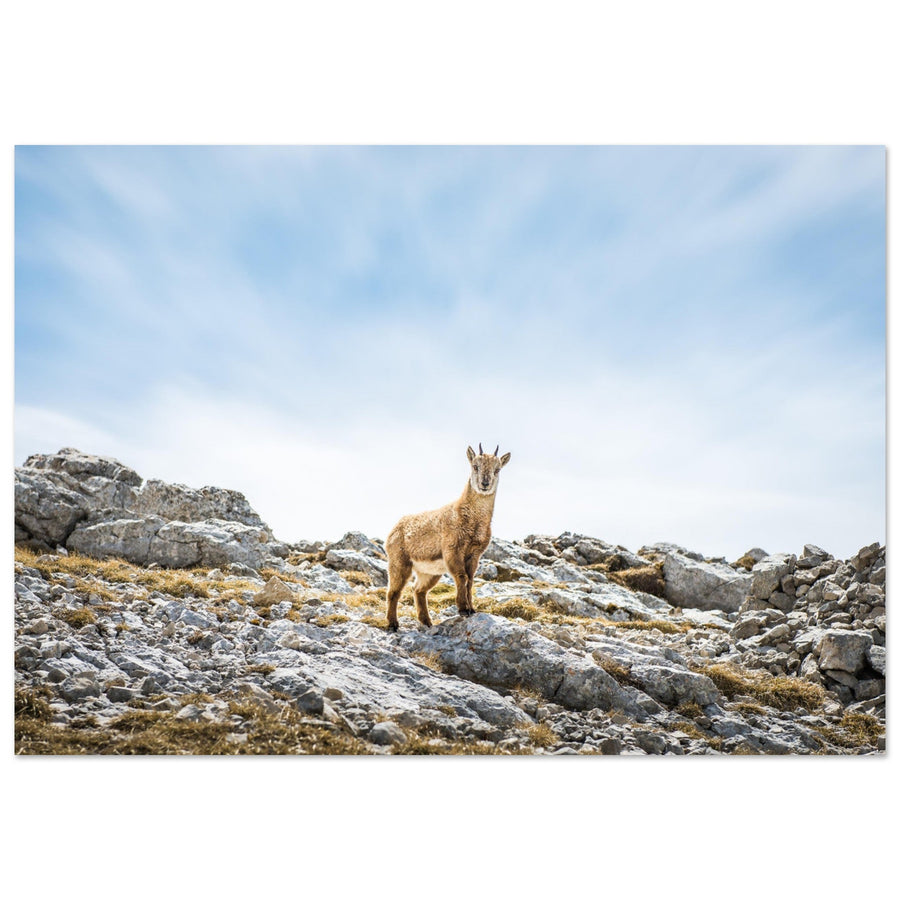
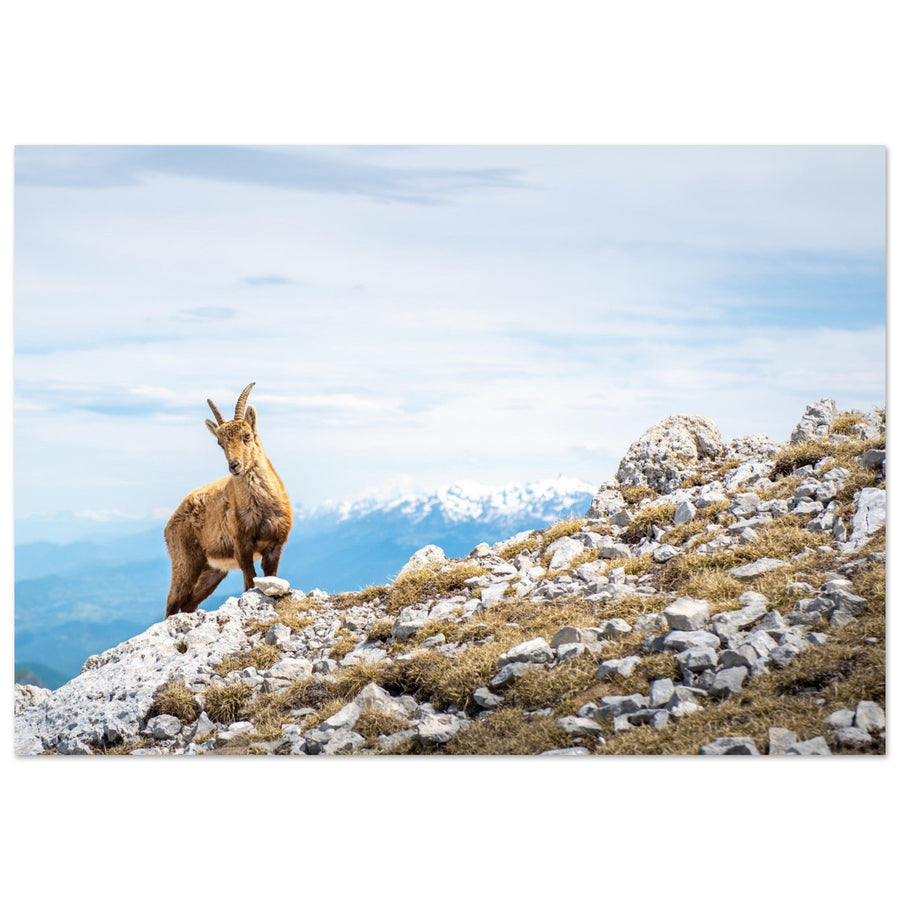
The rut can produce spectacular images, but its photographic value does not depend on proximity. A strong scene can include the animal as a small presence in the landscape, or even tell the story of the rut without a visible deer if the autumn context and sound experience structure the narrative.
The stag in the wider landscape
A distant male at the edge of a clearing or on a pasture keeps the forest, relief lines and Alpine scale in the frame. Distance becomes a compositional quality rather than a flaw.
Silhouette and antlers
At dawn or dusk, a clear silhouette against sky or a light area can be enough. The image conveys the power of the antlers without needing to show every detail of the coat.
Breath in cold air
When an animal appears naturally at a good distance, a cold morning can make its breath visible and strengthen the atmosphere. The scene should be received, never provoked by approaching.
Harem or rivalry at a distance
The presence of several animals can give meaning to rutting behaviour. Stay descriptive: a distant photograph does not always justify a precise interpretation of relationships or the outcome of a confrontation.
The rut out of frame
A forest-and-meadow landscape in autumn light can become a genuine rut image if the story explains that deer are being heard without being seen. Not everything has to become a portrait.
Giving up the photograph
If the light is too low, the animal remains behind cover, or the composition would require leaving the path, listening alone is the right outcome. Photography does not grant additional access rights.
For focal-length choice, shutter speeds, autofocus or handling high ISO at dawn and dusk, see Photographing mountain wildlife. Here, the subject remains preparation of the scene and distance.
Observe the rut without disturbing: rules that come before the photograph
Which area should you choose for your project?
For a very well-documented French context: Mercantour
The Park combines timing, habitat, behaviour and precise advice. It is the best starting point for understanding the Alpine rut without reducing it to an address.
For a Prealpine atmosphere: Vercors
Forests, broad grasslands and clearings give a very different reading from the major inner-Alpine massifs. The central issue becomes the coexistence between an intense experience and the need for tranquillity.
For the most regulated observation: Engadine
The Swiss National Park shows that a highly reputed experience can remain compatible with strict rules: paths, daytime only and no free repositioning.
For an Italian counterpoint: Gran Paradiso
Val Soana offers an experience officially organised around listening at dusk and reminds us that a powerful rut does not mean animals will be easy to see.
To prioritise guidance: Vanoise
An outing with a park ranger can be relevant if your main priority is understanding behaviour, local regulations and the distance to keep rather than building your own route.
Mercantour — the best French framework for understanding the rut calendar
Parc national du Mercantour publishes particularly complete documentation. Its page devoted to the rut places the main period between mid-September and mid-October and notes that the phenomenon is listened to more than it is observed. It also indicates that intensity is often high at dawn and dusk.
The deer species sheet adds an essential mountain nuance: while the mating period is given as mid-September to mid-October in lowland areas, it can shift from early to late October in the mountains. This difference justifies looking at altitude and temperature rather than copying a single national date.
The landscape also explains this variability. Deer use forests but also meadows, pastures and open habitats, from valley floors to above 2,500 metres. For photography, this opens very different scenes depending on the relief: dark forest edge, high-altitude pasture, silhouette below a slope or an animal almost lost in a vast mountainside.
The Park is very clear about practice, however: keep your distance, stay on paths and open routes, do not light animals, move as little as possible, stay quiet and use binoculars. This discipline is an integral part of the experience.
Vercors — listening to the rut in a mosaic of forests and broad grasslands
Vercors brings a more Prealpine identity. Official Vercors Rando documentation describes the Ambel plateau as a mosaic of clearings, forests and extensive grasslands, with red deer present and a rutting period from mid-September to mid-October.
The same content immediately stresses tranquillity: stay on paths, keep quiet and follow the instructions on signs. This is exactly what makes Vercors editorially interesting. The popularity of the rut does not remove constraints; it makes them more important.
AAM therefore does not turn Ambel into a guide to car parks, roads or waiting points. The name of the territory is enough to distinguish a context: Prealpine forest, open spaces, autumn listening and tranquillity management. Once on site, information from the local manager regains authority.
To prepare for the massif’s landscape independently of the rut, see What to photograph in the Vercors massif?.
Swiss National Park and Engadine — the rut under strict observation discipline
The Swiss National Park makes the red deer rut one of the major events of autumn. Val Trupchun is particularly well known for this period, and the animals page notes that the rut can also be sensed, heard or seen in other parts of the Park.
The calendar is one of the most precise in this project: the Park FAQ generally places the start around mid-September, often around 20 September, and the end around 5 October. Intensity depends strongly on temperature. The Autumn page confirms this broad window and notes that many visitors head to Val Trupchun.
This reputation grants no extra freedom. The Park prohibits leaving marked trails, permits visits only during daylight, prohibits dogs and drones, and asks visitors not to enter the Park before sunrise in order to avoid disturbing sensitive deer.
Photographically, this constraint is very productive: a deer seen from an authorised viewpoint in a large valley, even small in the frame, tells the park’s story better than a portrait obtained by leaving the route. To prepare for Swiss landscapes beyond the rut, see What to photograph in the Swiss Alps?.
Gran Paradiso and Val Soana — a rut the Park first invites you to hear
Gran Paradiso National Park describes red deer as a forest species that favours woodland interspersed with clearings and meadows. Within the Park, the species is currently found mainly in Val Soana, with a few more sporadic records elsewhere.
The official 2025 autumn programme offered a “Safari Alpino — Speciale Bramito del Cervo” in Val Soana on Saturdays between 20 September and 25 October. Its description is particularly relevant to this guide: at dusk, the stated aim was to listen to males roaring while defending their harems, with the clarification that the animals would not necessarily be easy to see.
This wording matches the philosophy of the article exactly: the sound experience can be complete without obtaining a portrait. The 2025 programme proves a strong institutional context; it should not be turned into a perpetual calendar or a guarantee for a future independent outing.
Val Soana therefore contributes above all a different practice: listening to a ritual in an Italian Alpine valley landscape, with possible official guidance depending on the year, rather than looking for a fixed place to “see the rut”.
Vanoise — a useful reference for prioritising guided observation
The Vanoise National Park calendar documents an evening observation with a park ranger titled “Brame du cerf” on 23 September. This signal is enough to retain Vanoise as a reference, but not to build a chapter as assertive as Mercantour or Engadine.
Vanoise’s value lies elsewhere: it shows that a guided outing can be an excellent strategy when the main objective is to understand behaviour, local regulations and the distance to keep. A park ranger provides a reading of the terrain without turning the presence of deer into a commercial promise.
The massif therefore deliberately remains secondary in this guide. AAM does not infer from an official event that all Vanoise valleys are equally suitable for observing the rut. To prepare for the massif’s landscape, see What to photograph in the Vanoise massif?.
What this guide can — and cannot — promise
After choosing the area: prepare for the landscape, then the photography
Once the broad context is chosen, each question returns to its proper owner. Destination guides are used to prepare the landscapes and general organisation of the massif. The Technique guide owns lenses, shutter speeds, autofocus, exposure and shooting methods. This Rut guide keeps only what changes the decision about listening, observation, distance and area.

A red deer in evening light
This photograph shows a red deer in low light and visually extends the guide. It does not document rutting behaviour and is therefore not used as evidence of the rut.
Photograph: Alexandre Nilles
View the red deer photo printKey takeaways
To hear the red deer rut in the Alps, start by choosing a broad, documented area and accept not knowing the exact point where the animals are. Sound carries far and the experience is often stronger when it remains distant.
The Alpine calendar generally concentrates between mid-September and early or mid-October, with variations linked to altitude and temperature. Mercantour and the Swiss National Park show precisely why a single date would be misleading.
The selected areas offer genuinely different experiences: a highly documented protocol in Mercantour, a Prealpine mosaic and need for tranquillity in Vercors, tightly regulated observation in Engadine, official dusk listening in Val Soana, and guided observation in Vanoise.
Finally, the rut is a breeding period. Distance, silence, authorised paths and local rules come before any photograph. If obtaining the image requires lighting, calling, following or approaching a deer, the scene no longer fits the contract of this guide.
Information and official sources
The rut calendar, access to protected areas and local rules can change. The facts used in this guide come primarily from the following managers.
- Parc national du Mercantour — C’est la période du brame
- Parc national du Mercantour — Cerf élaphe
- Vercors Rando — Plateau d’Ambel and red deer
- Swiss National Park — observing red deer
- Swiss National Park — autumn and the red deer rut
- Swiss National Park — FAQ on the rutting period
- Swiss National Park — protection regulations
- Parco Nazionale Gran Paradiso — autumn programme and bramito del cervo
- Parco Nazionale Gran Paradiso — Il cervo
- Vanoise National Park — guided outings