Écrins | Photographing Mont Pelvoux
Photographing Mont Pelvoux
Mont Pelvoux photographs as a large mass connected to Vallouise: its best foregrounds provide depth, season, and scale.
Forests, larches, meadows, and valley lines are not mere ornaments. They explain how the mineral volume dominates a tiered landscape.
Initial decision
What is the relationship with the valley?
The proportion given to the lower plans determines the narrative.
A tight frame isolates the volume and its breaks, with very little context.
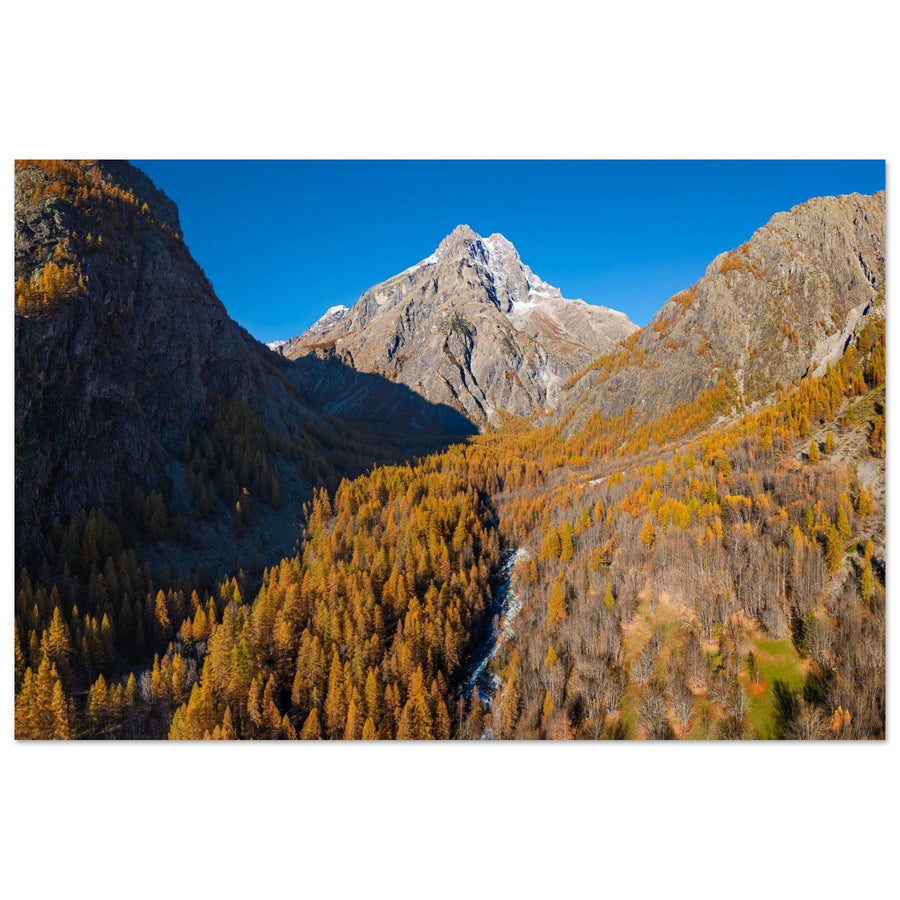
The valley forms a deep base that makes Pelvoux's dominance palpable.
Forests, larches, or snow establish a color and rhythm in front of the mass.
Photographic signature
What makes Pelvoux recognizable
The power comes from the gap between a continuous mineral volume and finer lower plans.
Avoid overlaps that cut the volume into unrelated fragments.
Valley, forest, and rock must clearly follow each other for the height to be read.
The color of the larches or the snowline can visually date the landscape without becoming a gratuitous effect.
Local positions
What the valley changes
The position chooses the amount of territory retained below the summit.

Proof through work
The season gives the volume a base
The golden larches punctuate the lower plans while Pelvoux retains the largest mass of the frame.
Photography: Francois RouxView the workSubject boundary
Does the image still tell the story of Pelvoux?
Context is useful as long as it provides the measure of the volume.
Its mass dominates and the valley plans organize its base.
Habitat, crops, or forest carry the narrative; Pelvoux becomes a territorial backdrop.
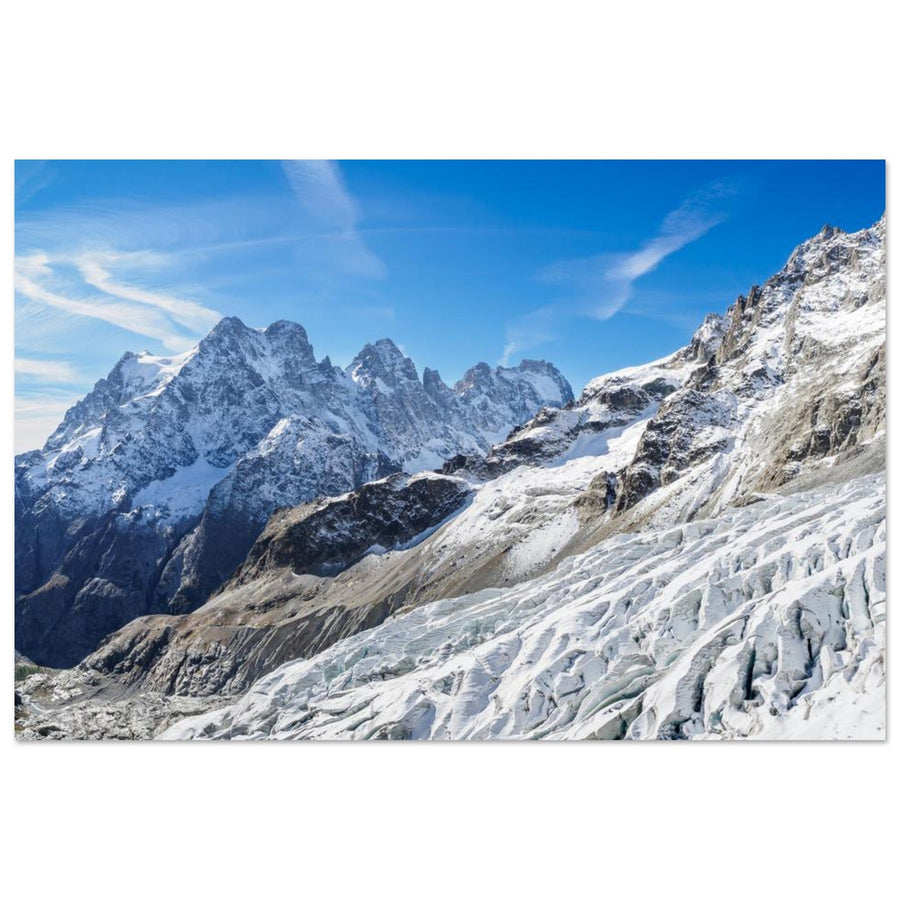
Crevasses, moraine, and glacial matter hold the gaze before the mountain.
Failures and backup plans
What lightens the mass, and what to change
A blocked silhouette can still work if the base remains clear.
Work on domination from the base
Frame the valley plans and the visible part of the volume rather than waiting for a complete cut-out.
Reduce the number of layers
Keep only one line of forest or meadow to give scale without scattering the gaze.
Re-establish hierarchy
Reduce its surface area or relative intensity so that the color serves Pelvoux instead of competing with it.
Terrain and sources
Preparing the actual terrain
The choices of plans remain valid from one season to another; access, snow cover, and trail conditions must be confirmed before each outing.
To check before going out
Adapt the project to the actually accessible area.
- weather, snow, and visibility;
- opening of access and parking;
- regulations and condition of routes.
Official sources
Vallouise territory and starting point of the high valley.
Continuing
Continuing the project
Two useful subjects next
Compare the mass to the iconic face and glacial matter.
Return to the choice of massif
Compare the seven projects before changing valleys.