Where to photograph the Aiguille du Midi? Light, framing, and field tips
Share
The Aiguille du Midi is one of the most spectacular places to photograph Chamonix and the Mont-Blanc massif. In just a few minutes by cable car, you leave the valley and enter a high-mountain world: glaciers, ridges, mountaineers, clouds, metal platforms, snow, dark rock, and immense panoramas.
But it's also a challenging site to photograph. Everything is impressive, so everything can quickly become confusing. The light is very strong, contrasts are extreme, whites can blow out, shadows can become very harsh, and the altitude demands a slower, more careful, and more selective approach.
This guide helps you prepare for a photo outing to the Aiguille du Midi: access, best viewpoints, light, framing, mistakes to avoid, field tips, and useful links to explore the rest of the photo cluster around Chamonix and Mont-Blanc.
Table of Contents
- Explore the Mont-Blanc Photo Cluster
- Aiguille du Midi in Photos: Quick Summary
- Why is the Aiguille du Midi a Major Photo Spot?
- Access to the Aiguille du Midi: Cable Car and Practical Info
- The Best Viewpoints for Photographing the Aiguille du Midi
- When to Photograph the Aiguille du Midi? Light and Weather
- Photo Framing Ideas
- Field Photography Tips
- Mistakes to Avoid
- Altitude, Safety, and Weather Conditions
- Which Aiguille du Midi Photo to Choose for a Wall Print?
- FAQ: Photographing the Aiguille du Midi
Explore the Mont-Blanc Photo Cluster
This article is part of the mini-cluster dedicated to the best photo spots around Chamonix and the Mont-Blanc massif. The Aiguille du Midi is a child page of the cluster: it delves into the high-mountain sector, while the Mont-Blanc and Chamonix guides provide a broader view of the valley.
- Complete Guide: Where to Photograph Mont-Blanc?
- See all Mont-Blanc photo guides
- Where to Photograph Chamonix?
- Where to Photograph Lac Blanc?
- Where to Photograph the Aiguille du Midi? (current guide)
- Where to Photograph the Mer de Glace?
- See all Alps photo guides
Aiguille du Midi in Photos: Quick Summary
| Criterion | Recommendation |
|---|---|
| Main Spot | Aiguille du Midi, Chamonix-Mont-Blanc |
| Strong Photo Subject | High mountains, glaciers, ridges, platforms, mountaineers, clouds, Mont-Blanc |
| Best Light | Clear morning, side light, late afternoon depending on opening hours, cloudy breaks |
| Ideal Season | Winter for graphic quality, summer for alpine activity, autumn for low light |
| Photo Difficulty | High: strong contrasts, snow, altitude, crowds, rapid weather changes |
| Terrain Difficulty | Technically easy via cable car, but high-altitude environment |
| Useful Equipment | Telephoto lens, wide-angle lens, extra battery, warm clothing, wind protection |
| Ideal Print Type | Black and white, strong vertical, sunset, graphic high-mountain image |
Why is the Aiguille du Midi a Major Photo Spot?
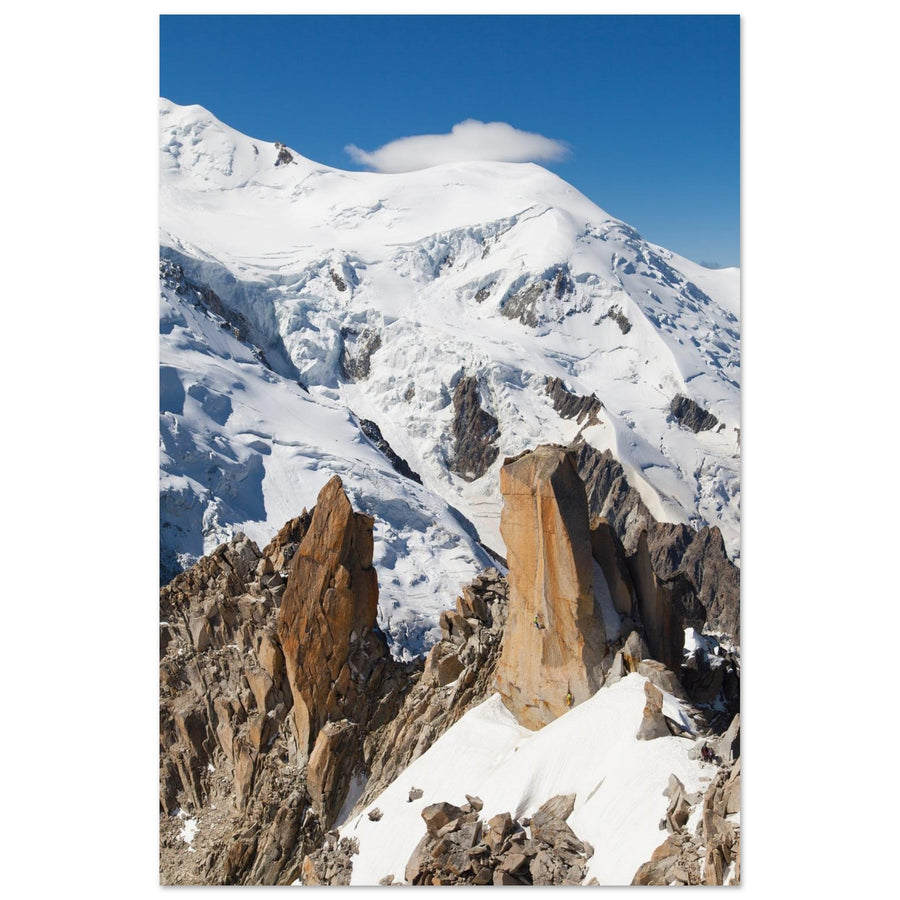
The Aiguille du Midi is a major photo spot because it offers quick access to a spectacular high-mountain atmosphere. From the platforms, the gaze falls on glaciers, ridges, the summits of the Mont-Blanc massif, and mountaineers evolving in a very mineral environment.
Unlike Lac Blanc, which relies on balance and reflections, the Aiguille du Midi thrives on verticality, graphic quality, and tension. The lines are harsher, the contrasts stronger, and the shapes more radical. It's an ideal place to produce powerful, sometimes almost abstract, images.
The challenge is not to be overwhelmed by the scenery. A good photo of the Aiguille du Midi isn't necessarily a wide shot. It can be a detail: a ridge in the light, a silhouette of a mountaineer, a track in the snow, a cloud obscuring a summit, or a metallic structure contrasting with the mountain.
Access to the Aiguille du Midi: Cable Car and Practical Info
Classic access to the Aiguille du Midi is by cable car from Chamonix. This is what makes the site so unique: you quickly go from the valley to a high-mountain environment, without a long approach walk.
For a photo outing, easy access should not make you forget the constraints. Schedules vary depending on the season, weather, maintenance, crowds, and operating conditions. Before planning a sunrise, late afternoon light, or a specific photo series, always check official schedules, opening status, last ascents, and last descents.
The site can be very busy. If you want to photograph with more calm, prioritize the first slots when the weather is stable. Even in summer, bring warm clothes: wind, cold, altitude, and waiting on the platforms can quickly cause fatigue.
- Official Timetables and Rates — Aiguille du Midi
- Official Access and Map — Aiguille du Midi
- Live Info, Weather, and Opening — Aiguille du Midi
- Chamonix Tourist Office — Aiguille du Midi Cable Car
The Best Viewpoints for Photographing the Aiguille du Midi
1. Summit Platforms for High-Mountain Views
The Aiguille du Midi platforms offer the most spectacular views: glaciers, ridges, summits, clouds, and the Chamonix valley below. It's the most obvious viewpoint, but not necessarily the easiest to frame.
The trap is to include everything. For a strong image, look for a dominant line: a ridge, a rock/snow contrast, a silhouette, a track, a shadow, or a window of light.
2. Framing Towards Mountaineers and Ridges
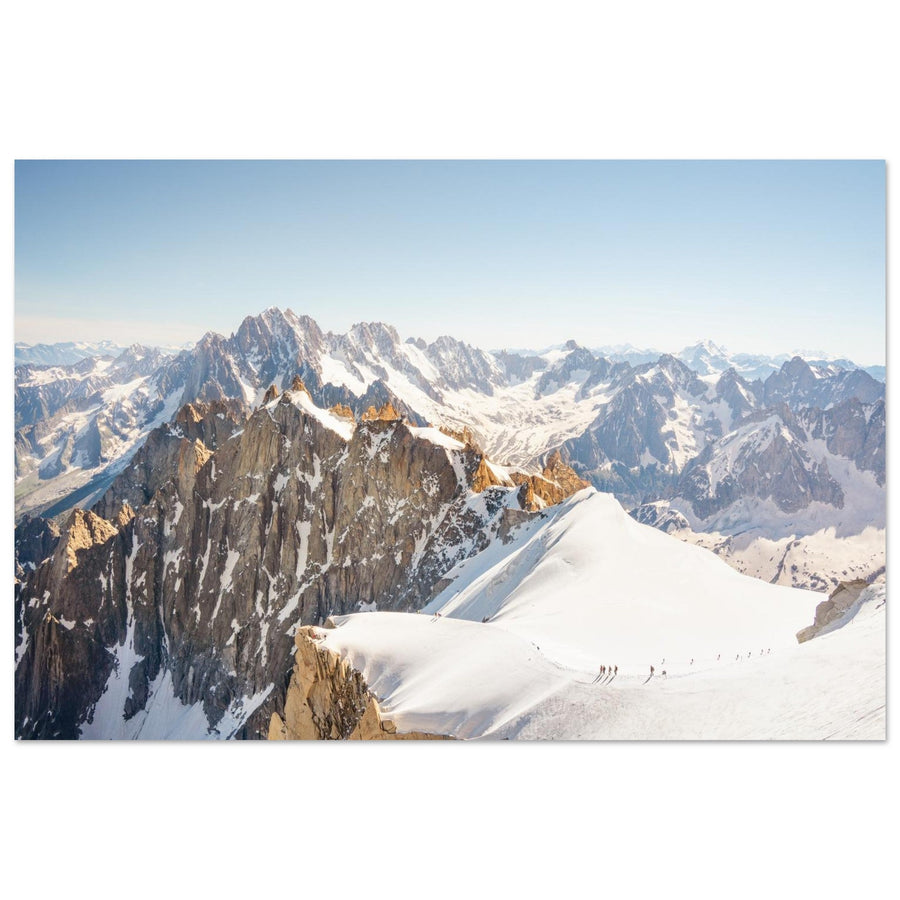
Mountaineers provide a human scale to the landscape. A small silhouette on a ridge can transform a spectacular image into an emotional one. It allows you to show the immensity of the place without needing to frame everything.
A telephoto lens is very useful for isolating these scenes. It visually brings the ridges, tracks, and summits closer, while keeping the image more legible.
3. Metal Structures and Platforms
The Aiguille du Midi is not just a summit: it's also an altitude architecture. The platforms, stairs, walkways, and installations can become very strong graphic elements when well integrated.
These structures create an interesting contrast between humans and the mountain. In black and white, they can produce very contemporary images.
4. Framing Towards Mont-Blanc and the Glaciers
Depending on the weather, the views towards the Mont-Blanc massif can be spectacular. The subject isn't always the summit itself, but the lines leading to it: glaciers, ridges, clouds, tracks, slopes, and shadows.
In this type of scene, side light is precious. It reveals volumes and prevents snow from becoming a flat, detail-less surface.
5. Views Towards Chamonix and the Valley
From the Aiguille du Midi, the Chamonix valley seems very far away. This contrast between extreme altitude and the valley floor can produce interesting images, especially if clouds or shadows structure the scene.
A vertical framing can reinforce this impression of depth: platform or ridge in the foreground, then valley, forests, town, and mountains in the background.
When to Photograph the Aiguille du Midi? Light and Weather
Morning: The Best Compromise
Morning is often the best compromise for photographing the Aiguille du Midi. The air can be clearer, clouds less developed, and contrasts easier to manage than in the middle of the day. It's also when the platforms may be less crowded.
Side Light: Ideal for Ridges
Side light reveals volumes. It defines ridges, couloirs, seracs, and snow textures. It's more interesting light than direct frontal sun, which can flatten relief.
Late Afternoon: Spectacular, but Dependent on Schedules
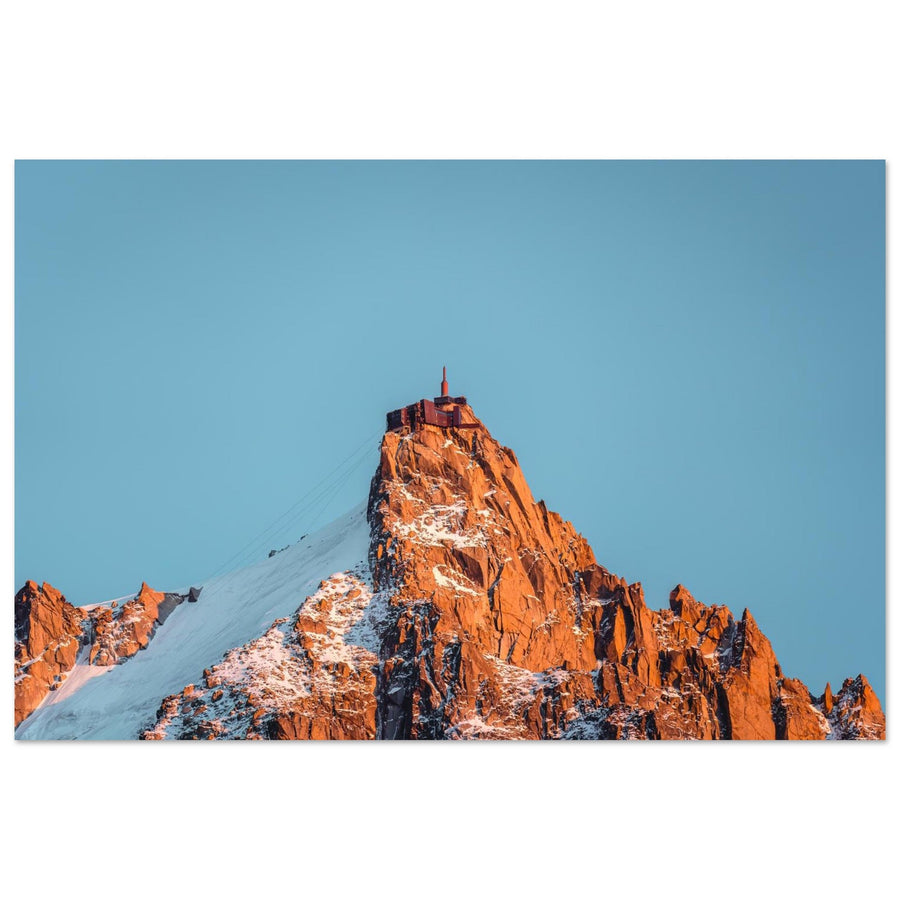
Late afternoon can provide magnificent light on the Aiguille du Midi and the Mont-Blanc massif. However, this window depends heavily on opening hours, last descents, and operating conditions. You should therefore check official schedules before planning a photo outing around this light.
Clouds: A True Photo Subject
At the Aiguille du Midi, clouds are not just a constraint. They can become the subject: mist around the platforms, summits appearing and disappearing, light breakthroughs, shadows on glaciers, dramatic atmosphere.
Winter: Pure Graphic Quality
In winter, snow simplifies shapes and enhances graphic quality. Contrasts become stronger, surfaces more refined, and black and white images can become very powerful. However, you must expose carefully to preserve details in the whites.
Photo Framing Ideas
Dramatic Vertical
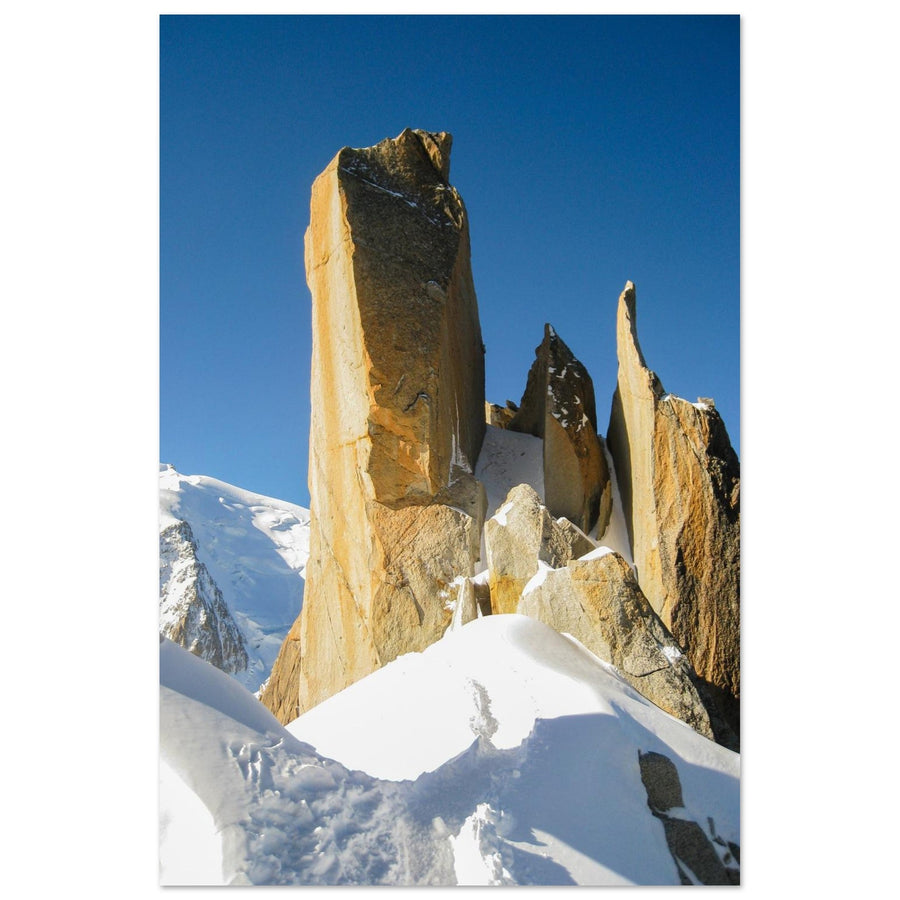
The Aiguille du Midi lends itself very well to the vertical format. The walls, platforms, ridges, and depth towards the valley reinforce the impression of height. This framing is particularly effective for a wall print in an entrance, office, or narrow wall.
Graphic Black and White
If color doesn't add much, consider black and white. The Aiguille du Midi naturally offers strong contrasts: dark rock, light snow, metallic structures, clouds, silhouettes. Black and white can enhance this readability instead of masking difficult light.
Silhouette on Ridge
A human silhouette placed on a ridge or near a glacial passage immediately gives scale to the place. The image becomes more emotional, more narrative, and less touristy.
Glacier Detail with Telephoto Lens
With a longer focal length, you can isolate ice textures, tracks, seracs, and the lines of the massif. This approach produces more sober, often more premium, images, as they avoid the "tourist photo" effect.
Platform in the Clouds
When clouds rise around the Aiguille du Midi, the platforms can become almost ethereal. A structure disappearing into the mist, a silhouette behind a window, or a piece of a staircase in the light can create a very strong image.
Field Photography Tips
Go with a Clear Intention
The site is so spectacular that it's easy to photograph anything and everything. Before shooting, choose your intention: high mountains, graphic quality, mountaineers, snow, architecture, valley, clouds, or black and white.
Use a Telephoto Lens
A wide-angle lens is useful for overall views, but a telephoto lens is often more powerful at the Aiguille du Midi. It allows you to isolate ridges, mountaineers, glacier textures, and snow contrasts.
Preserve Highlights
Snow, ice, and clouds can easily blow out. Expose carefully, monitor the histogram if you use it, and retain texture in the light areas. A high-mountain image that is too bright quickly loses its substance.
Protect Your Batteries
Cold reduces battery life. Keep a spare battery warm, especially if you plan to stay long on the platforms or if you are photographing in winter.
Accept Weather Changes
Conditions can change very quickly. A cloud can hide the entire massif, then leave an exceptional window of light a few minutes later. At the Aiguille du Midi, patience can be more rewarding than constant movement.
Mistakes to Avoid
Photographing Everything Wide-Angle
A wide-angle gives breadth, but it can also make summits look small and the image empty. Alternate with tight framing for stronger compositions.
Underestimating Altitude
Cable car access might give a false sense of ease, but you will feel the altitude. Walk slowly, hydrate, dress warmly, and don't push yourself if you feel unwell.
Blowing Out Whites
Snow, ice, and clouds are very bright. If highlights are lost, the image becomes flat and difficult to recover. It's better to expose a little more cautiously.
Only Taking Tourist Photos
The wide view is impressive, but it's often overdone. Also look for details, silhouettes, shapes, shadows, and lines. That's where you'll produce a more personal image.
Altitude, Safety, and Weather Conditions
The Aiguille du Midi is an accessible tourist site, but it remains located in a high-mountain environment. Cold, wind, altitude, snow, outdoor platforms, and weather changes must be taken seriously.
Stay within authorized areas, respect site instructions, do not cross barriers, and never venture onto glacial terrain without appropriate skills, equipment, and supervision. The mountaineers seen around the site are equipped and experienced: this is not a typical walking area.
Before any outing, check the schedules, cable car opening, weather conditions, any restrictions, and last descents. Good light does not justify putting yourself in difficulty.
Which Aiguille du Midi Photo to Choose for a Wall Print?
The Aiguille du Midi works very well as a wall print when the image embraces its graphic character. Ridge lines, contrasts between snow and rock, clouds, and high-altitude structures give a strong presence to the image.
For a contemporary interior, black and white is often very effective: it enhances contrasts, simplifies readability, and creates a premium atmosphere. For a living room or modern chalet, golden light on the Aiguille du Midi can bring more warmth. For an office or entryway, a vertical format can create a true impression of height.
Photo Prints Related to Aiguille du Midi and the Mont-Blanc Massif
Aiguille du Midi above Chamonix
A spectacular view of the high-altitude facilities, the valley, and the snow-capped peaks of the Mont Blanc massif.
Ideal for: large wall, modern chalet, office, high mountain decor.
Aiguille du Midi in black & white
A graphic and powerful image of Chamonix, ideal for a minimalist, alpine, and contemporary wall decor.
Ideal for: office, vertical wall, black & white interior, high mountain atmosphere.
Sunset on the Aiguille du Midi
Golden light on the features of the Aiguille du Midi, with ridges, couloirs, and seracs in a warm alpine atmosphere.
Ideal for: living room, modern chalet, bright mountain decor.
You can also explore related collections: Aiguille du Midi photo prints, Chamonix photo prints, Mont Blanc photo prints, black and white Alps photo prints, and mountain sunset photo prints.
Continue your exploration around Chamonix
The Aiguille du Midi is one of Chamonix's great high-mountain spots. To prepare for a more complete discovery of the Mont Blanc massif, continue with the other guides in the mini-cluster.
Related photo guides
- Where to photograph Chamonix?
- Where to photograph Mont Blanc?
- See all Mont Blanc photo guides
- Where to photograph Lac Blanc?
- Where to photograph the Mer de Glace?
- Where to photograph the Aiguilles Rouges?
- See all Alps photo guides
Related photo collections
FAQ: Photographing the Aiguille du Midi
What is the best time to photograph the Aiguille du Midi?
Mornings are often the best compromise: the air can be clearer, clouds less developed, and platforms less crowded. Late afternoons can be very beautiful, but this depends on opening hours and the last descents.
How to get to the Aiguille du Midi from Chamonix?
The classic access is via the Aiguille du Midi cable car, departing from Chamonix. Before going, check the schedule, site opening, weather, and last descents.
What are the best shots at the Aiguille du Midi?
The best shots are often the simplest: ridges, silhouettes of mountaineers, glacier textures, metallic structures, clouds around the platforms, or vertical views down to the Chamonix valley.
Do you need a telephoto lens to photograph the Aiguille du Midi?
Yes, a telephoto lens is very useful. It allows you to isolate the ridges, mountaineers, glacier details, shadows, and lines of the Mont Blanc massif. A wide-angle lens remains useful for overall views.
Is the Aiguille du Midi interesting in black and white?
Yes, it's an excellent subject for black and white. The contrasts between snow, rock, clouds, and metallic structures create very graphic and contemporary images.
Can you photograph Mont Blanc from the Aiguille du Midi?
Yes, the Aiguille du Midi offers spectacular views towards the Mont Blanc massif. Depending on the weather, the glaciers, ridges, clouds, and tracks in the snow can become even more interesting subjects than the summit itself.
Are there any special precautions to take?
Yes. Even if access is by cable car, the Aiguille du Midi remains a high-altitude site. You must dress warmly, walk slowly, stay within authorized areas, monitor the weather, and never venture onto glacial terrain without appropriate equipment or guidance.
Can a drone be used around the Aiguille du Midi?
You must check local regulations before any flight. The Chamonix area includes sensitive, tourist, and high-mountain zones where overflight may be restricted or prohibited.