Where to photograph Chamonix? The best photo spots in the valley
Share
Updated on July 9, 2026
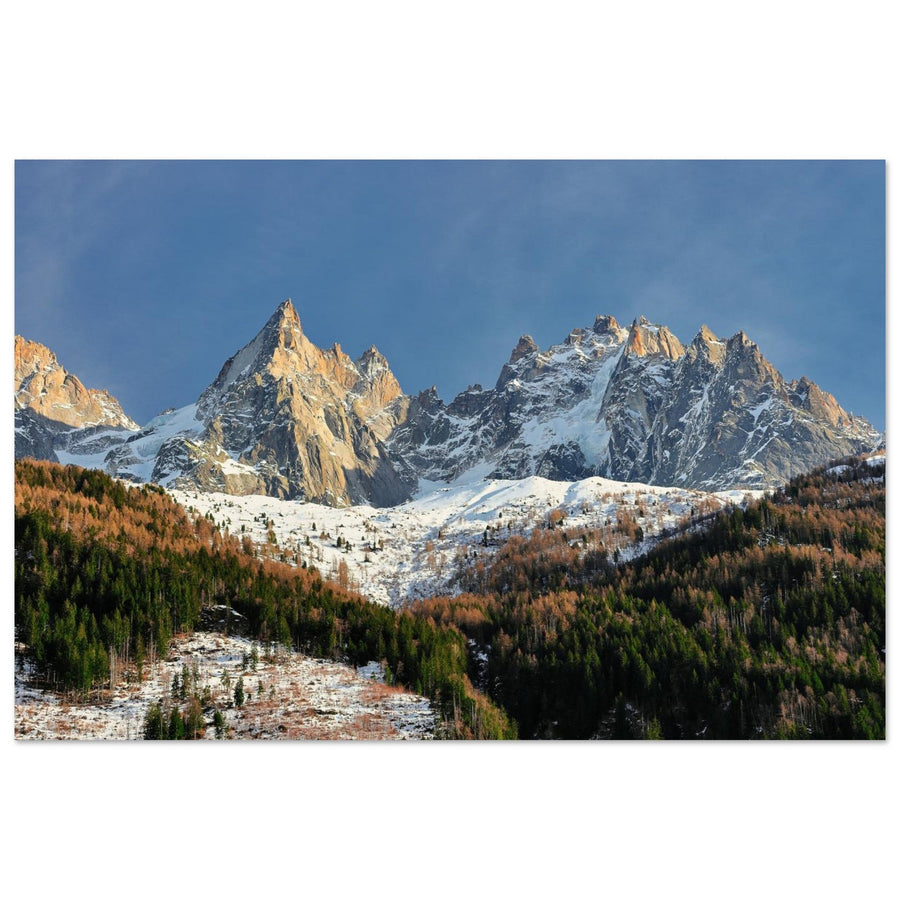
Chamonix is one of the best playgrounds in the Alps for mountain photography. Within a few kilometers, the valley concentrates all the visual strengths of the Mont Blanc massif: hanging glaciers, granite needles, dark forests, valley bottom lakes, high-altitude viewpoints, and spectacular light at sunrise or sunset.
But Chamonix can also be challenging to photograph. The landscapes are immense, the contrasts are strong, popular spots can quickly become crowded, and the weather changes very quickly. The challenge is therefore not just to find "a beautiful viewpoint," but to choose the right place at the right time, with a clear idea of the light, the season, and the framing.
This guide helps you locate the best photo spots in Chamonix, from the valley floor to the high viewpoints, with an approach designed for landscape photography, field preparation, and the selection of images that can then work as wall prints.
Table of Contents
- Explore the Mont Blanc Photo Cluster
- Chamonix in Photos: Quick Summary
- Why is Chamonix a Major Location for Mountain Photography?
- The Best Photo Spots in Chamonix
- Which Spot to Choose Based on Your Photo Objective?
- When to Photograph Chamonix?
- Photo Tips for Successful Images in Chamonix
- Chamonix Photo Itinerary Ideas
- Useful Photo Techniques
- Which Chamonix Image to Choose for a Wall Print?
- FAQ: Photographing Chamonix
Explore Photo Guides Around Mont Blanc
This article is part of the mini-cluster dedicated to the best photo spots around Chamonix and the Mont Blanc massif. It presents the main sectors of the valley, while dedicated guides delve deeper into the most impressive locations: Lac Blanc, Aiguille du Midi, and Mer de Glace.
Chamonix in Photos: Quick Summary
| Spot | Photo Interest | Best Light | Difficulty |
|---|---|---|---|
| Lac des Gaillands | Reflections, Mont Blanc, Bossons Glacier | Calm morning or late afternoon | Easy |
| Chamonix Center | Alpine atmosphere, streets, silhouettes, needles in the background | Morning, blue hour, winter | Easy |
| Les Praz | Chalets, forests, gentle lines, Flégère access | Morning or late afternoon | Easy |
| Brévent / Planpraz | Frontal view of Mont Blanc | Sunset, late afternoon | Medium depending on access |
| Aiguille du Midi | High mountains, glaciers, 360° panorama | Clear morning | Technically easy, high altitude |
| Mer de Glace / Montenvers | Glacier, Drus, mineral atmosphere | Morning or side light | Easy to medium |
| Lac Blanc | Iconic reflections on the Mont Blanc massif | Sunrise or sunset | Medium to strenuous |
Why is Chamonix a Major Location for Mountain Photography?
Chamonix is unique because the valley offers very quick access to high mountain atmospheres. In a single day, it's possible to photograph reflections at the valley bottom, alpine forests, village streets, glaciers, ridges, cable cars, and high-altitude panoramas.
Chamonix's strength also comes from its visual contrast. The peaks are very close, the walls are vertical, the glaciers descend towards the valley, and the clouds constantly change the perception of the landscape. For a photographer, this creates many opportunities, but also a real challenge: one must simplify.
A good photo of Chamonix isn't necessarily one that shows the entire massif. It's often an image with a clear intention: a reflection, a ridge, a glacier, a silhouette, light, a cable line, a contrast between snow and rock, or an urban atmosphere dominated by the mountains.
The Best Photo Spots in Chamonix
1. Lac des Gaillands: The Easy Spot for Photographing Mont Blanc
Lac des Gaillands is one of the best starting points for photographing Chamonix without going hiking. Located at the valley bottom, it offers a beautiful view of the Mont Blanc massif and the Bossons Glacier, with the possibility of using the water as a foreground when conditions are calm.
It's a particularly interesting spot if you're looking for a simple composition: lake in the foreground, forest, glacier, then peaks in the background. On windless days, the reflections can create a very legible, almost graphic image.
Photo tip: Come early in the morning to avoid crowds and maximize your chances of calmer water. In autumn, the colors around the lake can add depth to the image.
2. Chamonix Center: Photographing the Alpine Atmosphere
We often think of grand panoramas, but Chamonix town center is also worth photographing. The streets, facades, signs, silhouettes of walkers, and peaks visible between buildings allow you to tell another side of the valley: that of a lively mountain town at the foot of an immense backdrop.
The interest here is to work on layering: a street, a bell tower, a silhouette, then a needle or a glacier in the background. In winter, snow can enhance the contrast between architecture and relief. At blue hour, the city lights create a softer, more narrative atmosphere.
Photo tip: Use a standard focal length or a small telephoto lens to slightly compress the planes and visually bring the peaks closer to the urban setting.
3. Les Praz: Chalets, Forests, and Departure to Flégère
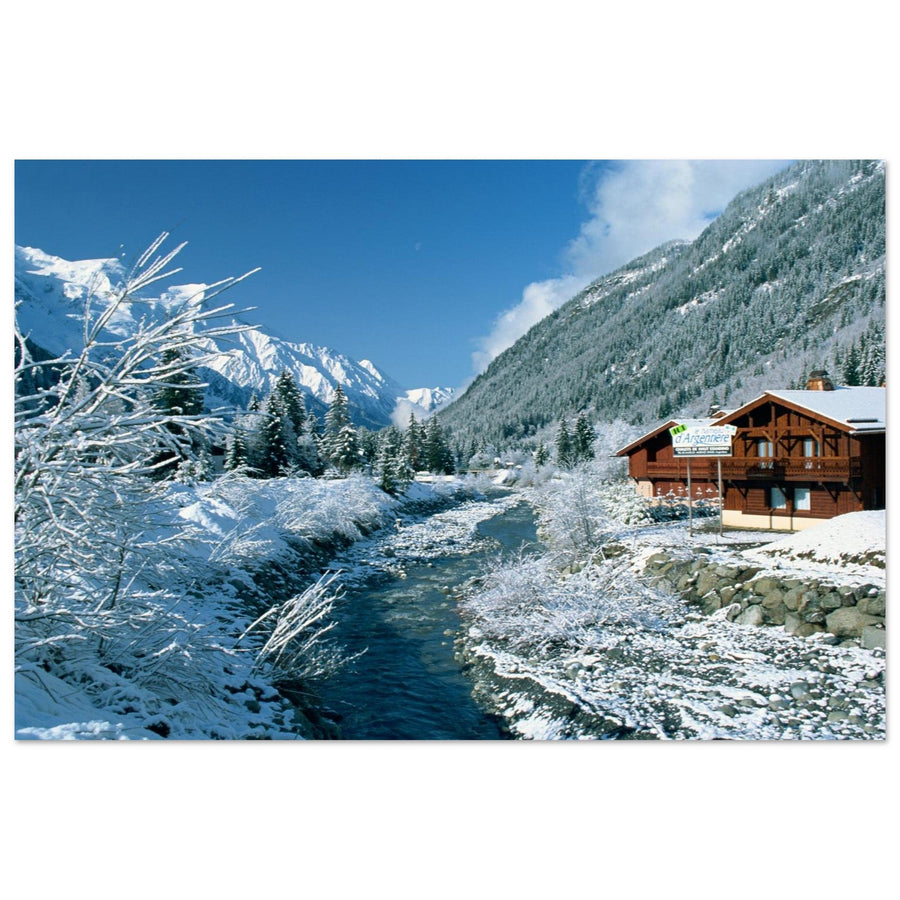
Les Praz offers a calmer atmosphere than the center of Chamonix. Here you'll find gentler lines, chalets, forests, openings onto the peaks, and access to Flégère. It's an interesting area for photographing a more "inhabited alpine" image, less spectacular than the Aiguille du Midi, but often more elegant.
This area works well if you like compositions with scenic elements: trees, paths, chalets, clouds clinging to the peaks. It can also serve as a starting point for higher views on the Aiguilles Rouges side.
Photo tip: Favor side lighting, especially at the beginning or end of the day. Forests and chalets gain a lot of relief when the sun comes from the side.
4. Brévent and Planpraz: The Frontal View of Mont Blanc
The Brévent sector is one of the classics for photographing Mont Blanc from Chamonix. Its advantage is simple: it faces the massif. This provides a very direct view of the glaciers, needles, and lines of the north face of Mont Blanc.
From Planpraz or higher up towards Brévent, compositions work particularly well with a telephoto lens. This allows you to isolate glaciers, ridges, seracs, or the contrasts between dark rocks and luminous snow.
Photo tip: In the late afternoon, the light can highlight the volumes of the massif. Be careful, however, of strong contrasts: expose to preserve the highlights on the snow and glaciers.
5. Aiguille du Midi: Photographing Chamonix in High Mountain Version
The Aiguille du Midi is one of the most spectacular sites for photographing the high mountains around Chamonix. It is quickly accessed by cable car, but the atmosphere is already that of high altitude: glaciers, ridges, mountaineers, low clouds, French, Swiss, and Italian peaks.
The main photo challenge is not to be overwhelmed by the immensity of the scenery. Everything is impressive, but a good image often requires simplification: isolating a ridge, a group of mountaineers, a track in the snow, a cloud line, or a glacier texture.
Photo tip: Go up early if the weather is stable. In high mountains, clouds can arrive very quickly. Also, protect your batteries from the cold, even in summer.
To prepare for this spot more precisely, consult the dedicated guide: where to photograph the Aiguille du Midi?
6. Mer de Glace and Montenvers: Glacier, Drus, and Alpine Memory
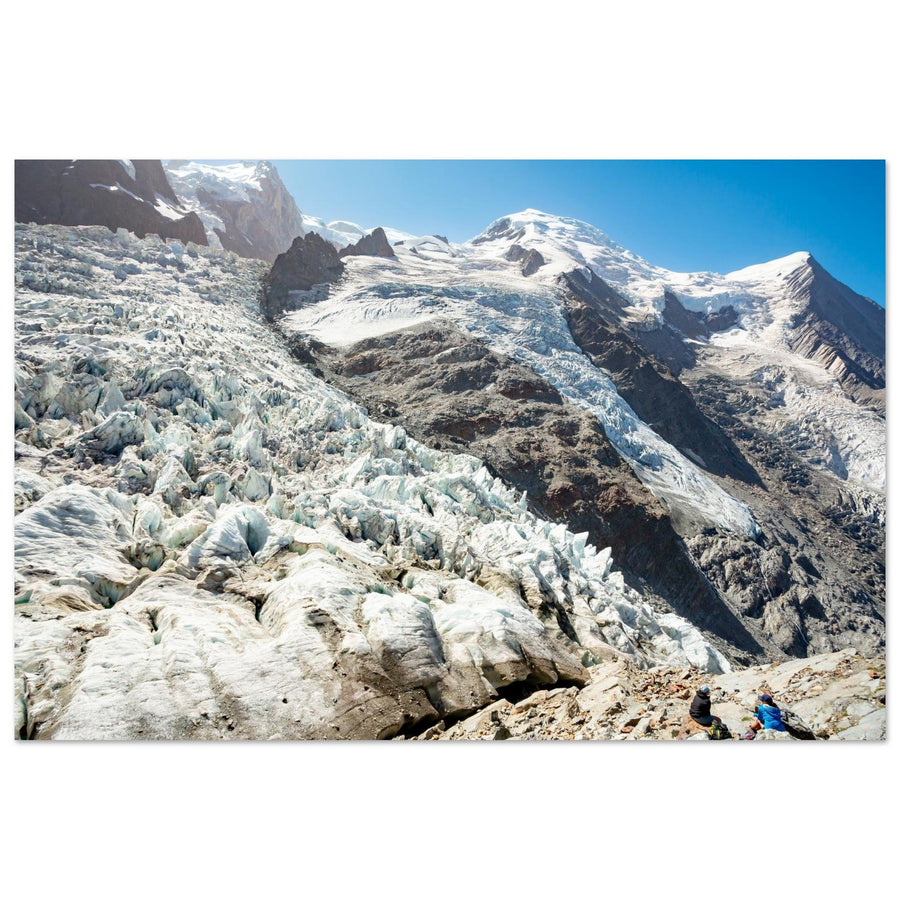
The Montenvers site allows you to photograph the Mer de Glace, the Drus, and the Grandes Jorasses in a very mineral atmosphere. It is a powerful place, both spectacular and imbued with a more sensitive dimension: glacial retreat is visible there, which gives the images a documentary depth.
Photographically, the site works well with tight framing on the textures of the glacier, the moraines, the walls, or the lines descending into the valley. Cloudy days can be interesting, as they reinforce the dramatic character of the landscape.
Photo tip: Don't just look for the "postcard" photo. Details, contrasts of rock and ice, or human scales can tell something more powerful.
To delve deeper into this sector, consult the dedicated guide: where to photograph the Mer de Glace?
7. Lac Blanc: The Great Classic Photo Spot Above Chamonix
Lac Blanc is one of the most famous spots for photographing the Mont Blanc massif. Located on the Aiguilles Rouges side, it allows you to compose with water, rocks, and the panorama of the peaks. When conditions are calm, the reflections can be magnificent.
It is also a fragile and very popular place in season. Therefore, you need to prepare your outing, respect the site's protection rules, and avoid degrading the lake's surroundings to find a composition.
Photo tip: Sunrise can be exceptional, but it requires real preparation: schedule, headlamp, weather, warm clothing, and knowledge of the itinerary. Sunset is more accessible, but requires managing the descent.
For a complete guide to the area, see: where to photograph Lac Blanc?
Which Spot to Choose Based on Your Photo Objective?
| Photo Objective | Recommended Spot | Why |
|---|---|---|
| Easy Mont Blanc Photo | Lac des Gaillands | Accessible, legible, possibility of reflections |
| Iconic Image with Reflection | Lac Blanc | Massif reflections, very strong composition |
| Spectacular High Mountain | Aiguille du Midi | Altitude, glaciers, ridges, mountaineers |
| Glacier and Mineral Atmosphere | Mer de Glace / Montenvers | Textures, glacial memory, Drus |
| Frontal Panorama of Mont Blanc | Brévent / Planpraz | View facing the massif, ideal with a telephoto lens |
| Inhabited Alpine Atmosphere | Chamonix Center / Les Praz | Streets, chalets, forests, peaks in the background |
When to Photograph Chamonix? Light, Season, and Weather
Morning: The Best Option for Clarity
Morning is often the most reliable time to photograph Chamonix. The air is generally clearer, the peaks can be clear, and some valley bottom spots are still calm. For Lac des Gaillands, Les Praz, or the Aiguille du Midi, this is often a very good slot.
Late Afternoon: Relief and Atmosphere
Late afternoon can give a lot of relief to the mountains, especially from viewpoints facing the massif. Brévent, Planpraz, or certain viewpoints in the Aiguilles Rouges are particularly interesting when the light becomes more lateral.
Autumn: Colors, Mists, and Contrasts
Autumn is a very photogenic season in the Chamonix valley. The forests change color, the light is lower, and the atmospheres are sometimes calmer than in midsummer. It's a very good time to combine spectacular landscapes with a more intimate atmosphere.
Winter: Graphics, Snow, and Alpine Atmosphere
In winter, Chamonix becomes more graphic. Snow simplifies compositions, contrasts are stronger, and cold lights can give a lot of character to the images. However, it is important to be vigilant about exposure: snow easily tricks light metering.
Cloudy Days: Often More Interesting Than a Clear Blue Sky
In Chamonix, clouds can become a real subject. They cling to the needles, reveal and then hide the peaks, create windows of light, and give relief to the landscape. Partially cloudy weather can produce stronger images than a perfectly clear sky.
Photo Tips for Successful Images in Chamonix
1. Don't Just Look for the Panorama
In Chamonix, the trap is wanting to put everything in the image: Mont Blanc, glaciers, needles, the valley, the clouds. However, a strong photo is often a simpler photo. Choose a main subject: a peak, a reflection, a ridge, a glacier, a silhouette, a light.
2. Use a Telephoto Lens
A wide-angle lens is useful in the mountains, but in Chamonix, a telephoto lens can be even more powerful. It allows you to isolate details of the massif, compress planes, reveal ice or rock textures, and avoid overly empty compositions.
3. Watch the Clouds
Clouds are not necessarily a problem. In Chamonix, they can transform a classic scene into a strong image: clouds clinging to the needles, a sea of clouds in the valley, peaks appearing and disappearing. Patience is often more important than equipment.
4. Expose for Snow and Glaciers
The Mont-Blanc massif contains many very bright areas. To avoid blown-out highlights, expose carefully and preserve your highlights. It is better to slightly recover shadows than to lose details in the snow and glaciers.
5. Respect natural sites
Some areas around Chamonix are in or near protected natural spaces. Stay on marked trails, avoid trampling fragile areas, do not disturb wildlife, and always check local regulations before using a drone. In nature reserves, restrictions can be strict.
6. Prepare your outing like a mountain excursion
Even if some spots are easily accessible, the weather changes quickly. Bring water, a warm layer, rain protection, an extra battery, and a headlamp if you leave early or return late. A beautiful photo is never worth an unnecessary risk.
Chamonix Photo Itinerary Ideas
Easy Itinerary: Valley Floor and Alpine Atmosphere
For a first approach without a big hike, start in the center of Chamonix at sunrise, continue towards Les Praz, then finish at Lac des Gaillands at the end of the day. This itinerary allows you to photograph the valley's atmosphere, chalets, streets, reflections, and views of Mont-Blanc.
Panoramic Itinerary: Brévent and Aiguilles Rouges
For a more landscape-oriented approach, favor the Planpraz / Brévent sector or La Flégère depending on the conditions. You will be facing the Mont-Blanc massif, with many possibilities for framing glaciers, ridges, and the valley.
High Mountain Itinerary: Aiguille du Midi and Montenvers
If you want to photograph Chamonix's glacial world, combine Aiguille du Midi and Montenvers on a clear day. You will experience two complementary atmospheres: the spectacular high mountains on one side, and the more mineral glacial landscape of the Mer de Glace on the other.
Reflection and Light Itinerary: Lac Blanc
For a more iconic landscape outing, Lac Blanc remains one of the best choices. It requires more preparation, but it offers a very strong composition: lake, rocks, reflections, and the Mont-Blanc massif. This is the spot to favor if you are looking for a calm, legible, and very alpine image.
Useful photo techniques for photographing Chamonix
The landscapes of Chamonix change greatly depending on the light, season, and weather. To obtain stronger images, it is useful to master a few basics: golden hour, blue hour, reflections, snow contrast, composition, and reading reliefs.
- Photographing a mountain sunrise
- Photographing a mountain sunset
- Photographing the blue hour
- Photographing reflections in a mountain landscape
- Using the rule of thirds in landscape photography
Which Chamonix image to choose for a wall print?
Chamonix can produce very different images depending on the location and light. For a soothing wall decoration, the reflections of Lac Blanc or the soft lights on the summits work very well. For a more spectacular atmosphere, glaciers, needles, and panoramas of Mont-Blanc create a stronger presence in a room.
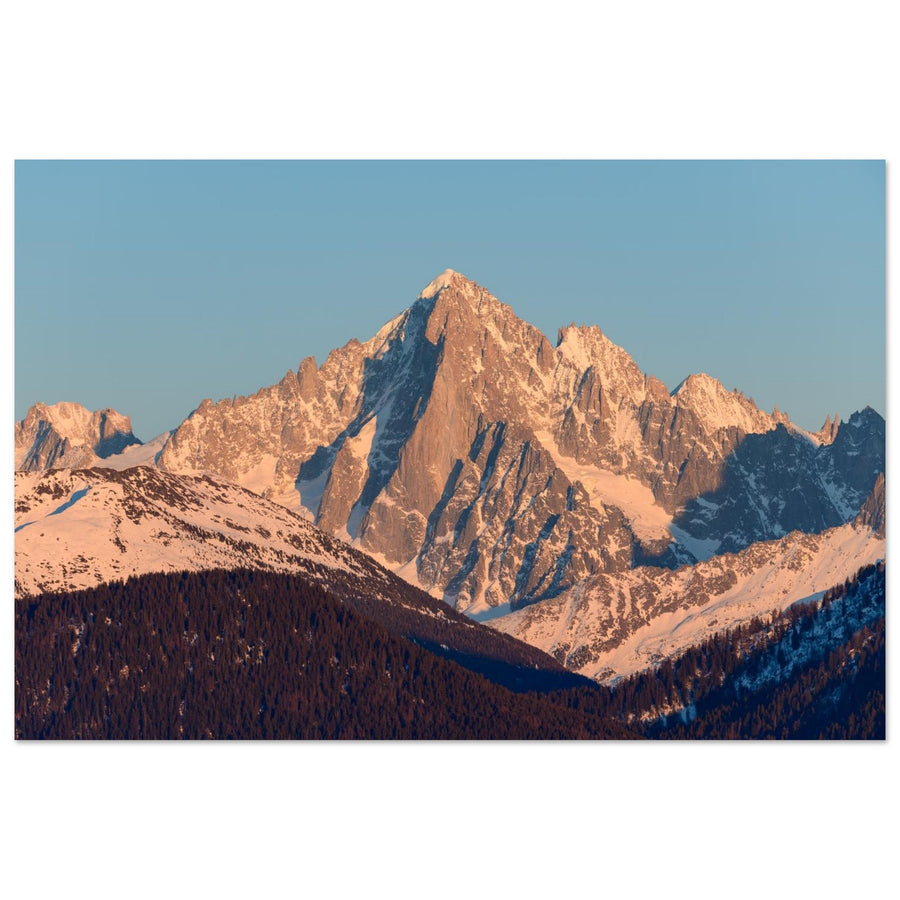
On a large format print, the most effective images are often those that remain legible from a distance: a ridgeline, a glacial mass, a strong contrast between snow and rock, or simple light on the massif. Horizontal formats work well above a sofa or sideboard, while vertical images like the Aiguille du Midi can add a lot of presence in an entrance, office, or narrow wall.
Photo prints related to Chamonix and the Mont-Blanc massif
Mont-Blanc reflected in Lac Blanc
A calm and iconic image of the Chamonix / Aiguilles Rouges area, with the Mont-Blanc massif reflected in the lake.
Ideal for: bright living room, soothing mountain decor, contemporary interior.
Aiguille du Midi in black & white
A graphic and powerful image of Chamonix, ideal for sober, alpine, and contemporary wall decor.
Ideal for: office, vertical wall, black & white interior, high mountain ambiance.
Mer de Glace, Chamonix-Mont-Blanc
A mineral and glacial image, perfect for representing the wilder, documentary dimension of Chamonix.
Ideal for: strong alpine ambiance, sober decor, premium interior.
Aiguille du Midi above Chamonix
A spectacular view of the high-altitude installations, the valley, and the snow-covered summits of the Mont-Blanc massif.
Ideal for: large wall, modern chalet, office, high mountain decor.
You can also explore related collections: Chamonix photo prints, Mont-Blanc photo prints, Aiguille du Midi photo prints, mountain lake photo prints, and Aiguilles Rouges photo prints.
Continue your exploration of Mont-Blanc
Chamonix offers a global view of the valley. To prepare a more precise photo outing, continue with the guides dedicated to the most important spots in the Mont-Blanc cluster.
Related Photo Guides
- Complete guide: where to photograph Mont-Blanc?
- See all Mont-Blanc photo guides
- Where to photograph Lac Blanc?
- Where to photograph the Aiguille du Midi?
- Where to photograph the Mer de Glace?
- Where to photograph the Aiguilles Rouges?
- See all Alps photo guides
Related Photo Collections
FAQ: Photographing Chamonix
What is the best easy photo spot in Chamonix?
Lac des Gaillands is one of the best easy spots to start. It is accessible without a big hike and allows you to photograph Mont-Blanc, the Bossons glacier, and sometimes reflections when the water is calm.
Where to photograph Mont-Blanc from Chamonix?
For a frontal view of the massif, the Planpraz, Brévent, and Flégère sectors are very interesting. In the valley floor, Lac des Gaillands and some points around Les Praz also offer beautiful, more accessible compositions.
What is the best season to photograph Chamonix?
Autumn and winter are particularly photogenic. Autumn brings colors, mists, and lower light. Winter simplifies landscapes with snow and creates a very graphic alpine atmosphere.
Can you photograph Lac Blanc from Chamonix?
Yes, Lac Blanc is one of the great classic photo spots above Chamonix, on the Aiguilles Rouges side. However, it requires real preparation, especially for sunrise or sunset, as access is by hiking.
Do I need a telephoto lens to photograph Chamonix?
A telephoto lens is very useful in Chamonix. It allows you to isolate glaciers, needles, ridges, and details of the Mont-Blanc massif. A wide-angle is still interesting, but it is not always enough to capture the power of the landscape.
Which spot to choose to photograph a high mountain atmosphere?
The Aiguille du Midi is the best choice for a quickly accessible high mountain atmosphere. Here you will find glaciers, ridges, mountaineers, clouds, and panoramas of the Mont-Blanc massif.
Where to photograph glaciers in Chamonix?
The Mer de Glace and Montenvers are the most obvious places to photograph a glacial landscape. The Aiguille du Midi also allows you to work with ice textures, ridges, and high-altitude summits.
Can drones be used around Chamonix?
Great caution is required with drones around Chamonix. Some sectors are in or near nature reserves where overflight may be prohibited. Before any flight, check local regulations and protected areas.