Bauges | Photographing the Croix du Nivolet
A simple landmark against too much landscape
To photograph the Croix du Nivolet, I would first decide how large it should appear in the image. The cliff and background would then only be included to explain its position and scale.
The Cross can dominate the frame, serve as a landmark in a vast landscape, or become an almost graphic silhouette. In each case, it must remain identifiable without being detached from the relief that makes it unique.
Before the focal length
What presence should the Croix du Nivolet have?
The choice concerns its relationship to the landscape, not an arbitrary size in the frame.
The Cross gains prominence, while the limestone explains the edge, the void, and the monument's anchorage.
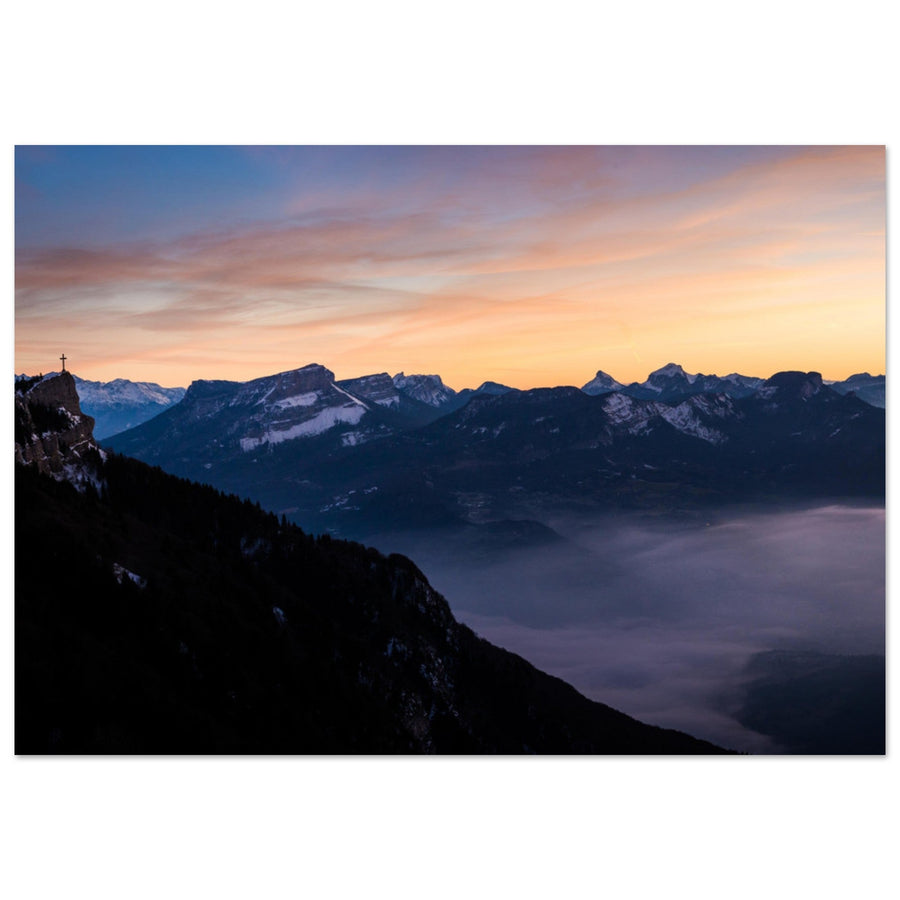
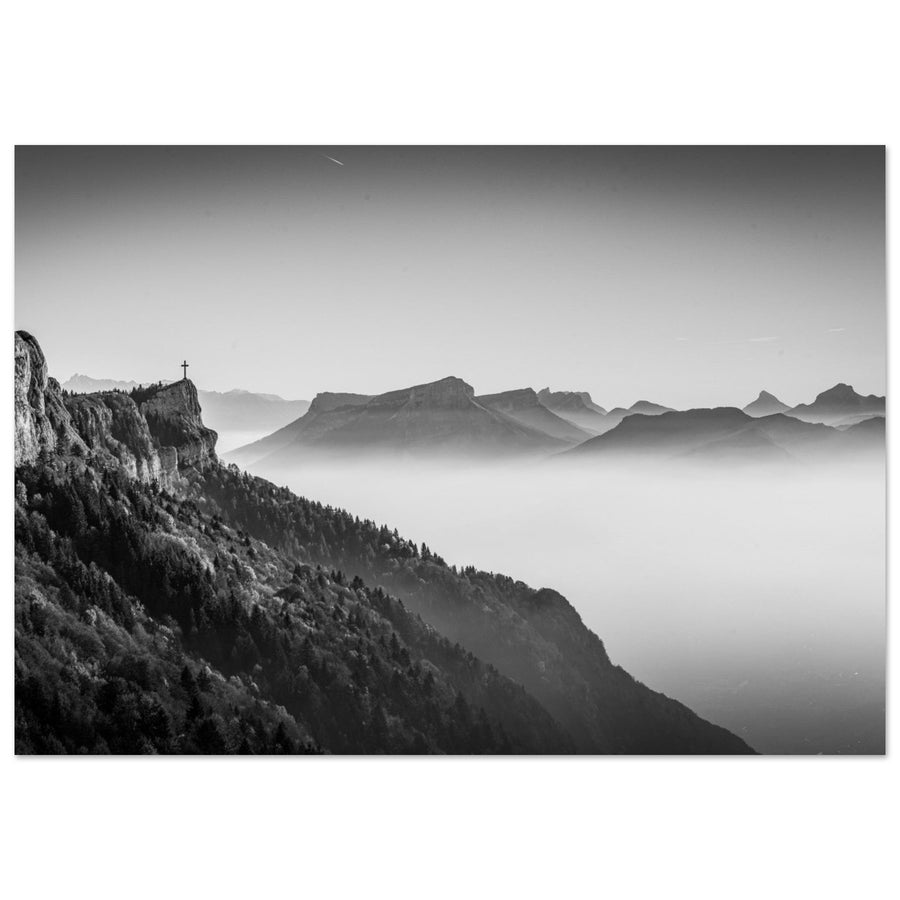
The Cross can be small, but its contrast and isolation must allow it to be immediately recognizable.
The vertical shape becomes a sign. Keep just enough of the cliff to avoid an image of a monument without a territory.
What makes it recognizable
Making verticality work against the mountain's lines
The Cross is effective because it contrasts a regular shape with irregular ridges and forests.
Two clear axes are enough to create a focal point, provided the background doesn't echo the same contrast.
The limestone places the monument at the edge of the massif and prevents it from floating in front of a horizon without local relevance.
The "cluse" (valley), Belledonne, the Bourget Lake depression, or Chartreuse modify the complexity behind the Cross; no single background should be assumed from all positions.
Relative size tells the story of the relationship
Moving closer or further away changes more than just the monument's presence
Distance redistributes the Cross, the cliff, the void, and the mountain ranges in the background.
The disappearance test
What remains if you mentally remove the Cross?
The answer immediately reveals whether the monument still organizes the photograph.
The monument closes a diagonal, gives scale to the cliff, or creates the only focal point in the reliefs.
The light on the Chartreuse, the forest, the valley, or the lake already carries the entire scene. The Cross is merely a geographical detail.
A minuscule presence can work, but only if the eye finds it before having exhausted the rest of the frame.
A visible limit
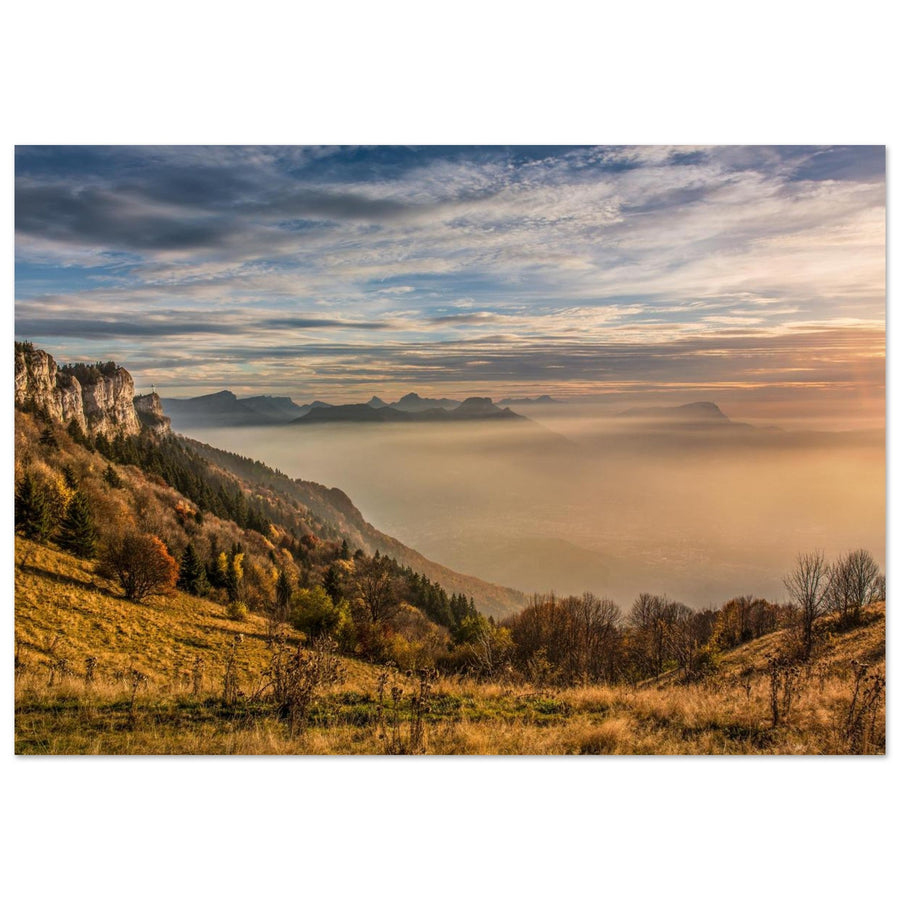
Here, the Cross borders on the status of a detail
It appears very small on the cliff to the left, while the golden mist and reliefs occupy almost the entire image. The local slope still retains a Bauges character, but the light and the horizon could easily become the true subjects.
Photography: Pierre Thiaville View the photograph of the Croix du Nivolet from Revard
When the form gets lost
Change the background before artificially enhancing the Cross
A good Plan B finds a real separation or accepts that the image now tells another story.
Move the silhouette to a simple area
A slight lateral or vertical change can free the monument from a background that echoes its lines.
Tighten the frame without removing the cliff
Increase its presence while keeping the rocky base or a terrain line that explains its placement.
Step back until a relationship is re-established
A lone graphic form can be powerful, but it no longer tells how the Cross inhabits the Bauges.
Embrace Mont Revard
If the distant layers already command the image, switch to the grand viewpoint project instead of artificially saving the Nivolet.
The cliff is never an accessory
Maintain a safety margin before seeking the void
The Park locates the Cross on a limestone cliff and indicates several access points, notably from Le Sire or La Féclaz. The hike remains mountain terrain: humidity, snow, wind, and traffic can change the outing. No exposed edge is necessary to achieve the composition.
To check before the outing
Check the approach route and conditions that affect grip or visibility.
- Access, parking, and daily markings
- Humidity, snow, wind, and ground conditions
- Foot traffic and local guidelines
Official sources
The Geopark describes the site, and Rando’Bauges specifies a reference itinerary.
Follow the new hierarchy
Leave the Cross as soon as another subject better carries the image
Two continuations that don't cheat with the frame
Open the guide corresponding to what actually dominated the scene.
Return to the choice of territory
The parent allows for comparison of landmark, panorama, karst, and large mountain forms.