Swiss Alps | Photographing the Bernese Oberland: Grindelwald, the Eiger and Lauterbrunnen
Bernese Oberland
In the Bernese Oberland, the great walls become truly tangible when a village, train, waterfall or lake provides a way to measure their height and reach.
Grindelwald places the Eiger face above an inhabited landscape. Kleine Scheidegg and Wengen move the eye through railway lines. Lauterbrunnen turns verticality into a valley and waterfalls. Oeschinensee closes a lake beneath a cirque. The shared subject is not a list of places: it is the tension between an Alpine mass and what lives, moves or falls at its foot.
Initial decision
What relationship should provide scale?
Choose what connects the foreground to the summits before choosing a resort or route.
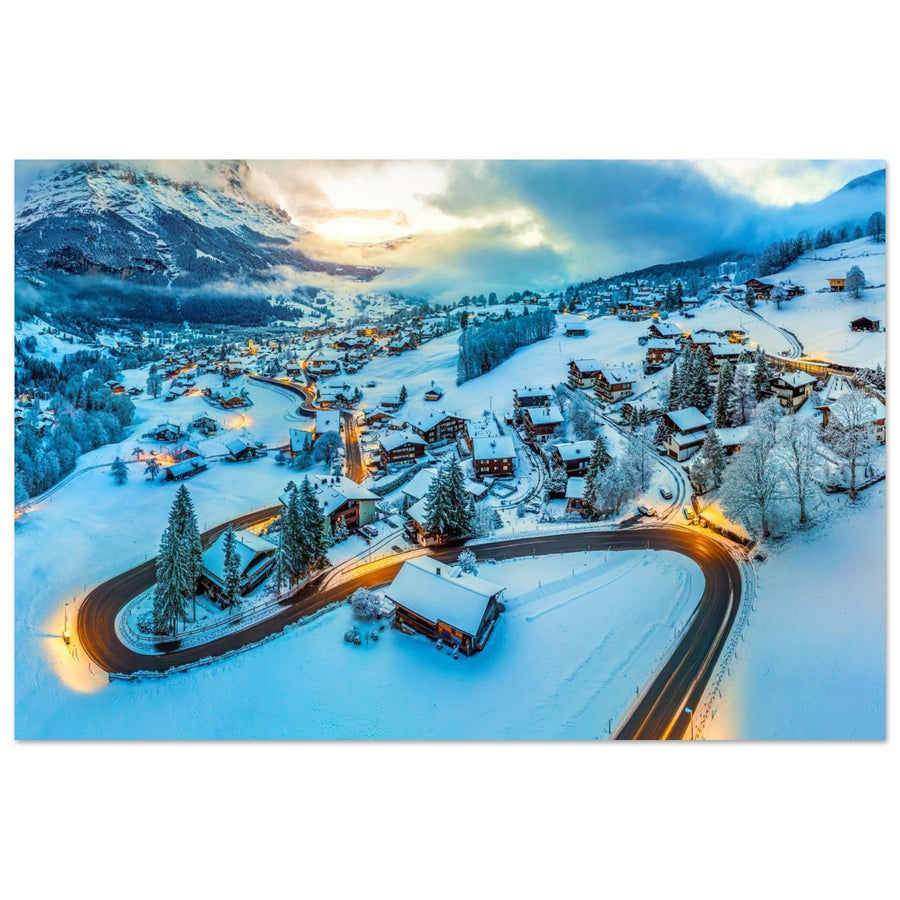
At Grindelwald, roofs and roads make the Eiger immense. Village light should remain a measure, not a luminous carpet that erases the face.
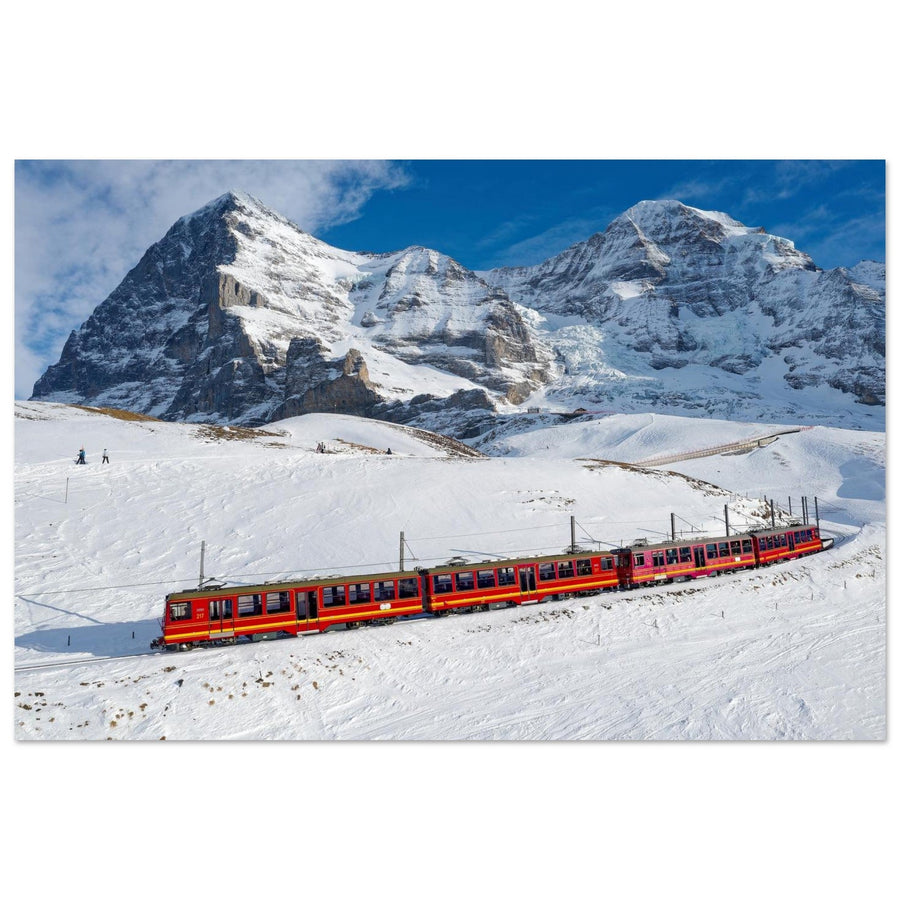
Around Kleine Scheidegg, a train and a curve of track connect the planes. Wait for a precise position instead of photographing the train wherever it appears.
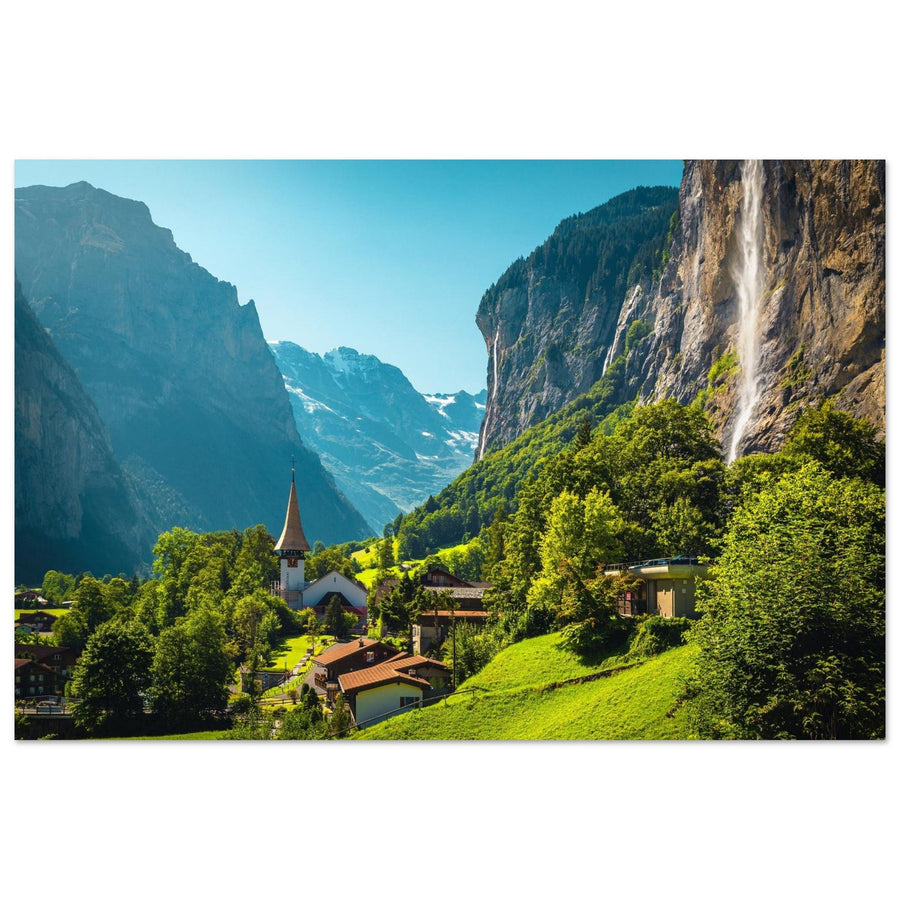
At Lauterbrunnen, the falling water provides scale to the cliffs. A dark background and soft light keep the fine line visible without separating the valley from its context.
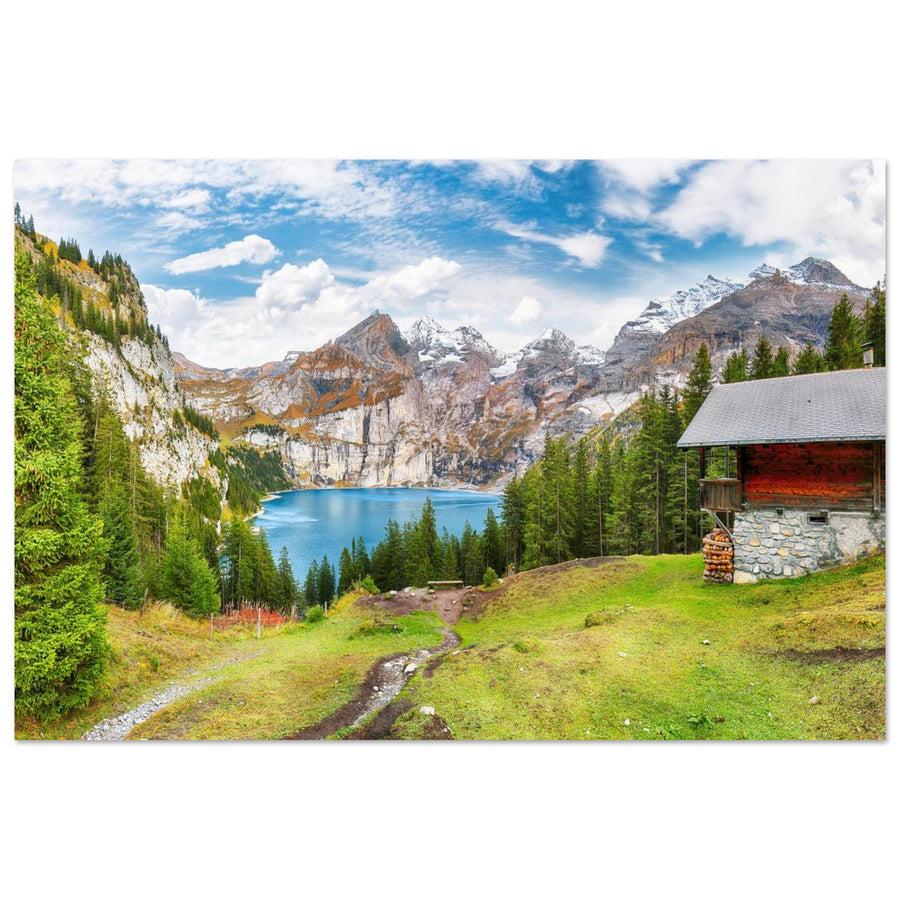
Bachalpsee opens successive planes, while Oeschinensee places a body of water beneath a cirque. Shoreline or colour should lead towards the summits rather than compete with them.
Photographic signature
What makes the Bernese Oberland distinct
Depth comes less from the number of summits than from how relief confronts valleys and movement.
The short apparent distance between habitation and high mountains creates strong tension. A long focal length reinforces it; a wide angle can disperse the village.
Grindelwald and Lauterbrunnen create different depth axes: one leads towards the face, the other sinks between cliffs.
Tracks and trains are not only access. They can become lines, touches of colour and a moving scale at the foot of Eiger, Mönch and Jungfrau.
High-altitude reflection, thin waterfall or turquoise lake do not require the same hierarchy. Water should be chosen as direction, measure or surface.

Another scale for the valley
The waterfall makes the wall’s height tangible
At Lauterbrunnen, houses and the church tower occupy the valley floor, while the waterfall traces a vertical line down the cliff. The difference between these small buildings and the rock wall conveys a scale that the summit alone could not provide.
Photograph: Gaspar Janos View the photograph of Lauterbrunnen and StaubbachLocal positions
What Grindelwald, the high lines and the valleys change
Each sector changes the relationship between habitation, movement, water and high mountains.

Reading the artwork
The road and lights measure the mass above Grindelwald
The illuminated curve creates an entrance into the village. Houses distribute the scale while the mountain closes the top of the frame. Human presence remains diffuse: it lets the height be felt without taking the place of the relief.
Photograph by Guitar photographer. View Grindelwald beneath the EigerComposition consequences
Keep a hierarchy between valley and walls
The foreground should help measure or travel through the scene, never simply fill the bottom of the frame.
Choose one inhabited structure
A road, church, line of chalets or a few lights is enough. Several built centres fragment the eye before it reaches the wall.
Align movement with the relief line
The train works when it enters a curve, follows a slope or crosses open space. Its colour cannot compensate for a position without direction.
Protect delicacy against the background
Diffuse light and a dark wall keep the waterfall clear. A longer exposure can strengthen the line of water, but should not erase its structure.
Use the shoreline as a hinge
It separates water from relief, creates depth and prevents the entire composition from relying only on colour saturation.
Subject boundary
When is the image still about the Bernese Oberland?
The relationship between wall and valley, movement or water must remain perceptible.
Village, train, waterfall or lake provides scale and leads to the high mountains. Removing any element would change the image.
If the train and track absorb attention, the photograph is primarily about railway heritage even if the Eiger remains visible.
At Oeschinensee, colour, shoreline and lake use can take over. Blüemlisalp then becomes a background rather than an active mass.
If moraines and glacial continuity command the frame, the reading joins the glacial Valais project, particularly around Aletsch.
When ice material takes over, continue to Valais beyond Zermatt.
Failures and fallback
What breaks scale and what to change
When the wall disappears or the foreground becomes confusing, change the relationship rather than widening the frame.
Move to the valley or blue hour
Village lights, a waterfall or mist between slopes can carry the image. Reduce the space given to the absent summit.
Tighten on one inhabited line
Use a road, a few roofs or one neighborhood. Compression from a longer focal length makes the relationship with the wall clearer.
Change angle or wait for soft light
A bright fall on a bright wall disappears. Look for a dark background, lateral mist or another better-separated waterfall.
Return to shoreline geometry
Frame a curve, forest or change in depth. Colour alone is not enough to distinguish Oeschinensee from Bachalpsee.
Choose a valley-level subject
High-altitude connections impose a return time. If it cuts the session short, prepare a subject accessible from Grindelwald or Lauterbrunnen.
Terrain and sources
Prepare actual connections and restrictions
The railway network quickly connects very different altitudes and valleys. This apparent ease removes neither local weather, walking nor the last return. Keep an alternative within the served valley.
At Oeschinensee and on high-altitude trails, follow official routes and open areas. A visible path or a passage used by others is not permission.
Check before the outing
The photographic relationship depends on the level actually accessible.
- train and lift status and last returns;
- visibility of the faces and wind at altitude;
- trail condition towards lakes and viewpoints;
- restricted areas, works and local instructions.
Official sources
Check operating information and instructions for the chosen sector on the day.
Continue the project
Follow the new hierarchy of the frame
Other useful readings
Move to another region when the Cervin pyramid or glacial continuity becomes the true subject.
Return to the Swiss Alps choice
The overview page compares silhouette, glacier and inhabited valley.
Compare inhabited Swiss landscapes
The artworks show how villages, trains, waterfalls and lakes give scale to the summits.