Swiss Alps | Photographing Valais beyond Zermatt: Aletsch, Saas-Fee and Grand Combin
Valais beyond Zermatt
From Aletsch to the Saastal and Grand Combin, the shared question is the same: how do you make the ice present enough to organize the image instead of becoming a simple bright band between summits?
Glacial Valais is not just a panorama. Aletsch draws a continuous curve and moraines. The Saastal stacks glaciers and summits. Corbassière confronts moraine, hut and Grand Combin. Each sector requires a different distance, but all depend on reading material and scale.
Initial decision
What presence should the ice have?
Choose a reading before the sector: it will determine the height of the viewpoint and how much landscape to keep.
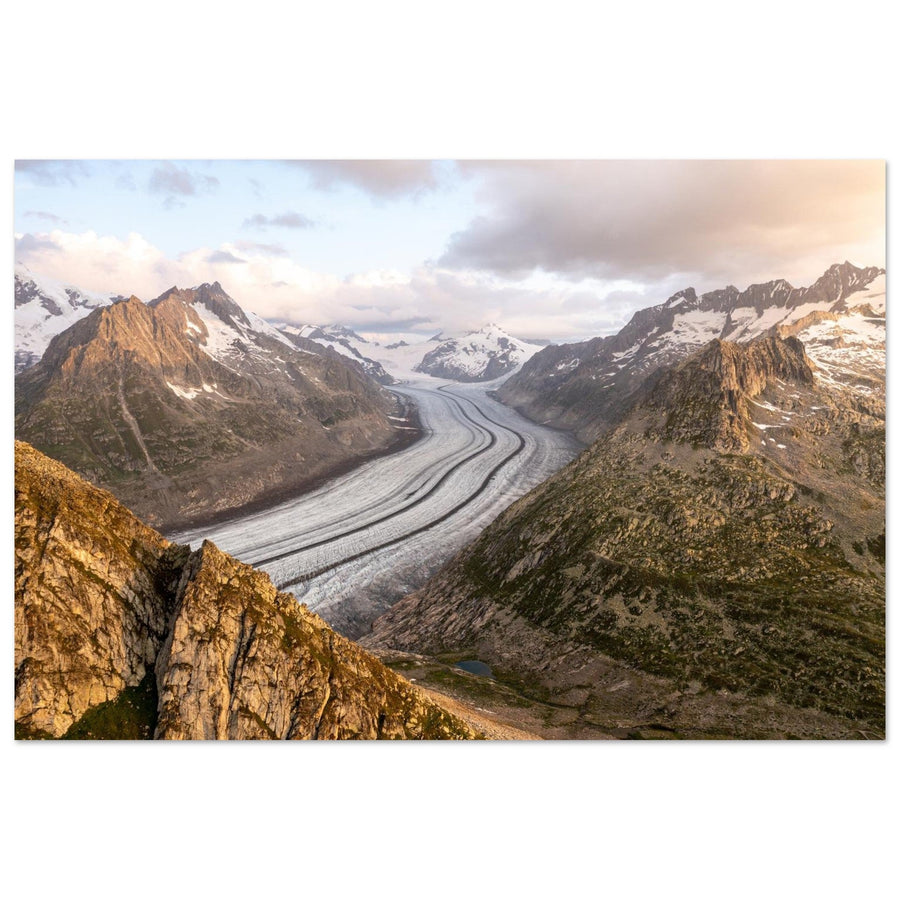
At Aletsch, the curve and central moraines become leading lines. Keep enough relief on the sides for the ice to retain its sense of enclosure.
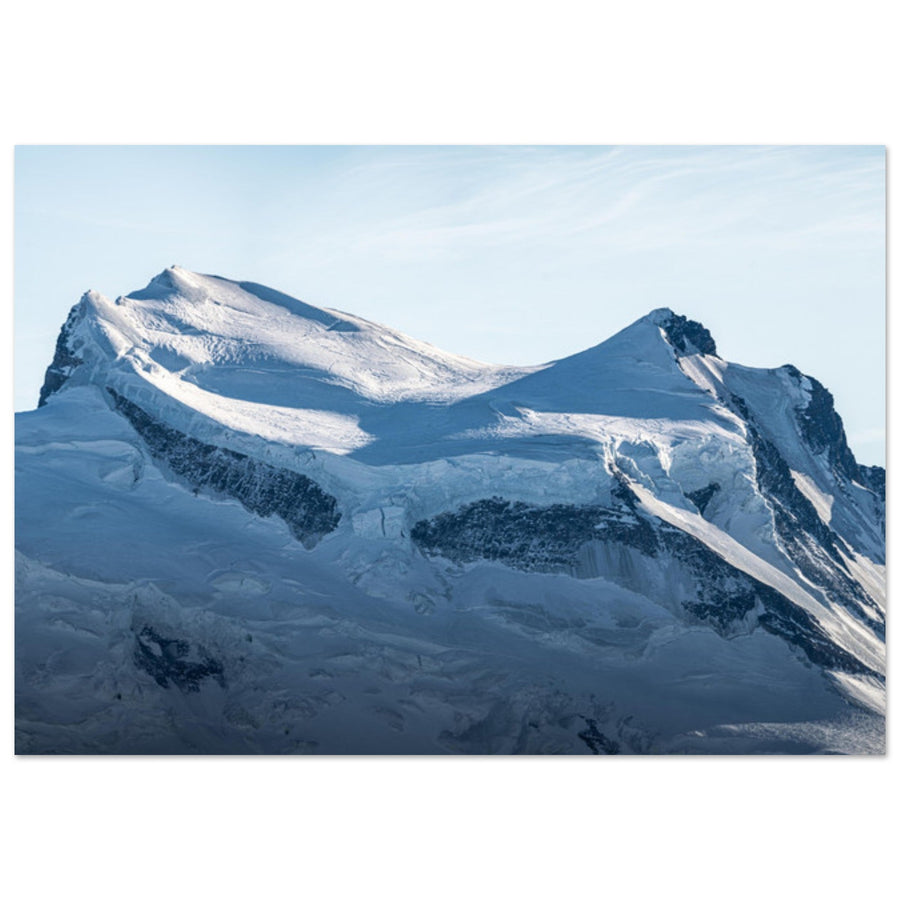
Tighten on seracs, moraines or a lit area. This reading works when the panorama is too flat or when the sky adds nothing.
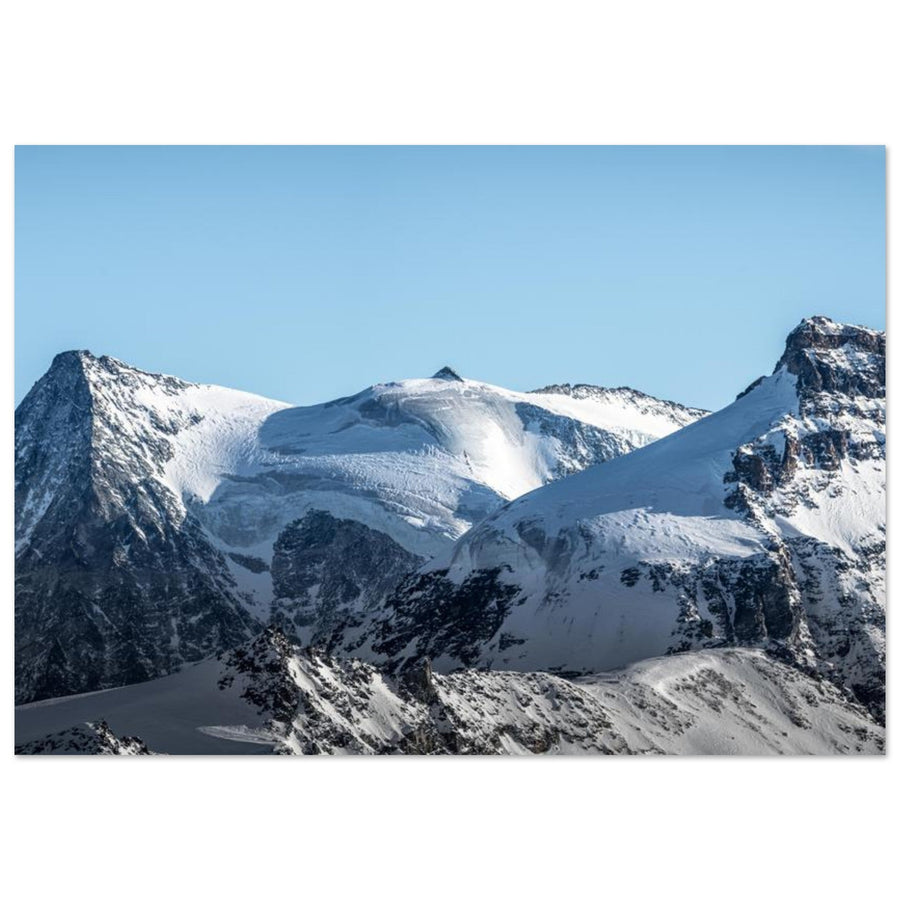
From the Saastal, separate the planes through tone and overlap. A long focal length compresses the masses, but it requires a clearly dominant summit or ice line.
Towards Corbassière and Panossière, moraine, footbridge or hut provide scale. The commitment of the terrain is part of the story without turning the page into a route description.
Photographic signature
What makes a glacial system readable
Ice gains presence when its direction, edges and relationship with rock remain separated.
Aletsch curve, Corbassière tongue or Triftgletscher slope: continuity should lead the eye. An awkward cut at the edge immediately weakens scale.
Their dark bands structure the ice even in diffuse light. They can be more useful than the sky when contrast is low.
A ridge or promontory in the foreground makes the glacier's mass understandable. Too large, it blocks the curve; too small, it no longer provides scale.
Side light reveals relief, but a localized break can be enough. Under an even sky, favor texture differences rather than a large white surface.
Local positions
Four readings, four distances to the glacier
These sectors remain united by ice, but the position changes its curve, scale and foreground.
Composition consequences
Give the ice mass without losing the relief
The frame should explain where the ice goes, what contains it and why it looks large.
Keep a rocky edge as an entry point
A dark foreground adds depth and scale. Cut it before it hides the first curve of the glacier.
Compress planes without merging them
Use differences in light and overlap to separate glaciers and summits. If all masses have the same value, the frame becomes a compact wall.
Reduce the sky and look for moraines
Dark lines remain active when shadows disappear. They guide the eye better than a large white zone without relief.
Keep scale without creating a second subject
A silhouette, hut or footbridge is enough. Their size should make the glacier immense without shifting all attention to the activity.
Reading the artwork
Moraines turn Aletsch into a current
Light reaches the relief while dark bands cross the entire ice. The rocky promontory in the foreground provides the height of the viewpoint without cutting the main curve.
Photograph by DjemoGraphic.View the artwork
Subject boundary
When is the image still about glacial Valais?
The ice must carry direction, material or scale; otherwise another subject has taken priority.
Its curve, moraines or width command the reading. Summits, rocks and human presence frame it and provide scale.
If the pyramid attracts all attention and the ice is only context, the project belongs to Zermatt and Gornergrat.
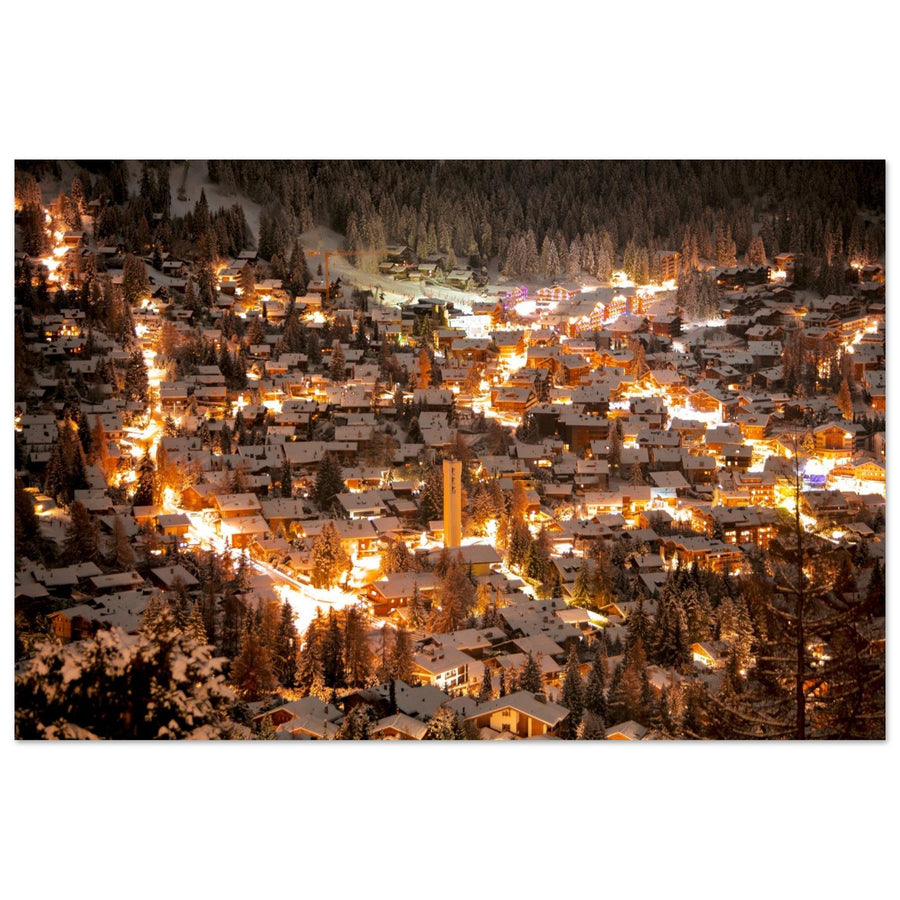
At Verbier or in a valley, lights, roofs and local life may dominate. Grand Combin then becomes the background of an inhabited landscape.
If the route, footbridge or hut absorbs the image, embrace a terrain story rather than a portrait of the glacial system.
When the Cervin silhouette becomes the center of gravity again, return to Zermatt, Cervin and Gornergrat.
Failures and fallback
What flattens the glacier and what to change
A grand view is not always the best response: reduce the scale as soon as the material becomes unreadable.
Move from volumes to lines
Tighten on moraines, a break in slope or a serac zone. Direction remains readable even when shadows no longer sculpt the ice.
Give the frame to the relief
Reduce the sky and use rocky edges to close the composition. The glacier's material deserves more space than the promise of absent light.
Isolate the tongue or descend
The project can survive if the curve remains visible. Otherwise look for lakes, villages or valley forests rather than waiting in whiteout.
Choose an accessible viewpoint
Aletsch Arena platforms or served levels in the Saastal provide a more reversible plan. Corbassière requires preparation and margin that cannot be improvised.
Terrain and sources
Prepare the right distance from the glacier
An accessible platform and a travelled moraine do not involve the same commitment or return options. Do not transfer framing advice from one sector to another without reassessing walking, altitude and exposure.
Never venture onto a glacier without the appropriate skills, equipment and guidance. Trails, lifts, huts and footbridges must be checked on their official sources at the time of the outing.
Check before the outing
Feasibility depends more on current terrain than on the season stated in an old account.
- lift operation and access to viewpoints;
- trail condition, residual snow and moraine stability;
- visibility by altitude, wind and temperature;
- hut schedules, last return and walking margin.
Official sources
Use operators and destination offices for access, then official weather.
Continue the project
Change guide when the ice stops carrying the image
Other useful readings
Follow the new hierarchy of the frame: iconic silhouette or relationship between wall and inhabited landscape.
Return to the Swiss Alps choice
The overview page compares subjects, conditions and alternatives by region.
Compare Valais glaciers and summits
The artworks show how curve, moraine and light change the reading of ice.