Queyras | Photographing Ceillac, Lac Miroir and Lac Sainte-Anne
Above Ceillac, Lac Miroir and Lac Sainte-Anne do not offer two interchangeable versions of the same image. The first is read through larches and reflection; the second through turquoise water set in a mineral cirque.
Before setting out, I therefore choose the relationship I want to show. At Lac Miroir, I work with depth between the shore, trees and peaks. At Sainte-Anne, I first look for the shape of the lake, pale rock and the presence of the Font Sancte. Trying to force a perfect mirror in both places erases what distinguishes them.
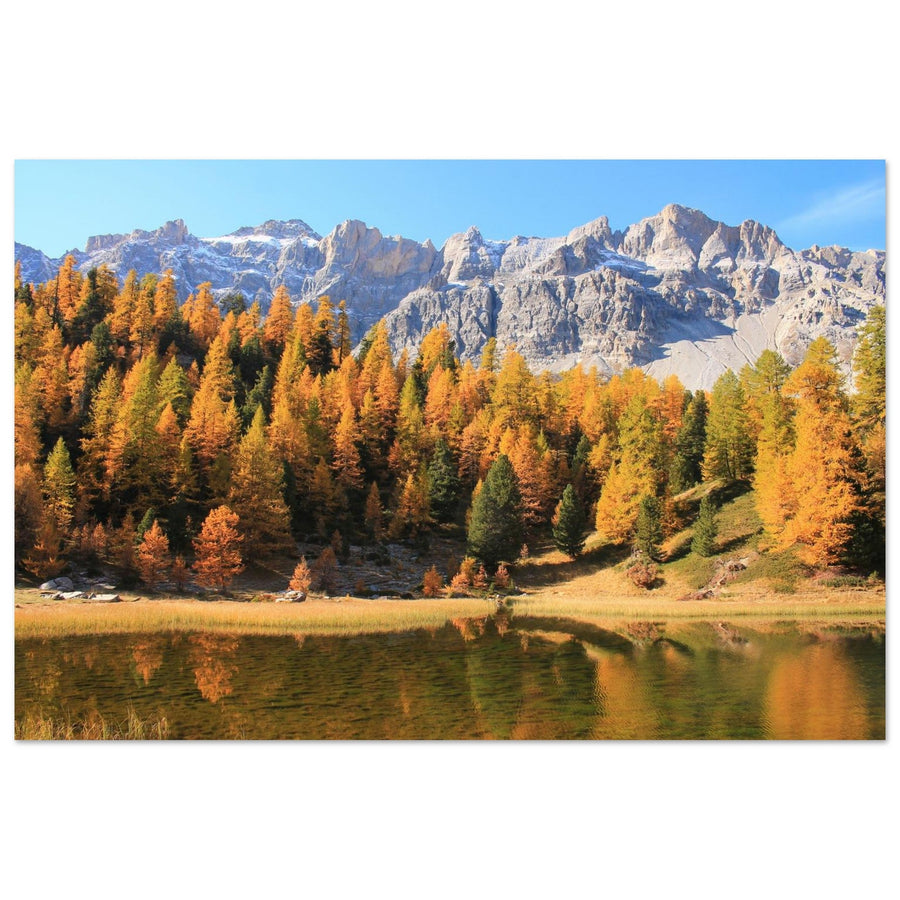
Opening photograph: Picturereflex — larches and Queyras relief reflected in Lac Miroir.
Before choosing equipment
Do you want to photograph a reflection, a cirque or the transition between the two?
Each intention gives a different place to water, trees and summits.
A low shoreline, a few trees and their reflection create depth. Leave air around the trunks so the image does not become a dark mass.
The coloured water leads the eye towards mineral slopes. A measured amount of shoreline helps explain the basin without weighing down the foreground.
When wind breaks the reflection, colour changes, submerged stones or light on the shore can produce a more truthful image than expected symmetry.
The passage from one lake to the other tells a change in altitude zone: larches thin out, mineral terrain takes over and the scale opens up.
What makes the two lakes different
Lac Miroir stacks layers; Sainte-Anne simplifies the landscape
Trunks and their reflections create a tight structure. The choice of frame edges becomes as important as the horizon line.
The relief surrounds the water with fewer obstacles. The photograph relies more on large masses and their proportions.
The water is not a fixed patch. Wind, viewing angle and light can shift the lake from turquoise to dark blue.

A reflection built by the trees
Lac Miroir becomes depth, not simple symmetry
The larches occupy both shores and continue into the water. The summits remain smaller, at the back of the opening. The photograph works because the reflection connects the layers instead of merely duplicating them.
Photograph: PicturereflexView the Lac Miroir photograph →
What your position changes
A few steps change the share of water, shore and mountain

A composition built from large masses
At Sainte-Anne, the colour of the water opens the cirque
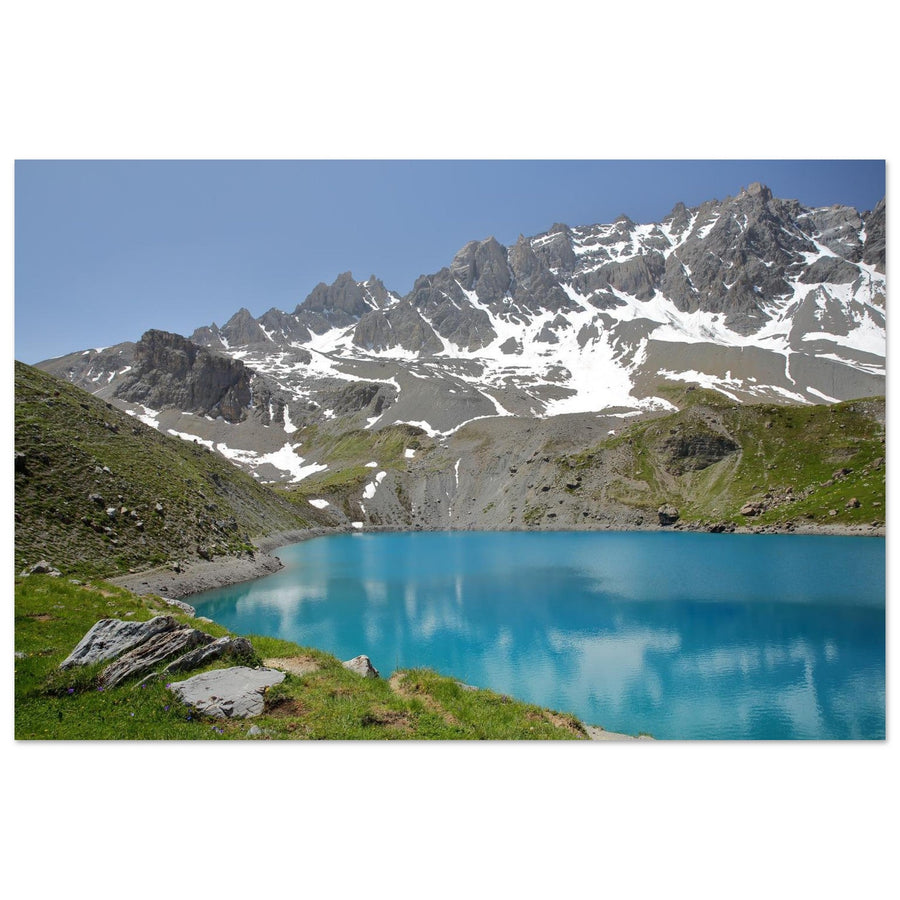
The turquoise band occupies the bottom of the frame, then pale slopes and snowy summits take over. A complete reflection is unnecessary: the contrast between water and mineral terrain is enough to lead the eye.
Photograph: Christophe CappelliView the Lac Sainte-Anne photograph →
When the image becomes generic
A perfect reflection is not enough to make Ceillac recognisable
The combination of water, larches and the opening towards the relief preserves several distinct layers.
The shape of the basin, the colour of the water and the slopes of the Font Sancte structure the frame.
If you keep only a sky reflection or a detail of water, the image may be strong but no longer necessarily describes Ceillac. Embrace that change of subject. To compare other areas, return to the Queyras photo guide.
If the planned image disappears
Wind and clouds change the composition, not the value of the place
Leave symmetry behind
Work with colours, shore and trees. A rippled surface can separate the layers instead of repeating them.
Reduce the top of the frame
Give more space to the water and slopes, or look for a patch of light on the larches.
Wait for separation
A break of light on the shore or Font Sancte can be enough to restore depth.
Change project
Do not extend the outing to save an image. Stay on a route that is open and suited to conditions.
Access and respect for the place
The two lakes should be prepared as a mountain outing, not as two backdrops
The Lac Miroir and Lac Sainte-Anne route is a hiking itinerary: check its condition, weather and snow cover at departure time. At Lac Sainte-Anne, swimming and water activities are prohibited. Do not leave paths to gain a few centimetres of reflection, and check the rules applying to dogs and drones before setting out.
Official sources
Check on the day
Weather, wind, snow cover, trail condition and local regulations at the exact point.
If your difficulty is mainly technical
For exposure, filters, sharpness or post-processing, continue with the technical guides.