Queyras | Photographing Col d’Izoard and the Casse Déserte
At the Izoard, the road is never neutral. It can give scale to the Casse Déserte, draw a broad curve through the larches, or take up so much space that the mountain disappears.
Before framing, I therefore decide what should remain the subject: the scree and pinnacles, the pale ribbon of road, the autumn forest, Lac de Souliers or a silhouette such as Rochebrune. These images belong to the same area, but they require very different distances and light.
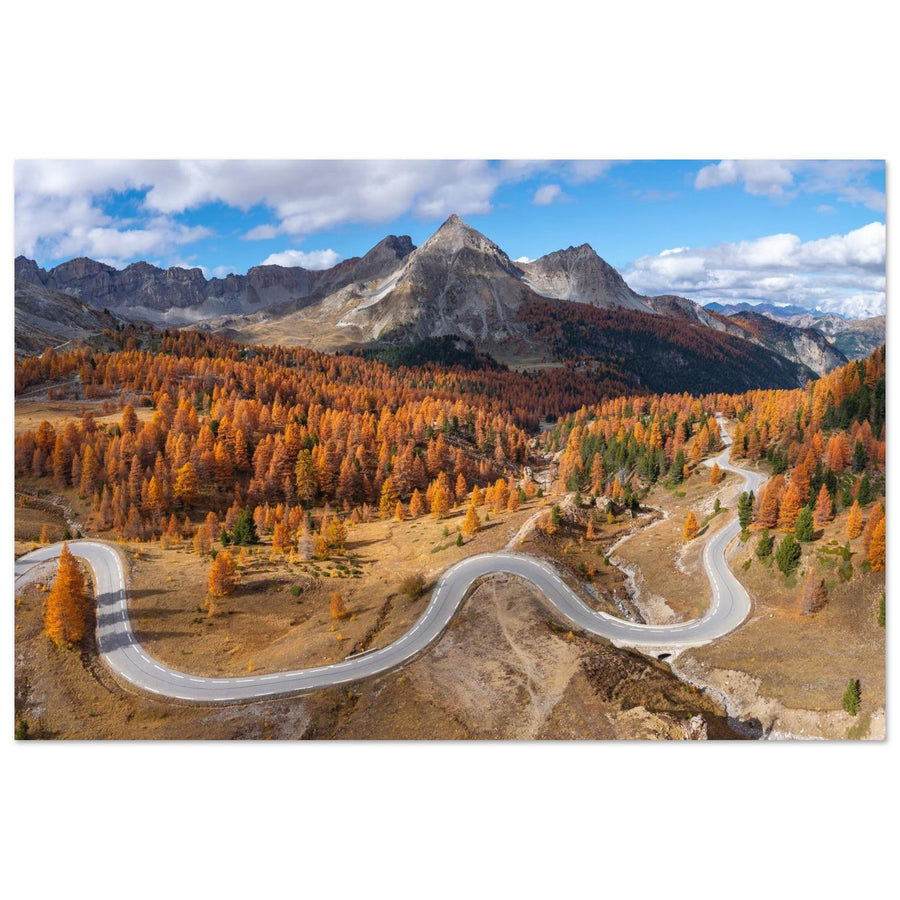
Opening photograph: Francois Roux — hairpins of the Izoard road through autumn larches.
Before taking out the camera
Which version of the Izoard do you want to photograph?
The four strong scenes in the area are not composed in the same way.
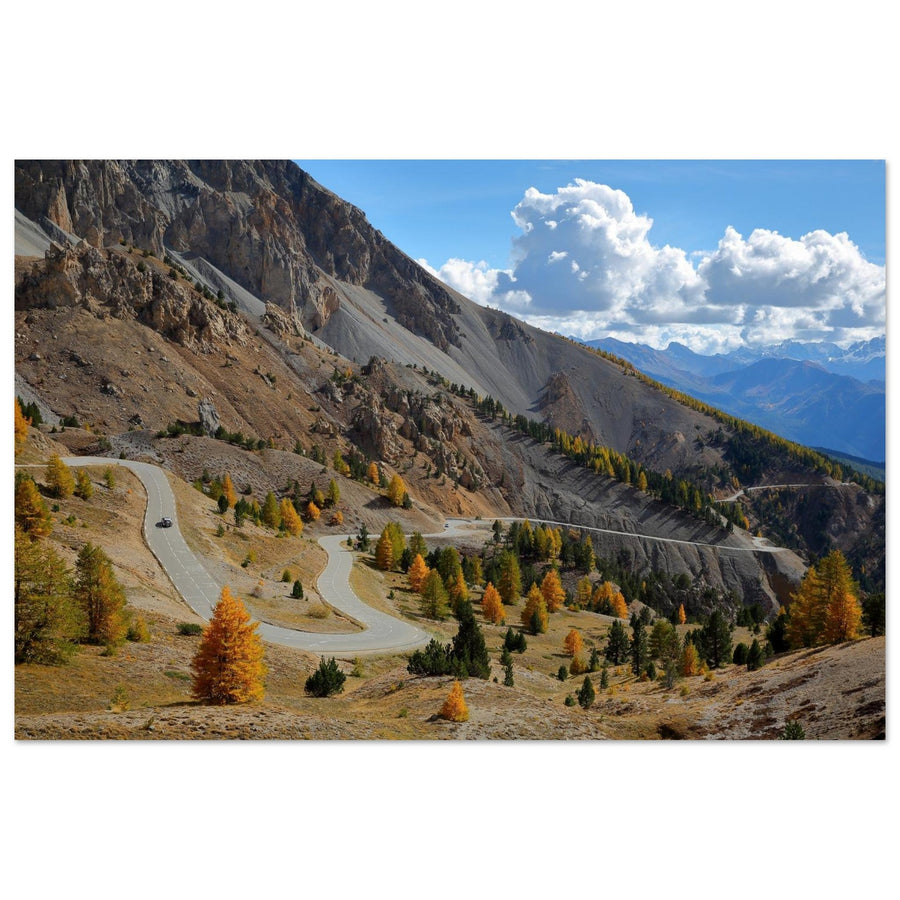
The road provides scale against the grey mass. Keep enough rock for the place to remain harsh, but avoid a large patch of scree with no direction.
The road becomes the main line. A higher position reveals the curves; a position that is too low turns them into disconnected fragments.
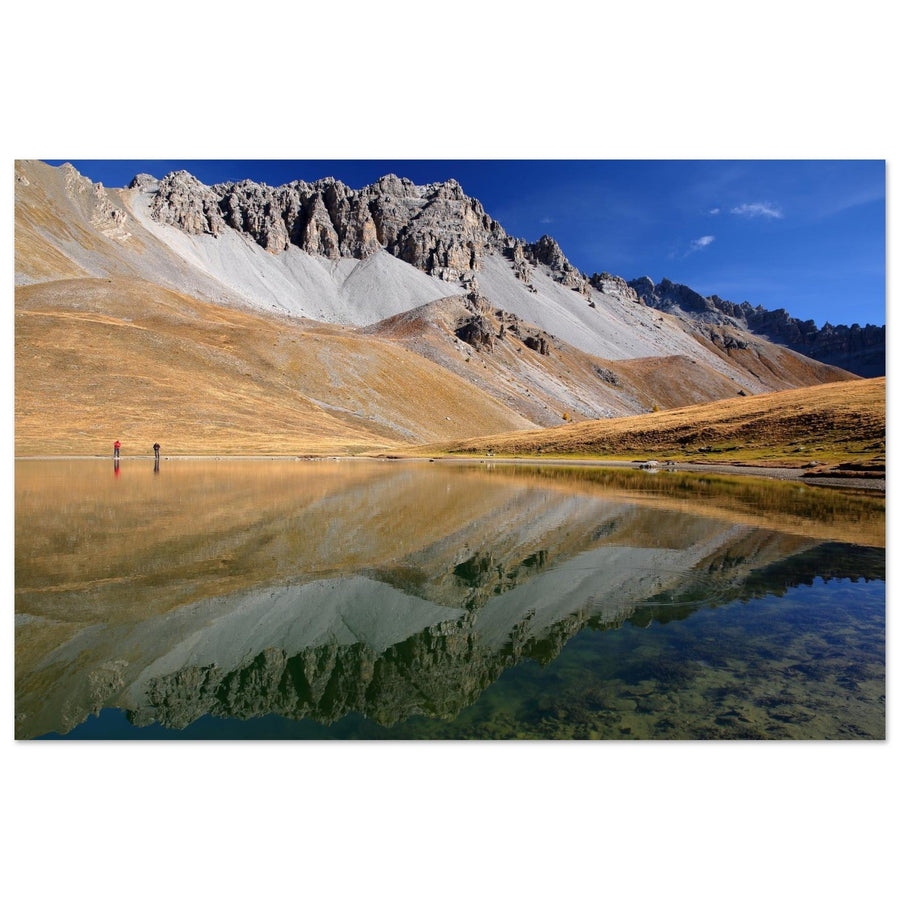
Water and its reflection can structure the bottom of the frame, while the mineral ridge closes the image. Two walkers can be enough to give scale.
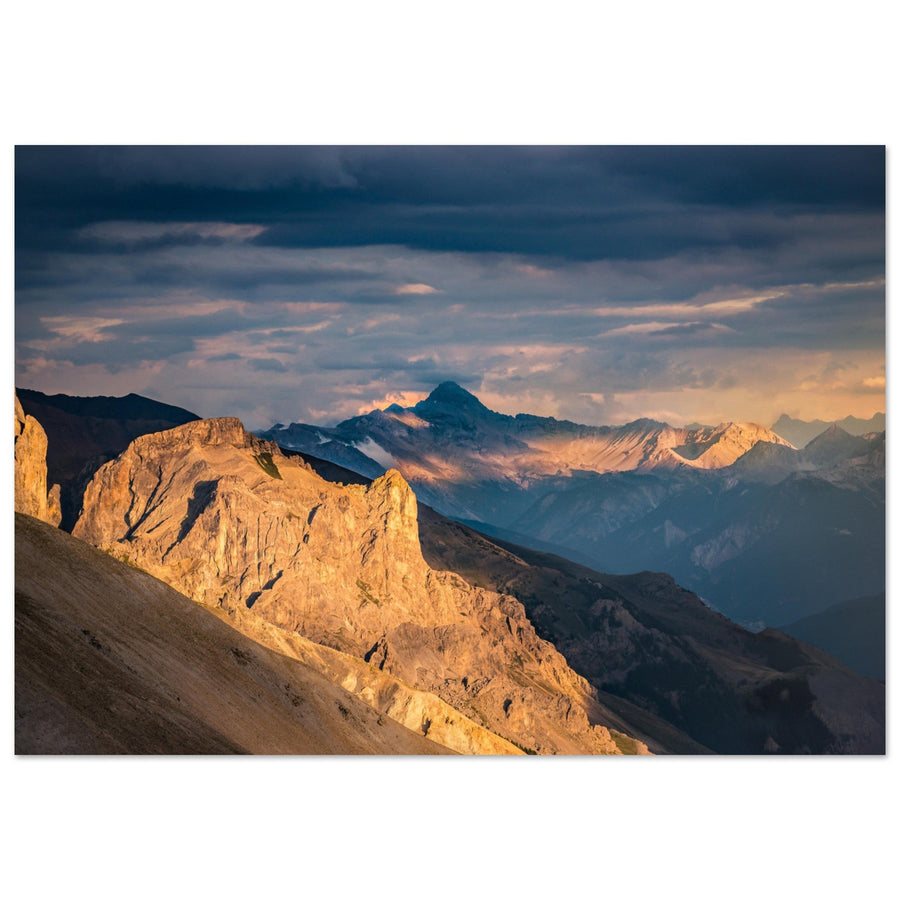
With a telephoto lens, the mountain can be isolated when sunlight or clouds separate it from neighbouring ridges. The road no longer needs to appear.
Why the area works so well photographically
The road places a human measure in a landscape of scree
On the Queyras side, the asphalt contrasts with grey and brown tones. This difference in material makes the curve immediately readable.
Lower down, the larches become denser. In autumn, their colour creates a second rhythm without making the walls disappear.
The pinnacles, a strip of scree or Rochebrune can become a complete image when the light individualises them.

The road provides scale
One curve is enough to reveal the size of the Casse
The road crosses the lower relief, bends and disappears. The tiny car reinforces the scale. The larches remain scattered: they indicate the season without turning the scene into a forest photograph.
Photograph: Christophe CappelliView the Casse Déserte photograph →
What your distance changes
Going up, down or tighter does not tell the same Izoard

From a high position
The road becomes a broad S through the forest
Three pale curves provide a very clear direction. The larches fill the middle of the frame and the mountain closes the background. Moving lower here would lose the continuity of the road.
Photograph: Francois RouxView the Izoard road photograph →

Another scale
At Lac de Souliers, two silhouettes are enough
The ridge and its reflection form an almost symmetrical mass. The two tiny walkers on the shore keep the landscape from becoming abstract and provide a measure of the relief.
Photograph: Christophe CappelliView the Lac de Souliers photograph →
When the Izoard leaves the frame
The road does not need to appear in every image
Scree, pinnacles, hairpins or a clear transition with the larches give the area its identity.
The lake becomes a study of reflection, Rochebrune an isolated silhouette, or the forest fills the entire frame.
Changing subject is not a problem. It simply needs to be acknowledged: a photograph of Rochebrune does not need to be presented as a view of the Casse Déserte. To choose another area, return to the Queyras photo guide.

When the summit becomes the subject
Light separates Rochebrune from the other ridges
The foreground rocks catch warm light, while the central summit and distant relief remain under a heavy sky. The road has disappeared: the image holds through rock layers and light.
Photograph: Pierre ThiavilleView the Rochebrune photograph →
If the planned scene no longer works
Change scale rather than force the programme
Reduce the amount of sky
Work with the road, scree and larches. The relief already provides enough lines and material.
Abandon symmetry
Frame more of the shore and ridge, or wait for light on the rock rather than a reflection that will not come.
Look for a break
A small illuminated area in the Casse or on Rochebrune works well with tighter framing.
Do not improvise
The pass is seasonal. Switch to an accessible valley subject and consult official road information.
Access and safety
A photogenic curve never justifies stopping on a bend
Col d’Izoard is a high-altitude road subject to seasonal closures and current conditions. Check its status on the day. On site, use only authorised spaces and paths; never place a tripod or photographer on the roadway. For Lac de Souliers, check the route, snow cover and trail condition before setting out.
Check on the day of the outing
Road opening, weather, wind, condition of the Lac de Souliers trail and local restrictions at the exact point.
If your difficulty is mainly technical
For exposure, filters, sharpness or post-processing, continue with the technical guides.