Belledonne | Photographing the Chamrousse Lakes: Lacs Robert and Lac Achard
Belledonne · project 02
At Chamrousse, the Lacs Robert and Lac Achard are not a list of spots: they offer two opposite relationships between water, relief and vegetation.
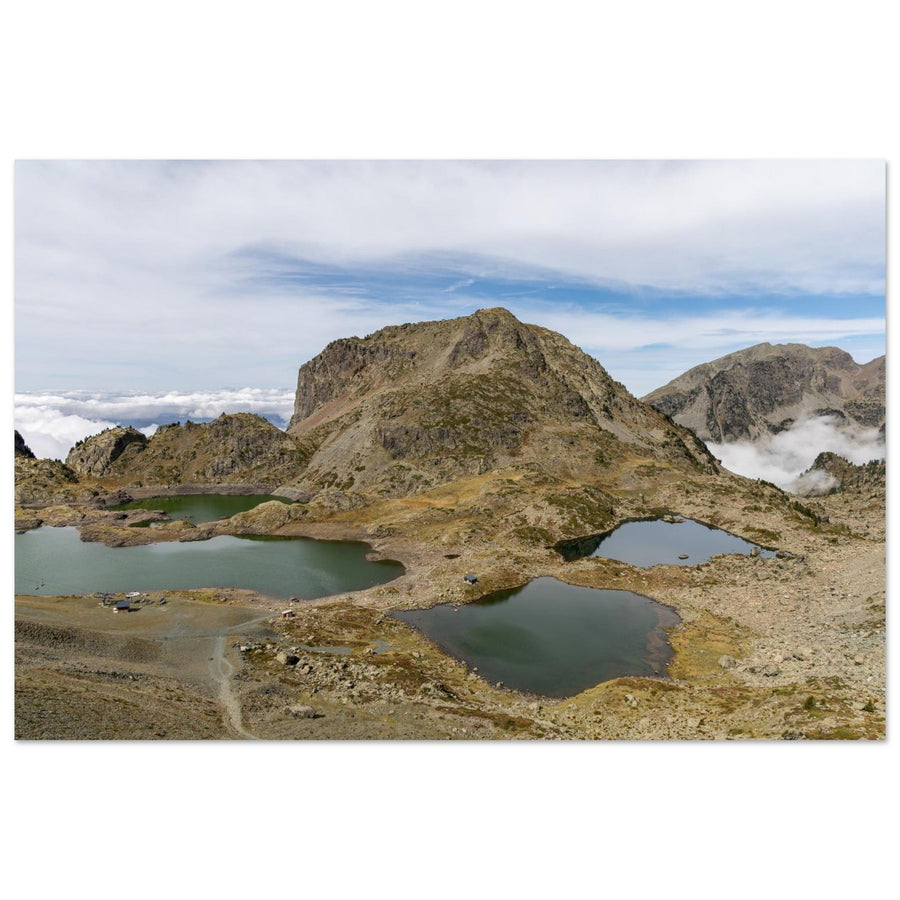
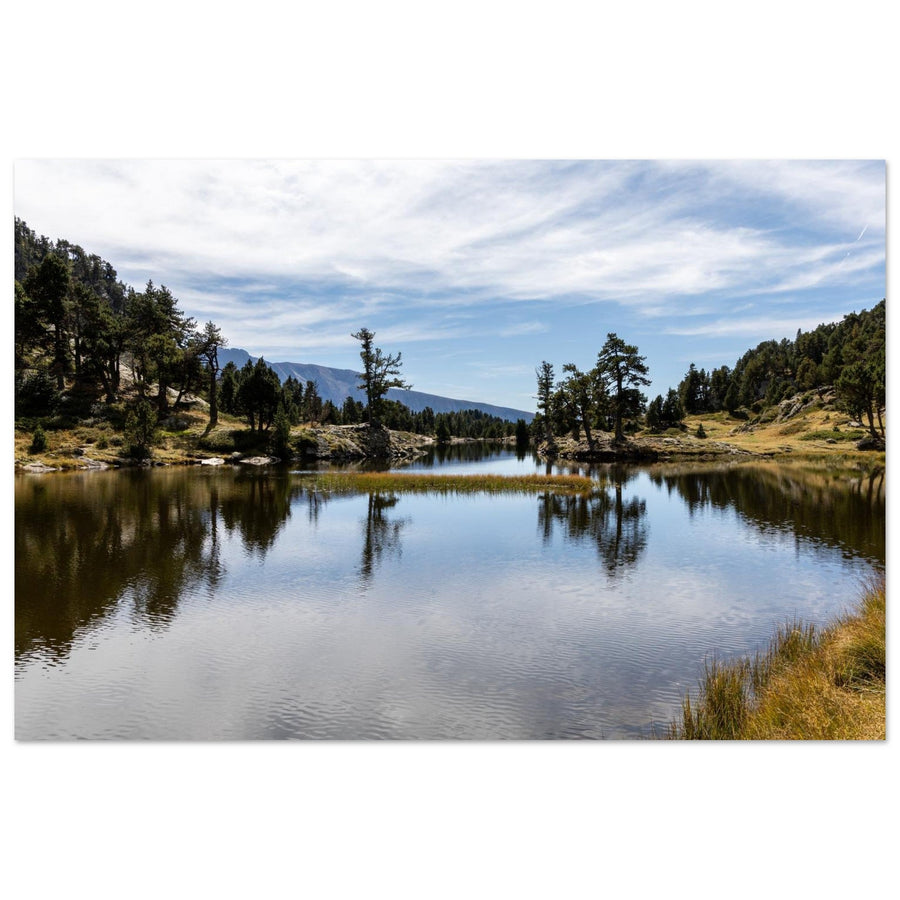
The Lacs Robert are read from the openness of a mineral cirque where several basins share the frame. Achard is photographed closer to the water, among pines, irregular shores and a protected wetland. Looking for the same image at both sites erases their interest.
Initial decision
Which relationship between water and landscape should dominate?
The choice is not about the most famous lake, but about the geometry the conditions genuinely allow.
At the Lacs Robert, gain enough height to separate the basins, make their outlines readable and keep the summits as a mineral enclosure.
At Achard, bring shore, grasses and trees closer so that reflection and forest edge build the image without seeking a total panorama.
Connect both images through water and light, then contrast scale, shoreline density and the amount of sky.
Local signature
Two nearby lakes, two visual languages
Geographical proximity must never create artificial continuity.
The Lacs Robert work when several water surfaces remain distinct at the bottom of the cirque and the rock connects their forms.
At Achard, pines, grasses and slabs provide close scale. The lake is contained without being enclosed.
Authorised routes and the fragility of the wetland limit positions. The frame must adapt to the site, not the reverse.
Real positions
What height and shoreline change
The right distance separates the Lacs Robert; at Achard, it brings textures closer without trampling fragile environments.

Artwork · mineral register
Height turns the Lacs Robert into a system
Several water forms remain separate in the cirque while the relief closes the background. The proof lies in multiplicity, not in one isolated basin.
Photograph: olivardView the Lacs Robert artworkArtwork · vegetal register
At Achard, shoreline and pines provide depth
Water occupies the foreground, but the tree line and grasses maintain a close scale. The subject does not need a monumental cirque.
Photograph: olivardView the Lac Achard artwork
Composition consequences
Match composition to atmosphere
The framing should strengthen the structural difference without caricaturing the sites.
Separate the basins
Keep bands of rock between the waters so every form remains readable and the eye can move through the cirque.
Bring in the forest edge
Use trees, grasses and rocks as successive thresholds; reflection alone would make the place too generic.
Repeat the water line
Keep a comparable proportion of water, then contrast mineral openness with vegetal enclosure.
Editorial boundary
When does the image still belong to the Chamrousse diptych?
Each lake must keep its own language, and both images must remain comparable through water.
At least two water forms or the cirque logic remain visible. The site is not reduced to a summit or infrastructure.
Shore, pines and water share the image. The lake is neither an abstract mirror nor an excuse to enter the wetland.
If both images rely on the same panoramic framing, they no longer demonstrate the contrast that justifies the page.
Failures and backup plans
What weakens each register and what to change
Conditions are not corrected the same way in an open cirque and on a protected shoreline.
Multiplicity disappears
Move down towards a shore and work with one basin and the blocks, or postpone the overall view rather than claiming an unreadable system.
The mirror fragments
Keep grasses and pines as the main structure; the texture of the water can then become a counterpoint.
Backup: reduce the setup
Work quickly from the path, choose tighter framing and give up any setup that would obstruct passage.
Backup: recalculate the route
Schedules and openings change. Redefine distance, return time and the project before relying on mechanical transport.
Terrain and sources
Prepare two sites with different constraints
The Lacs Robert lie in a high-altitude cirque; Achard belongs to the Arselle–Achard sensitive natural area. Access conditions and local rules must be read separately.
At Achard, protection of the wetland takes priority over choosing a viewpoint. At the Lacs Robert, weather and access solutions change the real commitment.
Check before the outing
Re-read official pages on the project date.
- Weather, wind, storms and visibility on the plateau.
- Trail condition and remaining snow.
- Schedules and operation of any lifts.
- Current rules for the Arselle–Achard sensitive natural area.
- Visitor levels and ability to stay on authorised routes.
Official sources
Local pages distinguish the Robert cirque from Achard's protected environment.
Other Belledonne projects
Continue the Belledonne project
Useful neighbouring projects
Change logic if you want to tell an ascent or a series of basins rather than a contrast.
Return to choosing the territory
The massif guide places the Chamrousse diptych among Belledonne's four active relationships.