Grandes Rousses | Photographing Pic Blanc and the Écrins from Alpe d’Huez
Photographing from 3,330 metres
At Pic Blanc, the problem is not finding summits: they fill the horizon. The eye needs a nearby ridge, a plunging view or a break in material before it is allowed to travel through the mountain ranges.
The altitude compresses the valleys and visually brings together massifs that are actually far apart. Without a guiding plane, the panorama becomes a frieze of peaks; with one, distance becomes readable again.
Before naming the summits
What depth do you want to make visible from Pic Blanc?
Choose a relationship of distance, not a ranking of visible mountains.
A nearby relief crosses the frame and separates the valleys. It gives a clear direction before the distant chains.
Each distance loses a little contrast and changes colour. The image rests on this progression, not on one isolated summit.
A tighter frame can extract the Écrins from the abundance, provided you accept that the image then leaves the story of the local terrain.
What altitude changes
The plunging view compresses valleys but separates materials
Pic Blanc becomes photographically specific when the foreground remains rough and detailed while the distance becomes simpler.
It cuts through the mass of the panorama, distributes the slopes and prevents the eye from sliding directly to the sky.
The plunging view reduces human signs and makes changes in altitude more readable than terrain details.
Contrast decreases towards the horizon; this gradual loss can become the main tool for depth.

Depth held by the ridge
The nearby relief distributes the entire panorama
The dark point leads towards the valley and separates the waters below. The distant ranges can then remain numerous without becoming confusing.
Photograph: olivard. View the basins and ridge from Pic BlancMove to change the hierarchy
Three positions around the terrace, three readings of the relief
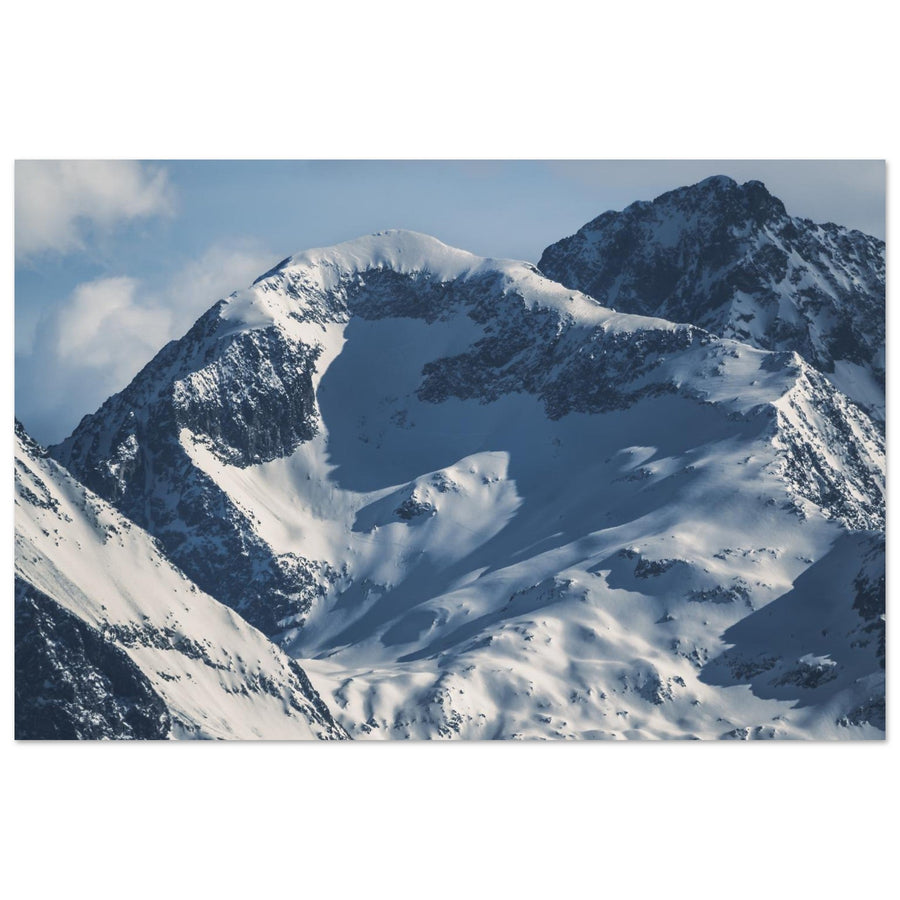
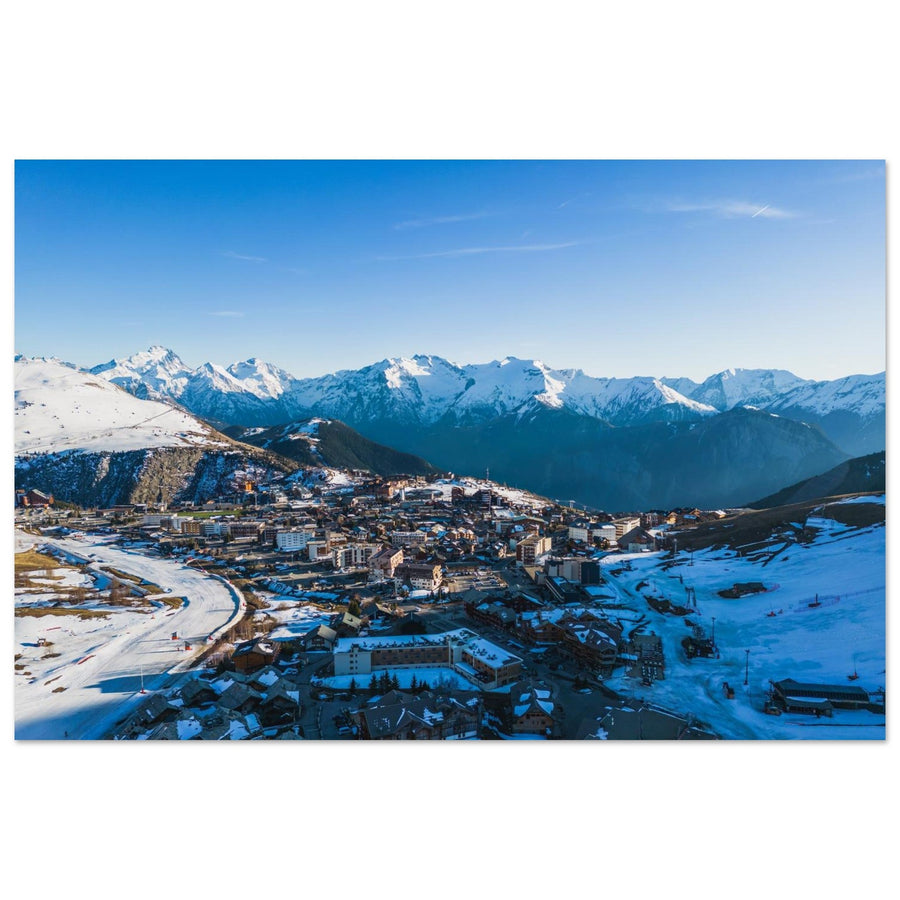
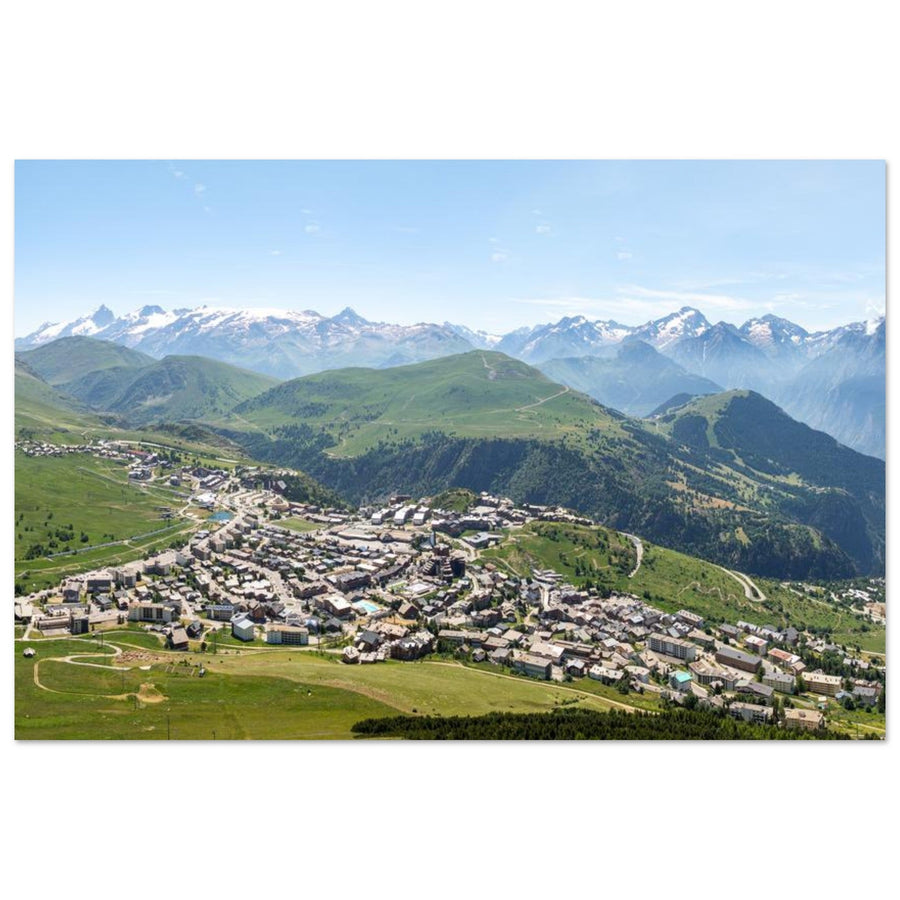
A few metres sideways or a tighter frame mainly change the overlap between the ridge, lakes, resort and Écrins.
Give each distance a function
Compose a cross-section of the Alps rather than a decorative panorama
Width is useful only if each plane performs a different task.
Keep a material that resists distance
Dark rock, cut snow or a ridge edge provides the contrast that the horizon cannot.
Let the valley separate instead of fill
The dark hollow between ranges is breathing space; do not systematically try to add a detail there.
Choose one dominant mass and reduce the rest
One range can close the frame, but the others should remain stages of depth rather than rivals. The guide to focal lengths and perspective helps distinguish choosing a viewpoint from framing one part of that depth more tightly.
The location does not decide the subject
Is the image still about Pic Blanc or only the Écrins?
The shooting location is not enough. Look at what makes the composition impossible to reproduce from another balcony.
A ridge, a plunging view, a lake or a Grandes Rousses slope organizes depth and imposes the geometry.
La Meije, the Barre or a glacial mass is enough for the image; the local terrain could disappear without loss.
If roads, buildings and slopes occupy the whole hierarchy, the image is first about the developed balcony of Alpe d’Huez.
Do not fight the shift: tighten the frame and embrace the other subject, or reintroduce a decisive local plane.
When altitude flattens instead of opening
Repair a panorama that is too wide, too blue or too empty
The fallback should simplify the hierarchy, not add more summits.
Work the nearby ridge and breaks in the snow
Reduce the horizon; local material handles loss of contrast better than distant ranges.
Raise the relief line in the frame
Give more room to the plunge and valleys, unless the clouds themselves create a structuring mass.
Look for a lateral cut or tighter framing
A move can place one ridge in front of another and restore separation that the light no longer provides.
Abandon the fragile assembly
Prefer a single tighter image and a composition based on mass rather than extreme precision.
The summit remains a high-altitude environment
Prepare Pic Blanc without promising conditions
At this altitude, wind, cold, visibility and access conditions can change quickly. The photographic project must remain adaptable and never depend on a remembered timetable or opening.
On site, terrain, instructions and photographer stability come first; no image justifies crossing a boundary or extending a session in deteriorating conditions.
Check just before the outing
Information likely to change should come from the day's operators and authorities.
- lift operation and timetables;
- wind, visibility, temperature and rapidly changing weather;
- summit conditions, authorized paths and any restrictions.
Official sources
These pages describe the location and lead to current practical information.
Change scale without leaving the area
After the Pic Blanc plunge, return to nearby terrain
Move to water, shorelines and Sarenne
Choose this continuation when great distance no longer works or when you want to build the image with a nearby surface and slope.
Return to the territory choice
The main guide compares high altitude, plateau waters, the resort and boundaries with neighboring massifs.
To explore this landscape in pictures, discover the Alpe d’Huez photographic prints.