Vanoise | Photographing Dent Parrachée
Photographing a rocky pyramid
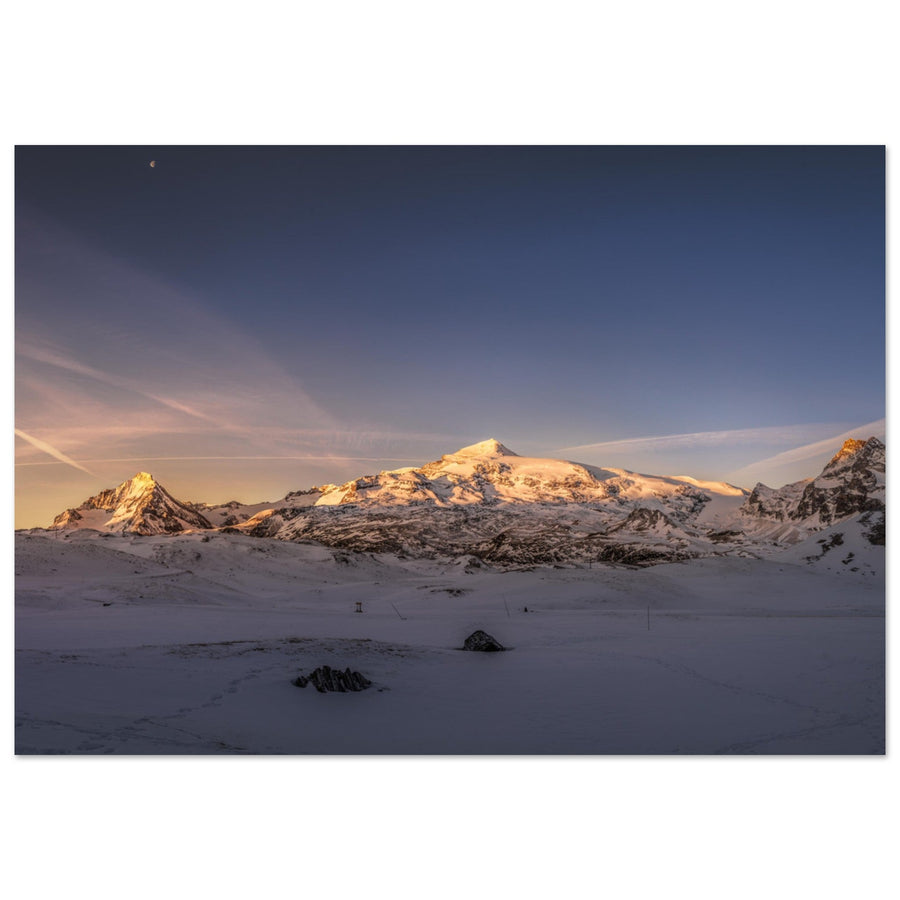
The Dent Parrachée is recognizable by its taut, dark silhouette; the image gains strength when this sharp relief is set against a calmer foreground.
From the Aussois sector as well as from more distant viewpoints, its profile changes with the angle. The essential decision is whether to isolate the summit or place it within the successive layers of Haute Maurienne.
Choose the tension of the profile
Isolated point, calm water or layered relief?
Start by choosing between the point alone, its relationship with water and its place within the mountain chain.
Frame the point against a simple background so its shape reads immediately.
Let water or shoreline create calm without requiring a perfect reflection.
Show breaks in relief and successive planes while keeping the Dent as the stopping point.
Silhouette of the Dent
Keep the point separated and readable
The point, dark rock and horizontal foreground form the combination to preserve.
Avoid overlapping ridges that break the point or create a competing line.
Side light reveals the folds; overly dense processing blocks the material.
Lakes and benches balance the summit's vertical force when they remain graphically simple.
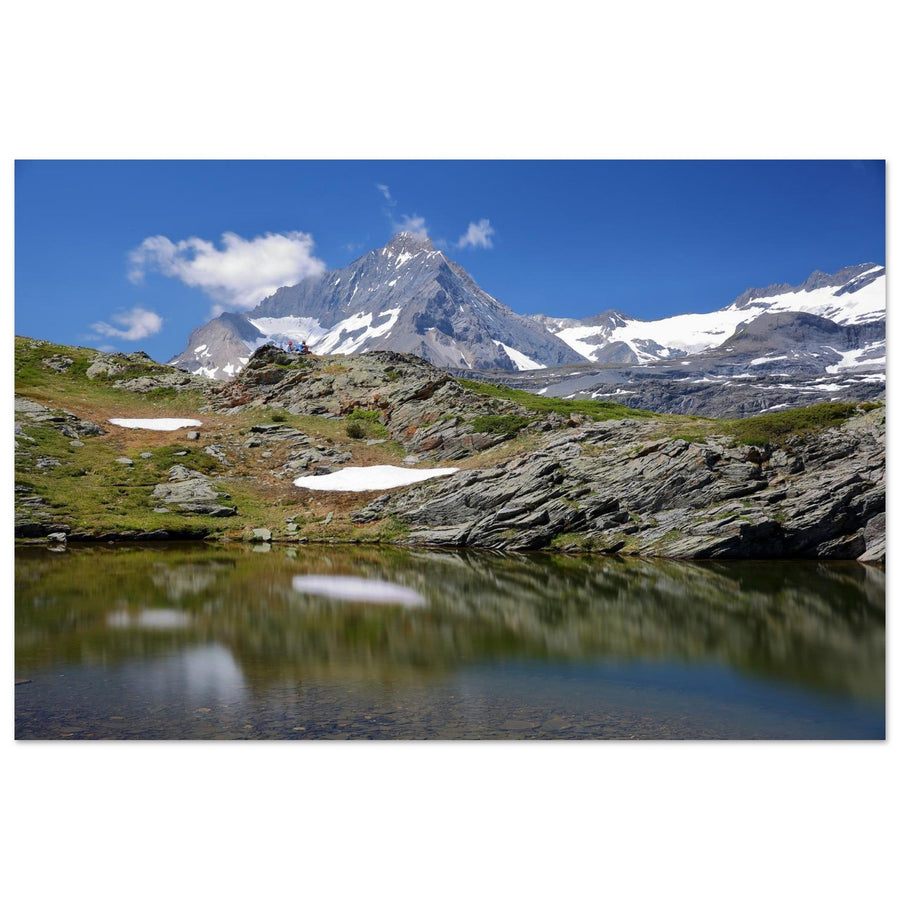
Artwork — calm the foreground
A calm surface strengthens the point
The Bellecombe lakes are not the Aussois waters: this artwork illustrates a visual relationship, that of a taut mountain above a contained horizontal foreground.
Photograph: Christophe Cappelli.View this photograph
Angle, background and foreground
Where does the Dent truly stand apart?
A useful move separates the point, calms the foreground or restores the Dent within the layers of the relief.
Balance between point and horizontal
Compose the point above a calm plane
The point gains tension when its flanks can breathe and the foreground remains simple.
Protect both flanks of the point
A small margin of sky or slope is enough to preserve the complete shape.
Choose one horizontal line
Shoreline, reflection or pasture should stabilize the image, not multiply motifs.
Separate the rock from the background
Wait for a difference in light or color between the Dent and the relief placed behind it.
Boundary of the silhouette
When is the image still about the Dent Parrachée?
The Dent loses priority when reflection, shores or neighboring summits become more insistent than its profile.
The point closes the reading and foreground lines lead towards it.
A dominant reflection, detailed shores or a strongly colored surface can make the water the true center.
When several summits stand out with equal force, the image becomes a Maurienne panorama.
Look first at the frame as a thumbnail: the point should still stop the eye without explanation.
When the point blends in
Restore tension to the summit without forcing a reflection
If the point merges with the background or the water refuses to mirror, rebuild the separation instead of pursuing the expected effect.
Shift the angle slightly
A few metres sideways can separate the point from a rear ridge and make its outline readable again.
Abandon the perfect reflection
Work with texture and shoreline; the surface then remains a calm plane rather than a failed mirror.
Expose for material
Protect useful shadows and wait for side light if the face becomes a solid black shape.
Reduce its place
Give more weight to the layers of terrain and use the sky only as breathing space.
Access through the levels of Haute Maurienne
Prepare the chosen sector around the Dent
Access from Aussois and high-altitude sectors changes with the season, snow cover and local services. The various lakes and refuges do not all describe the same route.
Distinguish the approach hike from alpine routes. Check the actual commitment of the chosen itinerary and turn back if terrain conditions do not match your preparation.
Check just before the outing
Access, wind on the water and route conditions vary: check them for your exact starting point.
- opening of access routes and any shuttles
- trail condition and snow cover
- local weather and wind on the water
- National Park regulations
Official sources
Open the pages that match your access and date.
Move from the point to another shape
Continue with water, mass or terrain layers
Two subjects that extend this decision
Change geometry while keeping a similar photographic question.
- Photograph the Grande Casse — to compare a broad mass with a more taut silhouette.
- Photograph Lac des Vaches — to give priority instead to water and its crossing.
Return to the Vanoise choice
Return to the massif comparison to move from a taut silhouette to a broader or more intimate relationship.