Which Alpine lake photo print to choose for your home?
A lake photo print can visually open up a room, create a sense of calm, or become the focal point of a large wall. However, no two water landscapes have the same effect: a reflection of the Cervin, an aerial view of the Beaufortain, a mineral lake in Belledonne, and an autumn forest in Queyras do not tell the same mountain story or provide the same decorative impact.
The right choice therefore depends less on the lake's name alone than on the desired atmosphere, the room's color palette, the legibility of the landscape, and the available format. This guide helps you choose a lake photo print from the Alps for a living room, bedroom, chalet, or office, based on active works from the gallery and clearly credited photographers.
This page helps you choose a work for your interior. To discover the locations, access, and seasons, see the most beautiful lakes in the French Alps. For wind, settings, and composition, consult the guide Photographing Alpine Reflections.
What atmosphere to create with a lake photo print?
Before comparing formats, identify the emotion the work should evoke. A bright lake print can visually enlarge a small living room, while a mineral or dark landscape adds more character to an already bright room. Light, vegetation, and the prominence of relief are as important as the color of the water.
A calm and bright atmosphere
Soft blues, snow-capped peaks, and airy compositions create a sense of breathing space. They are suitable for bedrooms, offices, and bright living rooms. The Cervin in Riffelsee or Mont-Blanc from Les Chéserys create a strong image without overwhelming the room.
Warm light for wood and natural tones
Golden light, autumn shores, and larches harmonize with oak, walnut, beige, linen, and stone. In a chalet or a cozy living room, these colors extend the interior materials instead of creating a cold contrast.
A mineral and contemporary atmosphere
Dark lakes, rocks, and sparsely vegetated reliefs are suitable for white or gray walls, metal, and black furniture. La Meije from Lac Lérié or Lac Noir de Belledonne provide power with a contained palette.
A forest and enveloping atmosphere
A nearby shore, conifers, mist, or emerald water create a more intimate image. Lac Miroir and Lac Vert are suitable for a bedroom, a reading nook, or a home where wood and plant materials already play an important role.
The right landscape is not necessarily the most spectacular
A very colorful photograph immediately catches the eye, but it can dominate a small room. Conversely, a calmer landscape may appear discreet on screen and become particularly elegant in a large format. Always look at the distribution of masses: amount of sky, placement of water, dark relief, vegetation, and overall contrast.
What type of alpine lake to choose for your decor?
Small alpine lakes facing large peaks
These landscapes concentrate a lot of identity in a relatively simple composition: a shore, a body of water, and an immediately recognizable peak. The Chéserys lakes, Riffelsee, or Lac Lérié make excellent central pieces. They are suitable when you want the mountain to remain the main subject while benefiting from the depth created by the water.
To explore the associated territories further, explore the guides to Aiguilles Rouges, the Swiss Alps, and the Écrins.
Large, open, and panoramic lakes
Annecy, Roselend, or Lac du Bourget produce a different sensation. Their interest comes less from a reflected peak than from the length of the shores, bays, roads, and successive reliefs. These compositions naturally complement wide walls, sofas, and sideboards. A panoramic view can add depth without imposing central symmetry.
Reservoirs and graphic aerial views
An aerial photograph reveals the shape of the lake and the relationship between the shores, alpine pastures, and developments. Saint-Guérin or Roselend allow you to choose a more structured work, suitable for an office, an entrance, or a contemporary interior. The hub dedicated to the Beaufortain allows you to extend this understanding of the territory.
Forest lakes and close-up landscapes
Lac Miroir, Lac Vert, or certain autumn landscapes create a more intimate relationship with the place. The shore, tree trunks, and vegetation occupy more space. This type of print is interesting when you are looking for a natural atmosphere rather than a monumental panorama. The Queyras photo guide connects several of these atmospheres with the new products in the catalog.
Mirror reflection, textured water, or panorama without reflection?
Reflection is not a requirement. It is one aesthetic choice among others and should enhance the landscape. An almost perfect mirror creates an impression of stability and visually doubles the peak. It works very well on a central wall when the composition is simple enough and the horizon is perfectly controlled.
Slightly rippled water produces a more natural image. The reflection becomes a texture, less literal and sometimes softer. This rendering easily fits into a bedroom, an office, or a decor where calm is sought without strict symmetry.
Finally, some lakes are powerful without a dominant reflection. The curve of Annecy, the plunging view of Roselend, or the aerial shape of Saint-Guérin rely on the lines of the landscape. They are particularly suitable for large walls and contemporary interiors. To understand shooting, polarizing filters, and the influence of wind, the technical guide on mountain reflections remains the dedicated resource.
What colors to choose according to your interior?
Blue, white, and gray
This palette brings clarity and goes well with white walls, light concrete, light wood, and black elements. It is suitable for contemporary offices, bedrooms, and living rooms. The Cervin, Les Chéserys, and mineral lakes are good starting points.
Green, turquoise, and natural wood
Forest landscapes or turquoise reservoirs create a direct link with wood, plants, and raw materials. Lac Vert, Lac Miroir, Roselend, and Saint-Guérin can add color without creating too warm an atmosphere.
Gold, copper, and autumn colors
Golden tones warm up a beige, cream, terracotta, or warm gray wall. They are particularly suitable for chalets and north-facing rooms. Lac de Souliers and the lights of Les Chéserys create a warm focal point.
Dark and mineral palette
Grays, rocky browns, and deep waters give a sober and graphic result. They work best in a sufficiently bright room, where Lac Noir or La Meije can add character without darkening the overall impression.
What format to choose for a lake photo print?
Above a sofa or sideboard
Opt for a horizontal composition whose width truly dialogues with the furniture. A print that is too narrow will look isolated. Views of Roselend, Annecy, or large reflections work well when the wall has sufficient setback.
On a large living room wall
Choose an image that is legible from a distance, with a clear main subject. A large, strong work is often more coherent than an accumulation of small formats. Panoramas, iconic reflections, and aerial views are suitable for this use.
In a bedroom
Moderate contrasts, forests, mists, and natural tones create a more relaxing atmosphere. Lac Miroir or Lac Vert are more suitable than a highly saturated sunset if you are looking for a calm ambiance.
In an office or entrance
A structured, aerial, or mineral image remains legible even when viewed quickly. Lac Noir, Saint-Guérin, or the Cervin can establish a strong identity without multiplying decorative elements.
Available orientations and dimensions vary by artwork. Always check the product sheet before developing your project. The guide What size to choose for an Alpine photo print? helps you proportion the print to the wall, furniture, and viewing distance.
Ten Alpine lake photo prints to discover
This selection does not aim to summarize the entire catalog. It brings together ten active and complementary works: iconic reflection, warm light, autumn, forest, high mountain, large panorama, and aerial photography. Each product sheet indicates the available formats and the true photographer of the work.

The Cervin reflected in Riffelsee lake
The immediately recognizable silhouette of the Cervin and its almost symmetrical reflection create a calm yet very present work. The blues, rocky grays, and bright areas are particularly suitable for a contemporary living room, office, or an interior combining light wood and black elements.
Photography: Mumemories

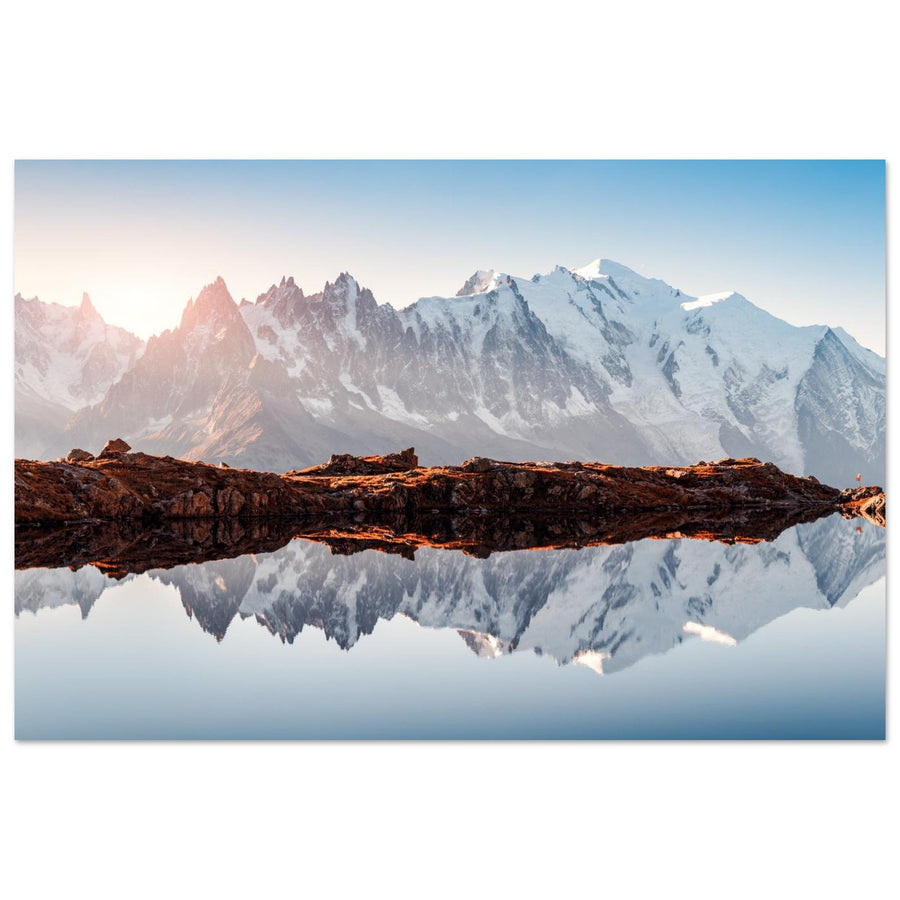
Mont-Blanc from Les Chéserys lakes
The warm light on the Mont-Blanc massif warms a composition dominated by water and reliefs. This photograph works as a centerpiece in a living room, especially with parquet flooring, linen, beige, or natural wood. Its reflection remains legible without making the image artificially static.
Photography: Pierre Thiaville

La Meije reflected in Lac Lérié
The open plateau, the small lake surface, and the silhouette of La Meije produce a balanced composition, less symmetrical and more mineral. This is a strong choice for a sober large wall, an office, or a contemporary interior where grays, browns, and rock textures can breathe.
Photography: Pierre Thiaville

Lac Noir facing Grand Pic de Belledonne
The dark water and powerful relief give a more graphic atmosphere than large bright landscapes. This work is suitable for a bright room that can accommodate contrast, a gray wall, or a decor combining stone, metal, and dark wood. The lake structures the image without imposing a mirror reflection.
Photography: Florian Augustin

Lac de Souliers in autumn in Queyras
The golden and russet tones immediately bring warmth to the alpine landscape. This photograph goes well with a chalet, a room with beige or terracotta walls, parquet flooring, or wooden furniture. It provides a colorful presence without relying on a spectacular sunset.
Photography: Christophe Cappelli

Lac Miroir in Ceillac
The forest, water, and reliefs compose a more intimate scene than the grand high mountain panoramas. The green and natural materials make this photograph suitable for a bedroom, a reading nook, or a botanical interior. It also works as a duo with another work from Queyras.
Photography: Picturereflex

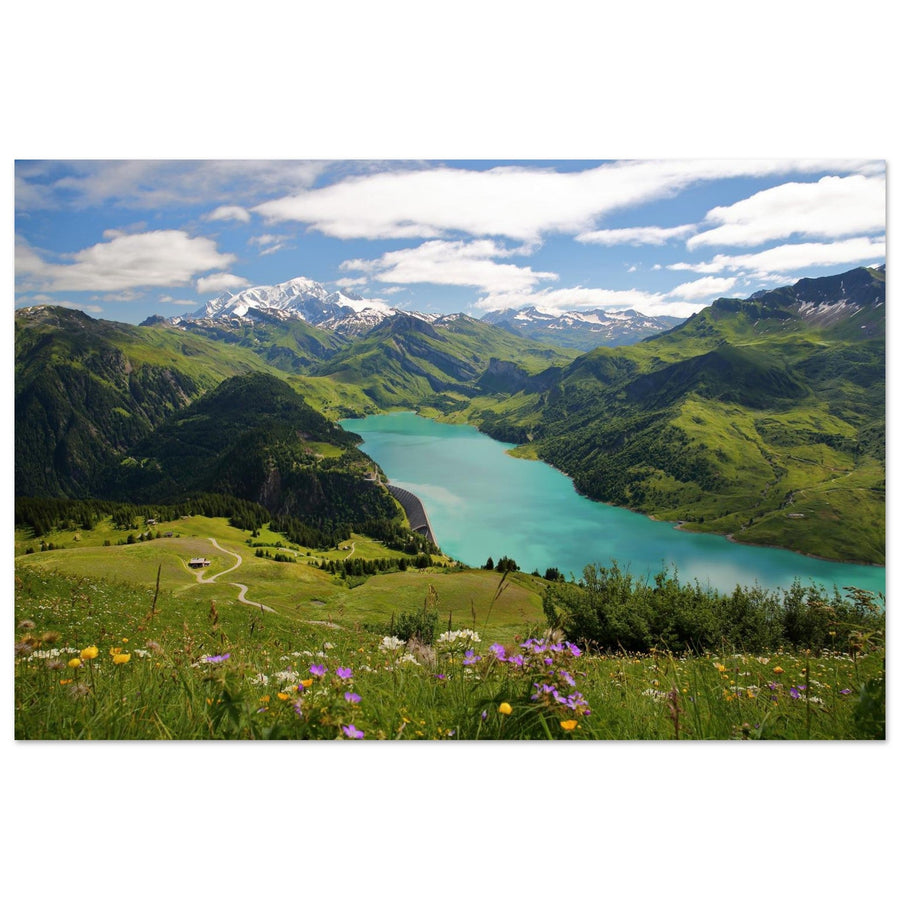
Lac de Roselend from Roche Parstire
The aerial view of Roselend opens up the landscape and draws the eye towards the peaks of the Beaufortain massif and Mont-Blanc. This composition is particularly suitable for a large living room wall. Its greens, blues, and successive lines create depth without requiring perfect symmetry.
Photography: Christophe Cappelli

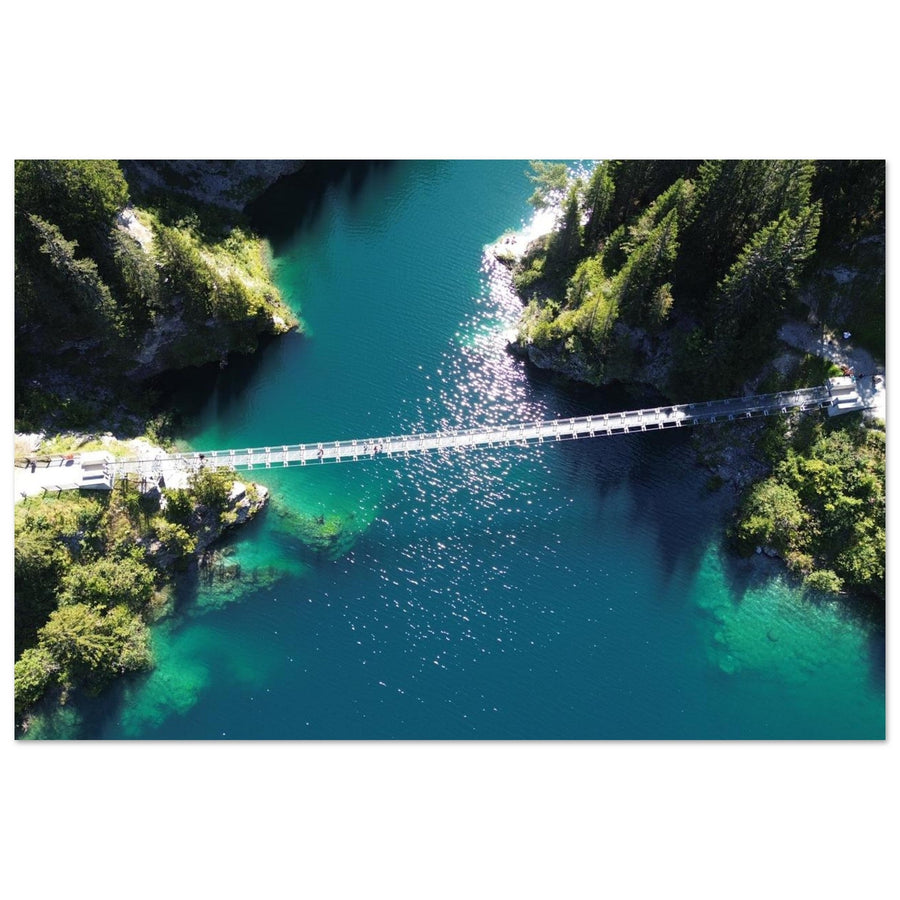
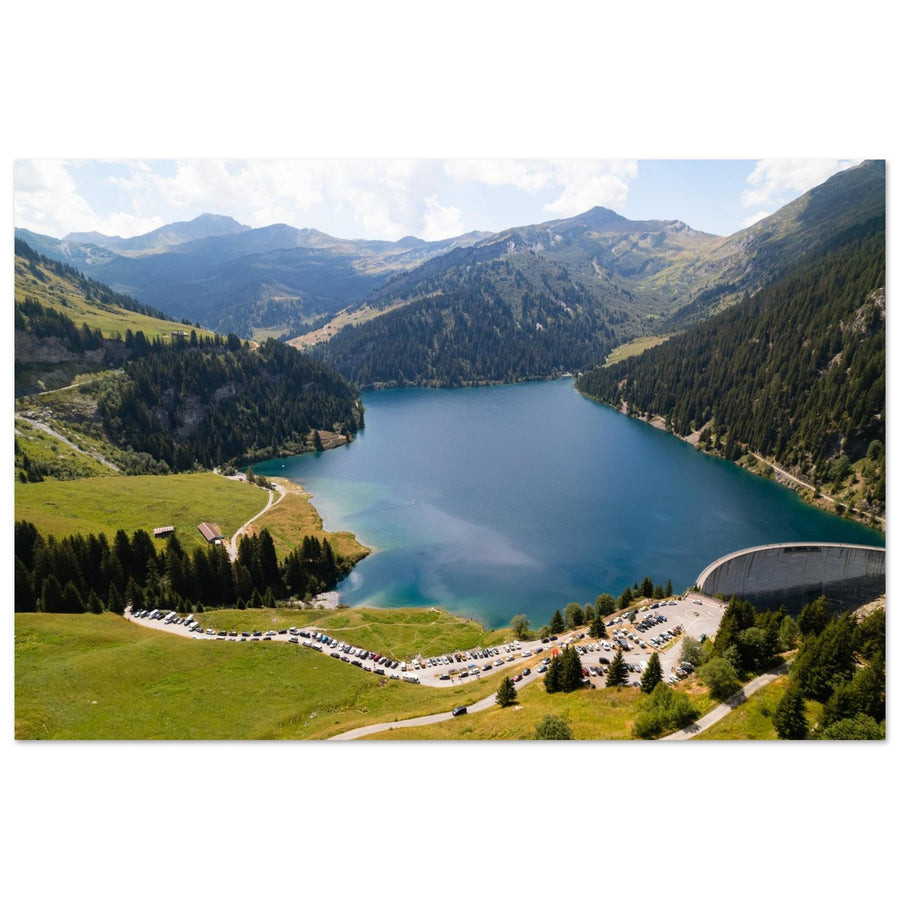
Lac de Saint-Guérin from above
Aerial photography transforms the lake into a graphic shape, revealing the relationship between water, shorelines, and mountain pastures. It is suitable for an office, an entryway, or a contemporary interior seeking a structured image. It can form a coherent duo with Roselend, sharing the same alpine palette.
Photography: laetom_drone

Duingt and Lac d’Annecy from La Forclaz
The curve of the lake, the Duingt peninsula, and the succession of peaks provide an immediately understandable panoramic view. This artwork is suitable for a living room or a large wall where space is desired more than a central reflection. It visually extends the depth of the room.
Photography: Matthias Riedinger

Lac Vert at the foot of the Fiz massif
The conifers, the nearby shore, and the color of the water create an enveloping forest landscape. More intimate than a grand panorama, this photo print naturally finds its place in a bedroom, a mountain home, or a living room with natural materials. It brings green without losing the alpine identity of the relief.
Photography: Martin Valigursky
How to combine several artworks around water?
A duo or series works when a common principle connects the artworks. You can choose the same territory, for example, Roselend and Saint-Guérin in the Beaufortain, or Les Chéserys and another view of the Aiguilles Rouges. You can also build a palette: blues and whites, greens and turquoise, or autumn colors.
Maintain a consistent visual height, regular spacing, and compatible orientations. Avoid unintentionally combining a very warm photograph, an almost monochrome image, and a turquoise aerial view. For a more structured arrangement, the Mountain Gallery Wall guide offers compositions adapted to aluminium prints.
Why choose matte Dibond aluminium for a lake landscape?
Dibond aluminium offers excellent flatness, useful for maintaining the stability of water lines and the precision of reliefs. Its rigidity is suitable for large formats, while the matte finish limits parasitic reflections from windows and room lighting. It does not eliminate all reflection, but it preserves a more consistent reading of the image.
The details of the shores, the textures of the water, and the nuances of the sky remain legible without the glossy effect of a highly reflective medium. Each artwork is custom-made in France. The available formats depend on the orientation and definition of each photograph.
Find the lake print suitable for your wall
Start by choosing the atmosphere and palette you wish to create. Then determine the format according to the furniture, wall width, and available viewing distance. Finally, compare the artworks in their context: central reflection, open panorama, forest, autumn, or mineral landscape.